From knife work and tea rituals to tech-free walks, even successful people get hobbies to clear mental clutter fast and reset their focus.
We all get mentally jammed—like trying to cook in a cluttered kitchen.
When that happens, I don’t need a grand retreat or a 90-day challenge.
I need small, repeatable moves that bring me back to the present.
Over the years—in busy dining rooms, cramped apartments, and airport lounges—I’ve collected a handful of simple hobbies that act like reset buttons.
They’re tactile, low-tech, and easy to start, whether you’ve got ten minutes or an hour.
If you’re craving clarity without overhauling your life, this list is for you.
Pick one, try it today, and feel your brain exhale:
1) Knife work and chopping therapy
There’s a reason so many chefs look calm even when the kitchen is chaos.
Repetitive knife work—slicing cucumbers, dicing onions, shaving fennel—becomes a metronome for your brain.
When I need a mental reset, I pull a cutting board from the rack, queue up a simple mise en place, and just chop.
No phone, no podcast—just rhythm.
It’s not about making a Michelin-level dish; it’s about giving your mind something tactile and slightly demanding so it can let go of everything else.
If you’ve never been taught knife skills, learn the basic claw grip and keep the tip of the knife anchored when you rock-chop.
You’ll get faster, safer, and more relaxed.
I timed myself once and realized ten minutes of steady slicing dropped my heart rate and unkinked my shoulders more than a scroll through “relaxing” videos ever could.
A quick starter routine: wash and trim a pile of vegetables—bell peppers, carrots, zucchini, red onions—and store them in glass containers for the week.
Your future self will thank you when lunch becomes toss–sauté–eat instead of doom–scroll–order.
2) Tea rituals done slowly
I grew up around coffee obsessives, but tea stole my heart when I realized how elegantly it forces you to slow down.
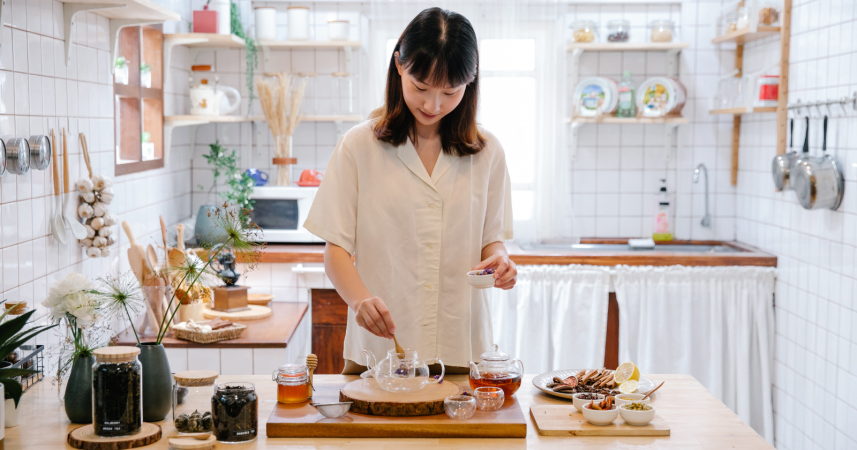
Heat water, warm the vessel, measure leaves, pour, wait, and sip.
That’s the entire point: when the steps are this simple and precise, your brain shifts from “inbox firefight” to “present moment.”
You don’t need fancy gear because a mug, a decent kettle, and loose-leaf tea are enough.
If you want to geek out, try gong fu style with a tiny teapot and short steeps.
It turns three grams of oolong into a 15-minute meditation.
Here’s what I do when I’m mentally fried mid-afternoon: I choose a tea by mood—sencha if I need clarity, roasted oolong when I want comfort—then I stand at the counter and watch the steam curl.
No screens until the second steep.
If meditation has always felt slippery, a tea ritual is mindfulness with training wheels.
You’re anchored to time, temperature, and taste.
One cup later, your brain is back online, but in a good way.
3) Tending a tiny herb garden
A balcony box with basil, mint, and thyme has rescued more of my Mondays than I can count.
You water, you pinch, you prune, and the plants—quietly and stubbornly—grow.
Gardening builds what psychologists call an internal locus of control.
You can’t control the weather, but you can choose where to place the pot, how often to water, and when to harvest.
That shift—from helpless to helpful—matters when the rest of life feels loud.
If you’re a total beginner, start with mint (forgiving), basil (sun-hungry), and chives (resilient).
Morning sunlight, a cheap moisture meter, and a weekly trim will keep everything thriving.
The food payoff is instant.
Snip basil into a tomato salad, mint into sparkling water, and chives onto roasted potatoes or tofu.
The smell on your fingers alone can reset a mood.
There’s also a quiet humility here as plants don’t rush.
They’re slow, seasonal teachers reminding you that growth is measured in weeks, not notifications.
4) Analog journaling that doesn’t try too hard

I love digital tools as much as anyone, but when my mind is cluttered, I go analog.
Pen, paper, three pages, and no editing.
Julia Cameron’s “morning pages” popularized this style, and it works because there’s no performance element.
You’re not writing for an audience—you’re clearing mental cache.
What do I write? Sometimes a brain dump, sometimes a list of open loops, and sometimes a single question repeated until my hand finds a fresh angle.
Pro tip from my days in busy kitchens: Write standing up at a counter.
It keeps entries short and punchy, and the posture signals, “I’m moving forward.”
5) Long, tech-free walks
Nothing clears my head faster than a 30-minute walk without headphones.
No step goals, no route tracking, just walking like I’m meeting a thought for coffee.
Creatives from Beethoven to Steve Jobs swore by walking for a reason.
When your body is occupied with a simple, repetitive task, your brain enters a diffuse mode that’s great for idea generation and stress release.
I like to give the walk a “job.”
Sometimes I assign a question at the door—What exactly is the bottleneck on this project?—and don’t allow myself to try solving it until the last ten minutes.
That buffer lets my subconscious shuffle the deck.
If your city route is chaos, find the quietest street or walk early.
Choose a loop you can memorize so you don’t make micro-decisions about turns.
The fewer choices, the more your mind can unwind.
6) Sketching what you eat
I can’t draw like a pro, but that’s not the point.
A five-minute sketch of whatever I’m about to eat—an apple, a bowl of ramen, a pile of roasted vegetables—forces me to truly look.
Sketching is a sneaky form of mindfulness with a souvenir at the end.
You notice the way light hits a tomato’s skin or how the arugula frays at the edges.
The act of seeing slows your brain—the lines you make are proof that you paid attention.
I carry a tiny notebook and an ultra-fine pen.
No pressure to share and no “content.”
It’s my private gallery of imperfect meals and better moods.
If you need structure, set a micro-challenge: sketch your breakfast every day for a week.
By day three, you’ll be noticing small differences in your morning routine and starting the day more present.
If you’re into food, it also sharpens your palate.
When your eyes work harder, your tastebuds get curious.
And when a sketch goes sideways? Big deal!
You still ate lunch and you still slowed down—that’s a win.
7) Flour, water, patience (aka baking therapy)
Finally, when the week has sandpapered my brain, I bake something simple and mostly hands-off: granola, focaccia, or a no-knead loaf.
Baking is chemistry with a smell track, and the ritual rewires a frazzled day into one with beginnings, middles, and ends.
Take granola: You mix oats, nuts, seeds, a little maple, a pinch of salt, and bake low and slow.
The house smells like a hug.
You break it into clusters when it cools.
Tomorrow’s breakfast is already solved.
Or focaccia: Stir flour, yeast, water, salt, and olive oil with a fork.
Let time do the kneading—press dimples with your fingertips, scatter rosemary from that herb box, and bake.
You’ve literally imprinted calm into the dough.
What I love most is the gentle feedback loop.
You learn patience waiting for rise, constraint measuring ingredients, presence watching edges brown.
As a matter of fact, you don’t need a stand mixer or a sourdough starter as you need an oven, a bowl, and a willingness to let aroma be your therapist for an hour.
When the timer dings, slice a warm piece, breathe, and remember that a good day can be assembled from small, deliberate acts.
The bottom line
On the days when my calendar looks like a Tetris board and my brain feels like it’s running forty tabs, I’ll often choose just one small thing: a mindful cup of tea, a ten-minute walk, or a sheet pan of toasty granola.
By the time I’m done, the world hasn’t changed—but I have.
I’m clearer, kinder, and ready to deal with whatever’s next.
That’s the promise of small hobbies.
They’re not escape hatches.
They’re reset buttons.
And the more often you press them, the more capable you feel—at work, in the kitchen, and everywhere in between.
If You Were a Healing Herb, Which Would You Be?
Each herb holds a unique kind of magic — soothing, awakening, grounding, or clarifying.
This 9-question quiz reveals the healing plant that mirrors your energy right now and what it says about your natural rhythm.
✨ Instant results. Deeply insightful.

Adam Kelton
Adam Kelton is a writer and culinary professional with deep experience in luxury food and beverage. He began his career in fine-dining restaurants and boutique hotels, training under seasoned chefs and learning classical European technique, menu development, and service precision. He later managed small kitchen teams, coordinated wine programs, and designed seasonal tasting menus that balanced creativity with consistency.
After more than a decade in hospitality, Adam transitioned into private-chef work and food consulting. His clients have included executives, wellness retreats, and lifestyle brands looking to develop flavor-forward, plant-focused menus. He has also advised on recipe testing, product launches, and brand storytelling for food and beverage startups.
At VegOut, Adam brings this experience to his writing on personal development, entrepreneurship, relationships, and food culture. He connects lessons from the kitchen with principles of growth, discipline, and self-mastery.
Outside of work, Adam enjoys strength training, exploring food scenes around the world, and reading nonfiction about psychology, leadership, and creativity. He believes that excellence in cooking and in life comes from attention to detail, curiosity, and consistent practice.
More Articles by Adam