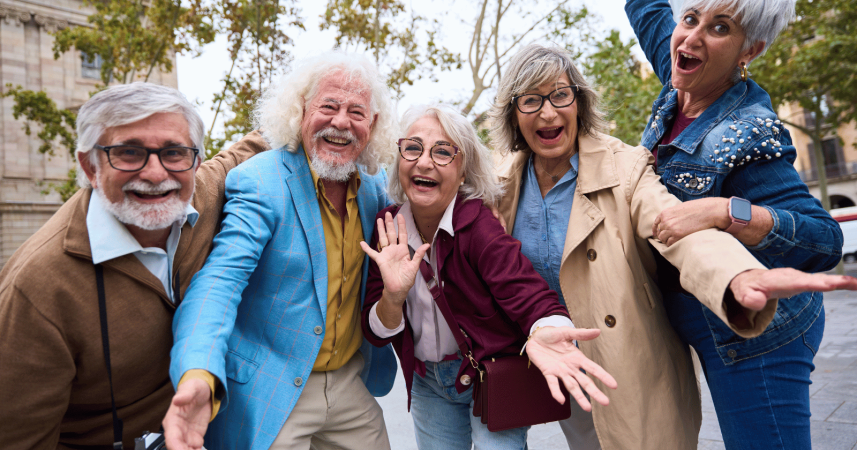
The difference between retirees who gradually disappear from group chats and those who become everyone's first call isn't age or energy.
There's a specific type of retiree who everyone gravitates toward at family gatherings. You know the one. They're engaged, curious, have stories that don't all start with "back in my day," and somehow always know about the restaurant that just opened or the documentary everyone's talking about.
My grandmother is one of these people. At 72, she's got more going on than most people half her age. And the difference between her and some of her peers who seem stuck? It's not luck or genetics. It's what she does with her time.
Retirement can go one of two ways. It can mean withdrawal, routine, and gradually shrinking social circles. Or it can mean expansion, new skills, and becoming the person everyone actually wants to spend time with. The activities you choose make all the difference.
1) You're learning something completely new
The Boomers who stay interesting are the ones who haven't stopped learning. Not taking the same watercolor class for fifteen years. Actually learning something new that challenges them.
Maybe it's a language. Maybe it's coding. Maybe it's understanding how cryptocurrency works or why everyone's suddenly into pickleball.
What matters is that they're still willing to be beginners at something. They're okay not being experts. They ask questions. They admit when they don't understand.
This keeps their brains active, sure. But more importantly, it keeps them relatable. Nobody wants to hang out with someone who stopped being curious twenty years ago.
When you're learning, you have something to talk about beyond complaints and nostalgia. You're engaged with the present, not just reminiscing about the past.
2) You actually use technology to stay connected
I've seen this divide clearly in my own family. Some relatives treat their smartphones like mysterious alien devices. Others are in group chats, sharing articles, video calling their grandkids, actually participating in family communication.
The ones everyone wants to hang out with? They figured out FaceTime. They're in the group chat. They don't need their nephew to explain everything three times.
This isn't about becoming a tech expert. It's about basic digital literacy that keeps you in the conversation. When someone shares a photo or a meme or coordinates plans in a group text, you can participate.
Technology isn't a generational divide anymore. It's a choice. And choosing to stay disconnected increasingly means choosing isolation.
The Boomers who learn enough tech to stay in touch make themselves more accessible. And accessibility matters when people are deciding who to invite to things.
3) You've maintained your sense of curiosity about other people
Ask questions. Actual questions. Not interrogations or thinly veiled judgments disguised as curiosity.
The retirees people gravitate toward are genuinely interested in others' lives. They ask about your work even if they don't fully understand it. They want to know about your hobbies, your travels, your perspective on things.
They've figured out that different doesn't mean wrong. That younger generations might actually have insights worth hearing. That their way isn't the only way.
I've mentioned this before, but one of the biggest lessons I learned in my own life was that pushing people toward your viewpoint usually backfires. The same applies here. The Boomers everyone likes spending time with aren't trying to convert anyone to their way of thinking. They're curious about how other people see the world.
This creates actual conversation instead of lectures. It makes intergenerational relationships possible. It keeps you interesting because you're genuinely interested.
4) You're physically active in social ways
Movement matters, but solitary treadmill sessions don't create the same social opportunities as group activities.
Walking clubs, hiking groups, yoga classes, tennis leagues. These create regular touchpoints with people. You're not just exercising; you're building community around shared activity.
My partner and I do regular hikes in Griffith Park on weekends, and the trail regulars we've gotten to know range from twentysomethings to seventysomethings. What brings everyone together is showing up consistently and being willing to chat while walking.
Physical activity keeps you mobile enough to do things. Social physical activity ensures you have people to do things with. That combination is what keeps retirees in the mix instead of on the sidelines.
Plus, when you're moving together, conversations flow differently. There's less pressure. More natural rhythm. Better connection.
5) You've adapted your food perspective
Food is cultural. It's connection. And the Boomers who insist everything was better "the old way" often end up eating alone.
This doesn't mean abandoning your preferences. It means being willing to try the new restaurant. Being flexible when dietary restrictions come up. Not making every meal into a referendum on changing times.
When someone suggests Thai food and you immediately launch into why American food used to be better, you're the person people stop inviting. When you're game to try things, ask questions about cuisines you don't know, and adapt when needed, you're the person people want at the table.
I work from coffee shops around Venice Beach pretty regularly, and the retired folks who become regulars are always the ones willing to try the new menu items, chat with the younger staff, and treat unfamiliar foods as opportunities rather than threats.
Food flexibility is social flexibility. And social flexibility determines who gets included.
6) You're creating things, not just consuming them
Photography. Writing. Woodworking. Cooking. Gardening. Music. Doesn't matter what it is. What matters is making something rather than just watching things other people made.
Creation gives you something to share. Something to talk about. Something that evolves and improves. It makes you a participant in culture rather than just a spectator.
When you're creating, you naturally connect with other creators. You have process to discuss. Failures to laugh about. Successes to celebrate. You're generating material for relationships instead of just consuming content alone.
I picked up photography seriously a few years back, and it completely changed how I move through the world. Now I notice light, composition, moments worth capturing. This makes me better company because I'm more present, more observant, more engaged.
The Boomers everyone wants to hang out with usually have a creative outlet. They're making something. And that makes them more interesting to be around.
7) You show up for people without keeping score
Generosity without strings attached. Help when asked. Presence without expectation of reciprocity.
The retirees people gravitate toward are reliable. They show up for birthdays, help with moves, babysit when needed, offer advice when asked. They don't constantly remind everyone of everything they've done or keep mental tallies of who owes them what.
My grandmother once drove six hours to bring me soup when I had the flu in college. She's never mentioned it since. That's the energy that makes people want to spend time with someone.
Being the person people can count on matters more than being the person with the most accomplishments to brag about. Reliability creates deep bonds. Scorekeeping creates resentment.
When you've got time in retirement, using some of it to genuinely support others makes you invaluable to your community. Not because of what you get back, but because of the relationships you build.
8) You're comfortable with not being the expert on everything
Admitting you don't know something is attractive. Pretending you know everything is exhausting for everyone involved.
The Boomers people enjoy being around have figured out that saying "I don't know, tell me more" opens conversations instead of shutting them down. They're comfortable with uncertainty. They don't need to be right about everything.
This creates space for other people's expertise and experience. It makes younger people feel heard rather than lectured. It allows for actual exchange instead of one-way information dumps.
When someone tells you about something you're unfamiliar with, responding with genuine curiosity instead of dismissal or immediate contradiction makes you someone people want to talk to. That might seem obvious, but watch how many people default to "well, actually" mode.
Being the know-it-all is lonely. Being genuinely curious is magnetic.
Conclusion
Retirement doesn't have to mean becoming less relevant or less connected. The Boomers everyone wants to hang out with prove that.
They're learning, adapting, creating, and showing up. They're curious about others. They're physically and socially active. They're generous without being martyrs. They're comfortable with what they don't know.
None of this requires dramatic personality changes. It's mostly about choices. How you spend your time. How you engage with people. Whether you treat retirement as an ending or as permission to try new things.
The retirees who become everyone's favorite didn't stumble into it. They built those relationships through consistent, intentional choices about how to show up in the world.
Your retirement can be whatever you make it. Just remember that the most fulfilling version probably involves more doing and less watching, more curiosity and less certainty, more connection and less isolation.
The choice is yours.