That dusty box in your parents' basement might be worth more than your last paycheck, and nobody's talking about it.

Add VegOut to your Google News feed. 
My grandmother kept a filing cabinet full of stamps in her Boston basement. Not the mail kind. Trading stamps from grocery stores, S&H Green Stamps mostly, collected throughout the 1960s and 70s. We'd tease her about it at Sunday dinners, calling it her "paper fortune."
Turned out she had the last laugh. A few years before she passed, she sold her entire collection to a nostalgia dealer for $4,200. Not life-changing money, but enough for a month-long trip to Ireland she'd always dreamed about.
That moment stuck with me. What we dismiss as "just a hobby" can sometimes transform into something with real financial value, especially if you've been at it for decades.
Baby Boomers are discovering this firsthand. The hobbies they picked up for pleasure, relaxation, or pure obsession are now supplementing Social Security checks, funding travel, and in some cases, becoming full-fledged retirement businesses. And they're doing it without the stress of traditional employment.
Let's look at eight hobbies that accidentally became income streams for this generation.
1) Vintage toy collecting
Remember when collecting action figures was just for kids? Boomers who held onto their Star Wars toys, Hot Wheels, or G.I. Joes are sitting on goldmines.
A mint-condition 1978 Star Wars Boba Fett figure can sell for over $2,000. Early Hot Wheels in good shape? Hundreds of dollars each. And that's not even mentioning the truly rare finds.
During my hospitality days, I worked a private dinner for a tech executive who casually mentioned he'd just sold his childhood toy collection for $47,000. He wasn't a dealer. He just kept the boxes.
The beautiful part about this hobby-turned-income is that it requires minimal active work. Most collectors already know what they have. They've cataloged it, preserved it, and now they're discovering online marketplaces like eBay, Heritage Auctions, and specialty Facebook groups where buyers are actively searching.
Some are selling their entire collections. Others are cherry-picking the most valuable pieces and keeping the rest for sentimental reasons. Either way, that dusty box in the attic just became a retirement supplement.
2) Vinyl record collections
Vinyl never really died. It just went underground for a few decades. Now it's roaring back, and Boomers who never threw out their albums are cashing in.
First pressings of classic rock albums, jazz records, and soul collections can command serious prices. A Beatles "White Album" numbered copy sold for $10,000. Original Blue Note jazz pressings routinely hit four figures.
I've got a friend from my New York days who started selling records online during the pandemic. He wasn't trying to build a business, just clearing space. Within six months, he was pulling in $1,500 a month and had buyers reaching out to him directly.
The vinyl resurgence has created a market that didn't exist even ten years ago. Younger collectors want the warmth and authenticity of analog sound. Boomers have the inventory.
The best part? Many collectors genuinely enjoy the process. Cataloging, grading condition, researching values, connecting with other enthusiasts. It's a hobby that evolved into income without losing the joy.
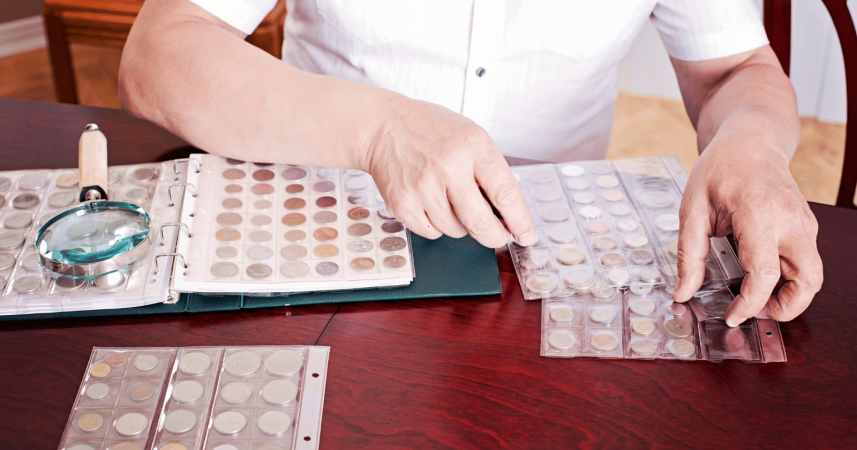
3) Coin collecting
This one's been brewing for generations, but it's hitting differently now. Boomers who collected coins as kids are finding that decades of patience have paid off handsomely.
Rare coins have appreciated significantly. But even common collectibles like state quarters, silver certificates, wheat pennies can add up when you've been accumulating them for 40 years.
The American Numismatic Association notes that the coin collecting market has grown substantially, with online platforms making it easier than ever to sell. No need to schlep to coin shows or deal with local dealers offering lowball prices.
One of my former clients mentioned he'd been gradually selling off his father's coin collection on specialized auction sites. Over two years, he'd made about $30,000. Not from rare treasures. Just from consistent, methodical collecting that someone had the discipline to maintain.
The lesson? Patience compounds in unexpected ways. What seemed like pocket change hobby in 1975 is now supplemental retirement income in 2025.
4) Antique furniture refinishing
This hobby always had practical value, but it's become a genuine income source for Boomers with the skill and the garage space.
Mid-century modern furniture is having a prolonged moment. Danish teak, Eames chairs, vintage credenzas. Pieces that Boomers remember from their parents' houses are now designer items commanding premium prices.
Those who learned furniture refinishing as a hobby are now restoring pieces they find at estate sales and flipping them for profit. The margins can be impressive. Buy a beat-up credenza for $50, refinish it over a weekend, sell it for $800.
I met someone in Austin who does exactly this. Former engineer, retired at 63, started refinishing furniture to keep his hands busy. Now he makes about $2,000 a month doing something he genuinely enjoys. He works his own schedule, takes breaks whenever he wants, and has a waiting list of buyers.
The combination of craftsmanship skills and design knowledge, things many Boomers absorbed through osmosis, has become marketable in ways they never anticipated.
5) Amateur photography
Film photography was the Instagram of its day, except it required actual skill. Boomers who spent decades perfecting their craft are finding new audiences and new income streams.
Stock photography websites, Etsy shops, local art fairs, commission work for family portraits. There are more ways than ever to monetize photography skills. And the market appreciates authenticity and experience over Instagram filters.
During my Bangkok years, I befriended an expat photographer who'd retired from corporate America. He'd been shooting landscapes as a hobby for 30 years. When he started selling prints online and through local galleries, he was shocked at the response. Within a year, photography income was covering his rent.
The barrier to entry is lower now, but that also means experienced photographers stand out. Boomers who understand composition, lighting, and storytelling have a real edge over someone who just bought their first DSLR.
Plus, this is work you can scale to your energy and interest. Shoot when you feel like it. Sell what resonates. No pressure, just supplemental income doing something you'd do anyway.
6) Handmade quilting and textiles
Quilting might seem old-fashioned, but there's a roaring market for handmade textiles. Custom quilts sell for hundreds, sometimes thousands of dollars. Vintage quilts in good condition? Even more.
Boomers who quilted for family and friends are discovering Etsy, craft fairs, and direct commissions from buyers who value craftsmanship over mass-produced items.
I remember helping coordinate a charity gala years ago where a handmade quilt auctioned for $3,500. The quilter was a retired schoolteacher who'd been making them for decades. She had no idea people would pay that much.
Now she takes commissions. Three or four a year. Enough to fund her travel without touching retirement savings.
What makes this particularly viable is that the skills are hard to replicate quickly. Machine-made quilts don't have the same appeal. The time investment, the artistry, the imperfections. Those are features, not bugs.
7) Model train collections
Model trains were never just toys. For serious collectors, they were miniature engineering projects. And now those projects are worth real money.
Vintage Lionel trains, rare European models, custom layouts. These can sell for thousands. Complete collections with original packaging? Even more.
The Train Collectors Association maintains standards for grading and condition that help collectors understand values, and there's steady demand from both nostalgic buyers and new hobbyists. Online marketplaces have connected sellers with a global audience.
A former colleague told me his father sold his model train collection for $18,000 after decades of collecting. He used the money to upgrade his RV and hit the road. The collection had been sitting in the basement for years.
The key insight here is that niche hobbies often have dedicated, passionate buyer communities. You're not selling to everyone. Just to the people who get it. And those people are willing to pay.
8) Woodworking and handmade furniture
Finally, we come to woodworking. Boomers who've been working in their garage workshops for decades are discovering their skills translate into serious income.
Custom furniture, cutting boards, wooden bowls, shelving. There's a market for all of it. Buyers appreciate the quality and permanence of well-crafted wood pieces in a world of IKEA particleboard.
Platforms like Etsy and local maker markets have made it easier to connect with customers. Commission work through word-of-mouth is common once you build a reputation.
I've watched several retired tradespeople transition from "hobby woodworker" to "small furniture business" without really trying. They make a few pieces, post photos, and suddenly have more requests than they can handle.
The income isn't just about selling finished products either. Some are teaching workshops, creating online tutorials, or selling plans and templates to other woodworkers.
What's remarkable is how this hobby provides both income and purpose. You're creating something tangible, using skills you've refined over a lifetime, and getting paid for it. That's a pretty good retirement gig.
The bottom line
The pattern here is obvious. Hobbies that required patience, skill development, and genuine interest have accidentally become valuable.
Boomers weren't collecting these things as investment strategies. They were doing it because they loved it. The financial return is almost incidental, a bonus that arrived decades later.
But there's a deeper lesson worth pulling out. In my years working with wealthy clients and running high-end kitchens, I learned that real value comes from depth, not breadth. The people who master something, who stick with it past the point where most people quit, end up with something rare.
Your hobbies aren't just ways to pass time. They're skill banks. Knowledge repositories. And sometimes, if you're patient enough, they become something more.
So what have you been collecting, building, or practicing for years without thinking about the value? Might be worth a second look.
If You Were a Healing Herb, Which Would You Be?
Each herb holds a unique kind of magic — soothing, awakening, grounding, or clarifying.
This 9-question quiz reveals the healing plant that mirrors your energy right now and what it says about your natural rhythm.
✨ Instant results. Deeply insightful.

Adam Kelton
Adam Kelton is a writer and culinary professional with deep experience in luxury food and beverage. He began his career in fine-dining restaurants and boutique hotels, training under seasoned chefs and learning classical European technique, menu development, and service precision. He later managed small kitchen teams, coordinated wine programs, and designed seasonal tasting menus that balanced creativity with consistency.
After more than a decade in hospitality, Adam transitioned into private-chef work and food consulting. His clients have included executives, wellness retreats, and lifestyle brands looking to develop flavor-forward, plant-focused menus. He has also advised on recipe testing, product launches, and brand storytelling for food and beverage startups.
At VegOut, Adam brings this experience to his writing on personal development, entrepreneurship, relationships, and food culture. He connects lessons from the kitchen with principles of growth, discipline, and self-mastery.
Outside of work, Adam enjoys strength training, exploring food scenes around the world, and reading nonfiction about psychology, leadership, and creativity. He believes that excellence in cooking and in life comes from attention to detail, curiosity, and consistent practice.
More Articles by Adam