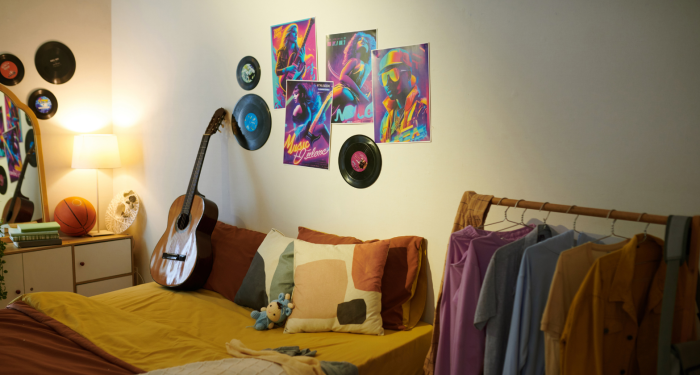
We keep trying to buy back the simplicity and slowness that past generations never realized were luxury in the first place.
When my dad tells stories about growing up in the ‘60s and ‘70s, there’s always this nostalgic sparkle in his eyes.
He talks about how he and his friends would grab their bikes, head to the park, or spend an entire afternoon fishing — no cell phones, no apps, no pressure. Just time, freedom, and a few bucks for snacks.
The funny part? Many of those same “cheap” activities are now luxury hobbies that require serious cash (and in some cases, a membership list longer than the DMV line).
It’s not that Boomers were better off — they just lived in a time when simplicity wasn’t yet commodified. They didn’t need to brand their joy or turn their hobbies into personal growth experiences.
Somewhere along the way, the everyday pleasures of the past became curated lifestyles. And the irony is, we pay big money now to feel what they once felt for free.
Let’s look at eight of those once-humble pastimes that have somehow become the playgrounds of the wealthy.
1) Golf
Let’s start with the obvious one.
Golf used to be the everyman’s weekend escape. You didn’t need much — a hand-me-down set of clubs, some second-hand balls, and a nearby public course.
My dad told me he and his friends would sneak in at twilight to hit a few holes before the sun went down. Nobody cared about scorecards or “swing metrics.” It was just something to do.
Fast forward to now: you’ve got $50,000 country club memberships, luxury gear, and entire vacation resorts built around golf culture. Even public courses charge what used to be a week’s wages.
And don’t even get me started on the tech — rangefinders, GPS trackers, launch monitors. Somehow, a slow walk through green grass turned into a data-driven sport for the affluent.
The irony? The game hasn’t changed much. Just the crowd — and the price tag.
2) Camping
Remember when camping was about pitching a tent, cooking canned beans over a fire, and sleeping under the stars?
Now it’s “glamping.” You know — luxury tents with air conditioning, Wi-Fi, and memory foam mattresses. Some even come with chefs and hot tubs.
Boomers often camped because it was cheap. A family could escape for the weekend for next to nothing — a tent, a few sleeping bags, and maybe a rented canoe. It was raw, a little uncomfortable, and memorable because of it.
These days, many people view camping as a curated, Instagram-worthy escape that costs thousands. We’ve turned a night in nature into a luxury retreat.
It’s wild how we’ve managed to commercialize the very thing meant to remind us of simplicity.
I still camp occasionally, but I notice how hard it is to truly disconnect. Even in the woods, people bring portable chargers and ring lights. Boomers didn’t camp for content — they camped for quiet.
3) Riding bikes
When I was a kid, a bike was freedom.
You didn’t think about your “carbon footprint” or “aerodynamic frame design.” You just wanted to get out and explore.
For Boomers, that sense of independence came cheap — a simple Schwinn or Huffy and a bit of pavement. You rode with your friends until the streetlights came on, and that was the curfew system.
Now? High-end road bikes can cost more than a used car. Add to that the lycra kits, carbon helmets, cycling computers, and membership in some exclusive cycling club — and suddenly “riding your bike” looks more like joining a sport for the affluent.
Even the routes are changing. Once, you could just pedal anywhere. Now, many cyclists travel to faraway countries for “cycling experiences” or $10,000 European tours through the Alps.
The strange thing is, people still chase the same feeling: wind in your face, open road, and the illusion of freedom. We’ve just overcomplicated it.
4) Vinyl collecting
Here’s one I relate to personally.
Back in the ‘70s and ‘80s, collecting records wasn’t a statement — it was just how you listened to music. Vinyl was the default. You’d flip through dusty crates in local shops and build your collection one paycheck at a time.
Now? Vinyl is back — but it’s luxury now.
Record prices have skyrocketed, new pressings can cost $50 or more, and rare editions are auctioned like art pieces. Even the turntables — once simple household gadgets — can now cost more than a month’s rent.
I’ve mentioned this before, but I love how the medium forces you to slow down. You listen intentionally. You commit to the song because flipping the record is effort.
Maybe that’s why vinyl’s revival hit the way it did. In a world where everything’s on shuffle, the idea of sitting still for a record side feels… revolutionary.
But still — there’s something strange about watching people spend thousands to recreate a listening experience that our parents had in their bedrooms for pennies.
5) Gardening
My grandmother’s backyard was a jungle of tomatoes, herbs, and the occasional sunflower.
To her, gardening wasn’t a lifestyle choice — it was just practical. You grew what you could, saved money, and ate fresh.
Now, gardening has become a symbol of sustainability and status.
You’ve got organic soil brands, raised cedar beds, designer watering systems, and $300 ceramic pots. Not to mention urban “micro-farms” run by influencers with aesthetics cleaner than hospital rooms.
Of course, there’s nothing wrong with loving plants or curating your space. But it’s fascinating how something that once symbolized frugality now represents privilege.
Even the psychology behind it is interesting. Gardening gives people a sense of control — over time, growth, and life itself. In a chaotic, uncertain world, it’s no surprise the wealthy gravitate toward something that feels grounding.
But I often think back to my grandmother’s hands — dirt under her nails, an old sun hat, and a sense of calm that no designer pot could buy. That’s the version of gardening that’s fading.
6) Fishing
There’s something profoundly calming about fishing. The patience, the rhythm, the silence.
Boomers often fished because it was cheap entertainment. You needed a rod, some bait, and a bit of time. Maybe a friend to keep you company and a cooler with sandwiches.
These days, fishing is a different scene. Fancy boats, high-tech sonar equipment, guided tours, and customized gear — it’s more of an investment than a pastime.
Even fly fishing, once a quiet river hobby, has transformed into a fashion-adjacent sport complete with designer waders and luxury lodges.
The irony? The stillness you get from fishing — the meditative quiet — doesn’t cost a thing. But we’ve attached a price to it anyway.
Maybe that’s the story of modern life in a nutshell: selling peace back to the people who forgot how to find it.
7) Photography
This one hits close to home for me.
When I first got into photography, it was because I loved capturing moments. My first camera was a beat-up film Canon I found at a flea market. I’d take it everywhere — hikes, road trips, even concerts when I was still writing music reviews.
In the Boomer era, cameras were everywhere. Families documented birthdays, road trips, and random Tuesdays. Developing film was cheap, and prints were shared over coffee tables, not social media.
Now? Photography has become both art and investment.
We have $3,000 mirrorless setups, editing software subscriptions, and workshops in Iceland that cost more than college tuition. There’s a sense of status attached to it now — who has the gear, the lens, the presets.
Don’t get me wrong — I love the craft. But it’s a bit ironic that something once done for memory’s sake has turned into a prestige pursuit.
If you want to feel grounded, try taking photos on a disposable camera for a week. No filters. No editing. Just real moments. It’s humbling in the best way.
8) Cooking at home
You’d think eating at home would always be the cheaper option. But the way we’ve dressed it up lately — not so much.
Boomers cooked because it was economical. Meals were made from scratch, often from the garden or local market. Dinner was a ritual, not a performance.
Today? Home cooking has become a lifestyle movement.
We’ve got $400 Dutch ovens, handmade Japanese knives, and sourdough starters with their own Instagram accounts. Cooking classes, high-end ingredients, and designer kitchens have elevated the act of making dinner into a kind of art form.
Even veganism — something close to my heart — has gone through this shift. What started as an ethical, accessible lifestyle has, in many places, become associated with premium products and influencer aesthetics.
Cooking can still be simple. But it takes conscious effort to keep it that way — to resist the idea that every meal has to be beautiful or brand-worthy.
Sometimes the best meal is still just a pot of soup, shared with someone you like, no photos involved.
Why this shift happened
So what changed?
Part of it comes down to the economics of attention. When something becomes rare — time, space, quiet — it becomes valuable.
Boomers didn’t see biking, camping, or gardening as special. They were just living. But in our hyper-connected, high-speed world, the slow, tactile, or analog things have become exotic.
We pay for disconnection now — literally.
There’s also the “experience economy” at play. We’re not just doing things anymore; we’re curating identities. A bike ride isn’t just exercise — it’s an expression of lifestyle. A garden isn’t just food — it’s sustainability and mindfulness wrapped up in hashtags.
I’ve noticed this shift most in cities. The fewer people have access to nature, the more they crave it — and the more they’re willing to pay for it.
It’s nostalgia, packaged and sold back to us with a luxury markup.
What we can learn from it
I don’t think this transformation is all bad.
If people are rediscovering slow living, analog hobbies, or outdoor time — even if it comes with a price tag — it’s still a step toward balance.
But it’s worth remembering: you don’t need to buy your way back into simplicity.
A bike ride is still free. So is a walk in the woods. You can start a small garden in a thrifted pot or borrow a camera from a friend.
Boomers didn’t see their hobbies as self-care or wellness rituals — they were just... life.
Maybe that’s the real takeaway here: to stop commodifying joy.
Because joy, like fishing on a quiet morning or spinning a vinyl record in your living room, was never meant to be bought.
The bottom line
The irony of modern life is that the simplest things have become the hardest to access — not because they’re gone, but because we’ve forgotten how to enjoy them without packaging them as luxury.
The good news? You don’t need a high-end tent, a thousand-dollar camera, or a golf membership to feel alive.
You just need time — and maybe a willingness to live a little slower, the way Boomers once did without realizing how lucky they were.
What’s Your Plant-Powered Archetype?
Ever wonder what your everyday habits say about your deeper purpose—and how they ripple out to impact the planet?
This 90-second quiz reveals the plant-powered role you’re here to play, and the tiny shift that makes it even more powerful.
12 fun questions. Instant results. Surprisingly accurate.