These simple pleasures may hold the real secret to staying sharp, calm, and ageless at heart.
We spend so much time searching for anti-aging secrets in creams, supplements, and serums that we forget one of the simplest truths: your daily habits play a much bigger role in how old you feel than the number on your birthday cake.
Psychology has a lot to say about that. In fact, many of the activities that preserve emotional vitality also help slow physical aging.
Here are seven simple, science-backed pastimes that can keep you feeling younger, sharper, and more alive, inside and out.
1. Walking in nature
There’s something about being surrounded by trees that resets everything. When I walk in the small park near our house, I always start with a head full of to-do lists and come home feeling like my mind has been rinsed clean.
Science supports that feeling. Research from Frontiers in Psychology found that spending at least 20 minutes outdoors in nature reduces stress hormones like cortisol, which speeds up biological aging when chronically elevated.
Natural environments restore the part of your brain responsible for focus and self-control. When you step away from screens and constant stimulation, your brain recharges in the background. It’s like giving your prefrontal cortex a vacation.
You don’t need a mountain trail to benefit. Even a city stroll where you consciously notice the trees or the changing light can trigger that same restorative effect.
The secret lies in the noticing. Paying attention trains your mind to be present, and presence is the opposite of stress, the true aging accelerator.
2. Gardening or tending to plants
Speaking of nature, getting your hands in the soil does more than beautify your surroundings. It can literally ground you in the psychological sense.
Studies published in Ecopsychology have shown that gardening reduces symptoms of anxiety and depression and boosts overall life satisfaction.
Psychologist Miles Richardson from the University of Derby describes this as “nature connectedness.” When you interact with living things, even small ones like houseplants, your brain releases serotonin, the neurotransmitter linked with happiness and well-being.
That serotonin boost is the reason many people find pruning, watering, or repotting soothing after a stressful day.
When I started growing herbs on our kitchen windowsill, I didn’t expect it to feel so rewarding. Watching a basil sprout unfurl or a tomato ripen connects me to something ancient and steady. Plants move at their own rhythm. They remind us that growth takes time, and that kind of patience does wonders for our nervous systems.
3. Journaling about gratitude (not goals)
The habit of writing things down can be medicine for the mind. But I'd like to add, the kind of writing matters.
Gratitude journaling, in particular, shifts the brain from problem-solving mode to appreciation mode, lowering stress and increasing life satisfaction.
Psychologist Robert Emmons, one of the leading researchers on gratitude, found that people who regularly write about what they’re thankful for show higher levels of optimism and better immune function. In his studies, those who kept gratitude journals reported fewer aches and pains and even slept better.
I myself keep a small notebook on my nightstand, nothing fancy. Some nights I write about something big and other nights it’s just the smell of coffee in the morning. The point isn’t to list achievements or future goals. It’s to pause and acknowledge what already nourishes you.
Gratitude softens the nervous system and helps your body release the constant need to chase more.
4. Learning something new for fun, not achievement
Most of us associate learning with grades, certificates, and the silent pressure to prove ourselves.
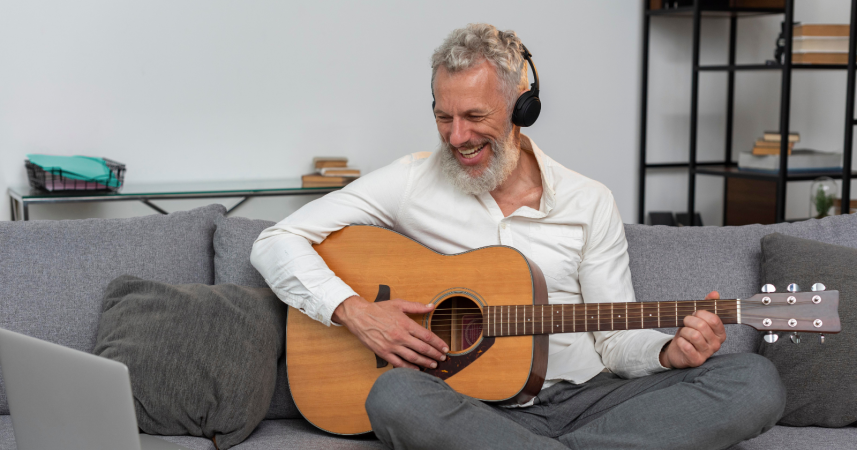
But real, joyful learning, the kind done purely for curiosity, can make your brain younger. Neuroscience research shows that novelty encourages neural plasticity and mental flexibility. These are both crucial for keeping the brain resilient against aging.
Don't worry about getting it perfectly; the whole idea of lifelong learning is to have a beginner's mindset. Personally, this mindset has helped me let go of my fussiness and desire to have everything done perfectly so I can simply enjoy the process.
As Rudá Iandê writes in his book Laughing in the Face of Chaos: A Politically Incorrect Shamanic Guide for Modern Life, "When we let go of the need to be perfect, we free ourselves to live fully — embracing the mess, complexity, and richness of a life that's delightfully real.”
His insights remind me how much of our learning is motivated by self-judgment. So what if we learned for the sheer joy of it instead?
When we engage in learning for enjoyment rather than perfection, our brains stay adaptable and creative well into old age.
5. Spending time near water
There’s a reason so many of us feel drawn to the sea, lakes, or even a quiet fountain.
Psychologist Wallace Nichols, author of Blue Mind, describes water as a natural trigger for calm awareness. The sound and movement of water activate the parasympathetic nervous system, lowering heart rate and increasing feelings of safety.
Being close to water seems to balance our overstimulated minds — something that directly impacts cellular aging.
Whenever I feel mentally cluttered, I drive to the nearby bay and sit on the rocks, letting the rhythm of the waves do what no playlist can. That steady movement reminds the body that life flows, and that everything changes. Even short encounters with water seem to wash away emotional static, leaving space for calm reflection.
6. Doing puzzles or crafts with your hands
If you’ve ever lost track of time while doing a jigsaw puzzle or crocheting a scarf, you’ve experienced what psychologist Mihaly Csikszentmihalyi called flow.
Flow is a deeply focused, satisfying state where you’re fully immersed in an activity, and research shows it’s good for both the mind and body. People who regularly experience flow have lower stress hormones, better mood regulation, and improved immune response.
Engaging your hands in detailed, repetitive motion like stitching, sculpting, or building models anchors your attention in the present moment. It’s mindfulness disguised as fun.
Such physical engagement shifts your brain’s activity away from the worry centers and into the sensory regions, creating a natural sense of calm.
7. Playing a team sport or group game
Lastly, let's talk about the huge impact of social connection on aging well. According to psychologist Julianne Holt-Lunstad from Brigham Young University, strong social connections reduce mortality risk by as much as 50 percent.
Team sports combine physical movement, laughter, and social bonding — a triple boost against aging.
Whether it’s a weekend volleyball game or trivia night with friends, shared play keeps the brain flexible and the heart happy. Activities that involve coordination and communication enhance dopamine and oxytocin, the “connection hormones” that promote resilience and well-being.
I recently joined a neighborhood badminton group. We’re a mix of parents, retirees, and teenagers, all cheering for each other in a way that makes the score almost irrelevant. What matters is the energy — that contagious sense of belonging that reminds us we’re part of something larger.
Final thoughts
If you look closely, the activities that slow aging share a common thread: presence.
Whether you’re walking through trees, writing in a gratitude journal, or laughing with others over a missed serve, you’re stepping out of autopilot and into life.
Aging gracefully isn’t about defying time but deepening your connection to it. When you engage with your world through curiosity, honesty, and play, your body receives the message that it’s safe to thrive.
And perhaps that’s the most beautiful kind of youth — the one that glows quietly from within.
What’s Your Plant-Powered Archetype?
Ever wonder what your everyday habits say about your deeper purpose—and how they ripple out to impact the planet?
This 90-second quiz reveals the plant-powered role you’re here to play, and the tiny shift that makes it even more powerful.
12 fun questions. Instant results. Surprisingly accurate.