Once certain hobbies shift your perspective, going back to your old normal becomes impossible.
A few years ago, I picked up watercolor painting on a whim.
Nothing serious. Just something to do on weekends when I was bored. I watched some YouTube tutorials, bought some supplies, started messing around with colors and brushstrokes without any real goal in mind.
And then something weird happened. I started noticing things I'd never paid attention to before. The way light hits water at different times of day. Color combinations in sunsets that I used to just glance at and move on from. The textures in everyday objects that suddenly seemed worth examining.
Suddenly, my house felt dull. My daily routine felt gray and monotonous. My whole life felt like it needed more... something. More beauty, more intention, more of whatever that spark was that I felt when I was painting.
That's when I realized: certain hobbies don't just fill your time. They change what you're willing to accept from life. They raise your standards in ways you don't see coming, and once that shift happens, there's no going back to how things were before.
Here are the hobbies that do this:
1. Traveling (even locally)
Travel ruins you in the best possible way.
I don't mean fancy international trips, though those count too. I mean any kind of travel where you see how other people live.
A weekend in a different city where people move at a different pace. A road trip through small towns where the priorities seem completely different from yours. Even exploring neighborhoods in your own area that you've never visited before.
You see people living differently and prioritizing different things. Building their lives around values that might be completely opposite to yours, and somehow they seem just as happy, if not happier.
And suddenly you start questioning everything. Why do I work so much when people in that beach town seem perfectly content with less? Why do I live somewhere I can't afford a decent apartment when I could probably live better somewhere else? Why am I rushing through life like it's a race when I just watched people spend their entire afternoon at a cafe, talking and laughing?
The point is, travel shows you options. And once you know options exist, once you've seen proof that people are out there living completely different lives and making it work, settling for what you've always known feels a lot harder.
2. Reading widely
Books are dangerous, and I mean that in the best way possible.
Fiction novels drop you into worlds beyond what you know (and make you more empathetic too, according to research). Memoirs take you inside someone's completely different reality. Essays challenge your assumptions and ways of thinking.
For instance, I read this book about a woman who quit her corporate job to live on a farm and grow her own food and spend her days outside with her hands in the soil. I'm not a farm person at all. I like cities, I like convenience, I like being able to order takeout at midnight.
But reading about her life made me realize how disconnected I felt from everything. How much time I spent indoors, staring at screens, feeling vaguely unsatisfied but unable to pinpoint why.
Reading widely exposes you to possibilities you didn't know existed. Different career paths that never crossed your radar. Different relationship structures that work for people even though they're nothing like what you grew up thinking was normal. Different definitions of success that have nothing to do with money or status.
And then you look at your own life and think: wait, why am I doing it this way? Is this what I actually want, or is this just what I thought I was supposed to want?
Once you see what's possible through other people's stories, your current situation might start feeling like a choice you're making by default rather than intention. And that realization changes everything.
3. Cooking from scratch
This one sneaks up on you in a way you don't expect.
You start cooking at home to save money or eat healthier or because you saw some appealing recipe online. You follow some recipes, learn some techniques, figure out how flavors work together. Nothing dramatic, just gradually getting better at making meals.
And then you can't eat at mediocre restaurants anymore. I'm serious about this. Once you know what properly seasoned food tastes like or how fresh ingredients are supposed to work together, you can't go back.
That pasta you used to love from the chain restaurant is going to taste like cardboard now. That frozen meal you'd microwave after work because it was easy? You can taste all the preservatives and shortcuts, and it will likely be kind of depressing.
But it's not just about food quality. It's about standards across the board. If you're willing to put time and care into your meals, if you're willing to seek out good ingredients and learn proper techniques, suddenly you start noticing where else in your life you're accepting low quality just because it's convenient or familiar.
Your job that drains you. Your relationships that feel one-sided. Your living space that you've never really made your own. All of it gets measured against this new baseline of "I deserve better than this, and I'm willing to put in effort to get it."
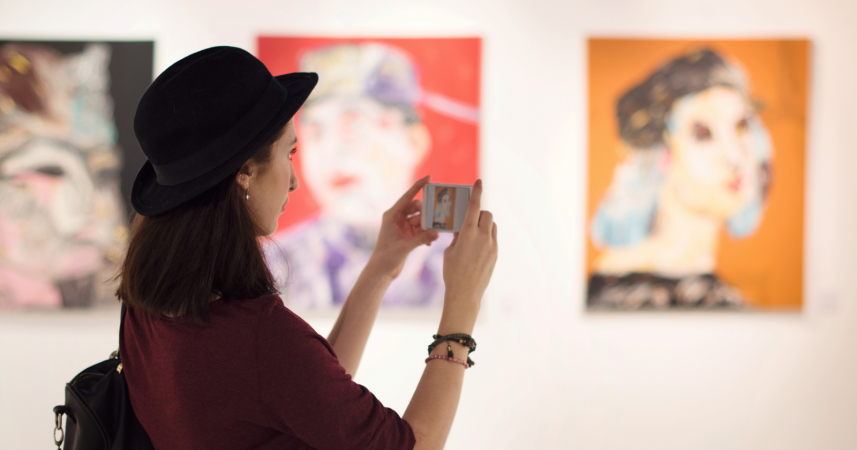
4. Visiting museums and galleries
I started going to art museums in my 20s, mostly because they're free on certain days and I was broke and needed something to do that didn't cost money.
But something shifted in me after a few visits. I started noticing design everywhere I went.
Good design that made spaces feel intentional and welcoming. Bad design that made you feel uncomfortable without quite knowing why. Lazy design that showed nobody really cared about the end result.
That apartment complex with the terrible proportions that make it look like it's squatting. The restaurant with clashing colors that put you on edge even though the food is decent. The furniture store selling mass-produced garbage that's pretending to be stylish but falls apart after six months.
Once you train your eye to see beauty and intention in art, you can't unsee ugliness and thoughtlessness everywhere else. You develop a kind of refinement that you carry with you everywhere.
Visiting galleries regularly doesn't just teach you about art history or famous painters. It teaches you that your surroundings matter, that beauty and intentionality in your daily environment actually affect how you feel, how you think, how you move through your day.
5. Hiking or spending time in nature
Here's something nobody warns you about: spending regular time in nature makes cities feel suffocating.
I started hiking on weekends a couple years ago. Nothing intense or hardcore, just local trails within an hour's drive. Getting out of the concrete jungle for a few hours, breathing different air, hearing something other than traffic and sirens.
And then going back to my home in the city started feeling wrong in a way I couldn't quite articulate at first.
The constant noise that never stops, even at 3 AM. The crowds everywhere you go. The lack of green space, or the sad little parks that try but can't quite deliver. The air that never quite feels fresh no matter what time of day it is.
I'd never noticed these things before, or maybe I'd noticed but accepted them as normal, as just the trade-off for city living and all the opportunities and conveniences that come with it.
But once you spend time somewhere quiet, where you can actually hear yourself think and where the air is free of exhaust and pollution, you start questioning why you're choosing this particular set of trade-offs.
People who hike regularly often end up moving, or at least restructuring their entire lives to spend more time outdoors. Not because they become granola-eating nature purists, but because once your body remembers what peace feels like, it stops accepting constant stimulation and noise as normal or necessary.
6. Learning a craft or skill
My neighbor took up woodworking in his garage a few years back.
He started making simple cutting boards as gifts, then he graduated to tables and chairs. Then full cabinets with intricate joinery that took weeks to complete.
Now he can't walk into a furniture store without getting visibly annoyed. He sees the shortcuts everywhere, the cheap materials pretending to be quality hardwood. The complete lack of craftsmanship or care, just mass production optimized for profit margins.
That's what happens when you learn to make things with your hands. You develop an eye for quality that you can't turn off.
You see the difference between something mass-produced in a factory and something crafted with intention and skill. Between something designed to break in two years so you'll buy a replacement and something built to last generations.
And suddenly all the cheap, disposable stuff in your life feels insulting. Like someone thought you wouldn't notice or wouldn't care about the difference.
This applies to any craft, really. Pottery, knitting, leatherwork, photography, whatever. Once you understand the skill and time and attention required to make something well, you can't tolerate poorly made things the same way you used to.
Your standards shift completely. You'd rather save up for months to buy one quality item than buy ten disposable versions that'll end up in a landfill.
7. Meditation or yoga
I resisted meditation for years because it seemed too woo-woo, too much like something that wouldn't actually help with anything concrete. Then I finally tried it, just ten minutes a day using a free app, mostly because I was desperate and out of other options.
And within a month, I couldn't tolerate my stressful job the same way anymore. Not because meditation made me less resilient or less capable of handling pressure. Because it made me aware of how much unnecessary stress I was accepting as normal, as just part of adult life.
When you spend time in stillness regularly, even just a few minutes, you notice chaos more acutely. You feel stress in your body instead of just pushing through it and ignoring the signals. You become aware of what you're actually experiencing instead of just surviving it.
These practices raise your standards for peace. For mental clarity and emotional stability. For what you're willing to tolerate in your environment and relationships and daily existence.
Once you know what calm feels like, once you've experienced what it's like to not be constantly anxious or wound up, you stop accepting chaos as inevitable or normal.
The bottom line
Here's the uncomfortable truth about these hobbies: they might make you restless.
They might make you dissatisfied with parts of your life that felt perfectly fine before. They might make you want to change things that seemed unchangeable, that you'd accepted as just the way things are. And that can be genuinely unsettling when it happens.
Because once you raise your standards, you can't lower them again. Once you've tasted better food, seen beautiful art, felt peace in nature, learned what quality craftsmanship looks like, experienced what calm feels like in your body, you can't go back to accepting less.
And yes, that can be inconvenient. It can make you feel like you're suddenly too picky or too demanding or too hard to please. It can create tension when the life you've built no longer matches the standards you now have.
But here's what I think: that restlessness is good, even when it's uncomfortable.
It means you're paying attention to your life instead of sleepwalking through it.
It means you're not just accepting whatever gets handed to you or whatever defaults society prescribed.
It means you're actually building a life that matches your standards instead of just existing in whatever circumstances you landed in.
So if one of these hobbies is calling to you, if something on this list sparked something inside you, try it. Even if it seems random or impractical or like you don't have time for it.
Just know that it might change you. It might raise your standards in ways that make your current life feel too small or too compromised or too far from what you actually want.
That's a great use of your free time, don't you think?