Taking a cool trip down memory lane just shows how connected our childhood to our present actually is.
Childhood looks simple from a distance.
If you zoom in, those hours you spent tinkering, drawing, or running around the neighborhood weren’t just filler.
They were quiet rehearsals for the adult you became.
Here are seven childhood hobbies that quietly trained your brain, tuned your values, and still influence your choices today:
1) Building things
Whether it was LEGOs, cardboard forts, plastic models, or that questionable “robot” made of tape and bottle caps, building trained more than your hands.
It trained your mind to think in systems.
Little builders learn to visualize outcomes before they exist; you had to imagine a finished structure, then reverse-engineer the steps to get there.
That’s proto-project management.
It’s also early design thinking: Try, test, and tweak.
You also learned constraints: Not enough blue pieces? You improvise with red. Missing a roof? You demolish a wall.
That mindset—solving within limits—translates straight into adult life.
Budgets, timelines, competing priorities… the skills rhyme.
If you built a lot, you probably carry a bias for action.
You’d rather make a rough version and iterate than overthink in the abstract.
You trust prototypes more than hypotheticals.
Personally, I grew up obsessed with assembling little synth kits and rickety skateboard ramps.
Today, every big decision starts for me with a “minimum viable version.”
I’ll mock up a photo series before committing to a full shoot, or outline a piece before I obsess over cadence.
The habit is the same: Build something small to see what’s real.
2) Reading adventures
Bookworms weren’t just escaping. You were rehearsing empathy and attention.
When you spend afternoons inside a story, you practice taking someone else’s perspective.
You learn how motives collide and how people rationalize.
That “character theory of mind” shows up later as social fluency: Reading rooms, spotting tension, and understanding why people defend their choices.
Reading also built your focus muscles.
That’s gold in a notification-hungry world.
If you can still get absorbed in a chapter, you can get absorbed in your work.
Deep work is just grown-up story time with deadlines and, let’s be honest, the best readers became excellent pattern-spotters.
You learned to connect Shakespeare to a tweet, or a sci-fi premise to an office policy.
That cross-pollination is creativity on demand.
If you weren’t a big reader, you might have gotten similar gains from long-form videos, comics, or even narrative video games.
3) Drawing and doodling
People think doodling is aimless—it’s not, because it’s a backdoor into thinking.
Kids who sketch learn to externalize ideas quickly.
A blank page becomes a sandbox for possibilities.
The act of drawing lowers the pressure to be “right” and raises the permission to explore.
That loop—see, try, adjust—teaches visual problem-solving.
In adult life, it shows up as the ability to whiteboard a plan, map a messy process, or outline a talk without getting precious.
You get comfortable with ugly first drafts.
There’s also a regulation piece.
Doodling calms the nervous system as it gives busy hands a job so your mind can roam.
As an adult, you might find yourself drawing boxes and arrows during meetings and thinking, “This helps.”
It does; in my case, sketching contact sheets before a shoot helps me see the rhythm of a series.
I’m not married to the marks; I’m using them as scaffolding for judgment.
4) Make-believe worlds

Remember playing house, running a “restaurant” in the backyard, or using couch cushions as a pirate ship?
Pretend play wasn’t just cute—it was a training ground for leadership, negotiation, and creativity under constraints.
In make-believe, you had to recruit friends into a shared world.
That meant pitching a vision: “You be the captain, I’ll be the navigator, and the dog is a sea monster.”
You learned fast that clear roles avoid mutiny.
Pretend also taught rule-making and rule-bending.
You negotiated boundaries—what counts as “lava,” where the “shore” begins.
As adults, we call that stakeholder alignment and scope definition.
There’s a resilience piece too.
The world breaks your rules all the time and people don’t follow scripts.
Make-believe taught you to adapt the story mid-scene—like if a parent called you in for dinner, you figured out a cliffhanger.
That flexible framing helps you pivot at work without spiraling.
If you were the kid who always said, “Let’s play this,” you might still be the de-facto convenor.
You set agendas, frame problems, and get people moving with a narrative.
5) Team sports
Even if you hated wind sprints, sports gave you a blueprint for collaboration that’s hard to learn anywhere else.
You discovered roles matter.
Strikers, defenders, goalies—different strengths, one outcome.
You learned to trust others to do their part while you do yours.
That’s basically how sane teams ship anything.
You also learned how to lose without collapsing.
Games gave you fast feedback wrapped in ritual.
You shake hands, you learn, you go again.
As adults, that’s how we metabolize setbacks. We separate the result from our identity, and then there’s the practice paradox.
Sports made it obvious that consistency beats talent when talent doesn’t train.
That principle sneaks into everything: writing daily, saving slowly, choosing veggies most of the time (yes, I’m vegan; no, I won’t preach).
Small reps compound.
If you never played team sports, you might have found the same lessons in music ensembles, theater, or debate.
Any group pursuit with roles and a scoreboard works.
6) Collecting things
Stamps, rocks, basketball cards, rare game items—collecting looks like hoarding to outsiders.
However, beneath the piles is a beautiful stack of cognitive skills.
Collectors learn classification.
You notice tiny differences, create categories, and argue with yourself about edge cases.
That’s analytical thinking disguised as fun.
Later, it helps you evaluate job candidates, choose software, or compare neighborhoods with more nuance than “good” or “bad.”
You also build patience—collections grow slowly—and you pass on the flashy item today because you know a better one will surface.
That’s delayed gratification with training wheels, and you learn story.
Every item has provenance and context so, together, they tell a narrative about taste, time, and values.
As adults, we do the same with our habits and purchases: we curate a life.
I collected mixtapes and I’d spend hours labeling, noting track transitions, and rating live bootlegs from tiny venues.
Today, when I’m scoping a writing series or a photo project, I still think like a curator.
7) Exploring outside
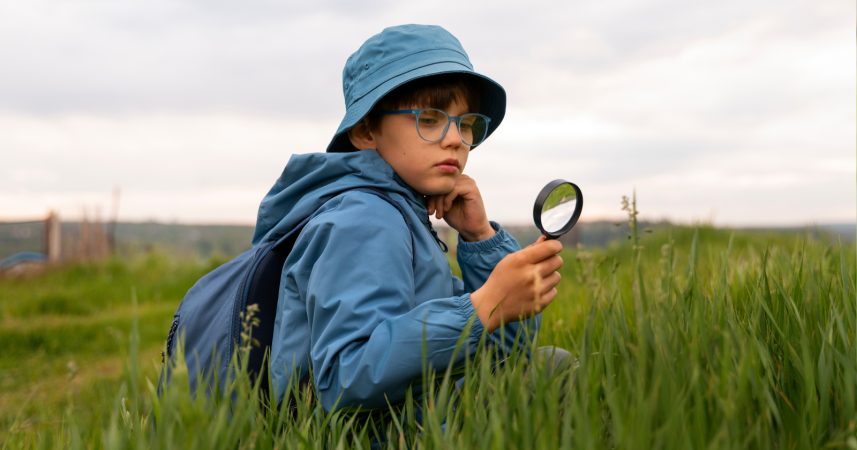
Climbing trees, flipping over rocks, biking to nowhere, building trails—outdoor play was a crash course in risk, awe, and respect for systems bigger than you.
Nature exploration taught you to calibrate danger.
The first scraped knee hurt, but it also taught you where your edges are.
Adults who did a lot of outdoor play often have a healthier risk sense.
They can tell the difference between scary and unsafe, which matters when you’re choosing careers, investments, or relationships.
Spending time outside also trained your attention to widen and soften.
You notice patterns—where water pools, where birds gather, how light shifts.
That observational mode transfers directly to creative work and leadership.
You see weak signals earlier. For me, long walks with a camera are still a lab.
I shoot textures, shadows, and the way plants find their way through cracks in sidewalks.
It’s not about perfection—it’s about noticing.
That muscle keeps me grounded when I’m buried in screens and headlines.
Outdoor kids also pick up a systems view.
You can’t pull one thread without touching others.
Food choices affect soil, water, and communities.
This is one reason I went vegan years ago: It aligned with the systems I wanted to support—compassion, sustainability, and the least harm within imperfect choices.
If you explored creeks as a kid, you might feel that same tug toward stewardship now, even if it shows up as composting or choosing the bus.
The bottom line
Adults rarely “play,” so we forget the environments that shaped us.
Fortunately, we have the choice to recreate out childhood in present time.
If drawing helped you think, put a sketchpad near your laptop; if collecting made you patient, set up a wishlist with rules before you buy; if outside reset your brain, make a 20-minute walk non-negotiable after lunch.
Your childhood hobbies weren’t random—they were rehearsals.
Figure out which ones trained you, keep the gifts, and rewrite the parts that don’t serve you anymore.
Immerse in it and take a cool trip down memory lane when you can!
What’s Your Plant-Powered Archetype?
Ever wonder what your everyday habits say about your deeper purpose—and how they ripple out to impact the planet?
This 90-second quiz reveals the plant-powered role you’re here to play, and the tiny shift that makes it even more powerful.
12 fun questions. Instant results. Surprisingly accurate.