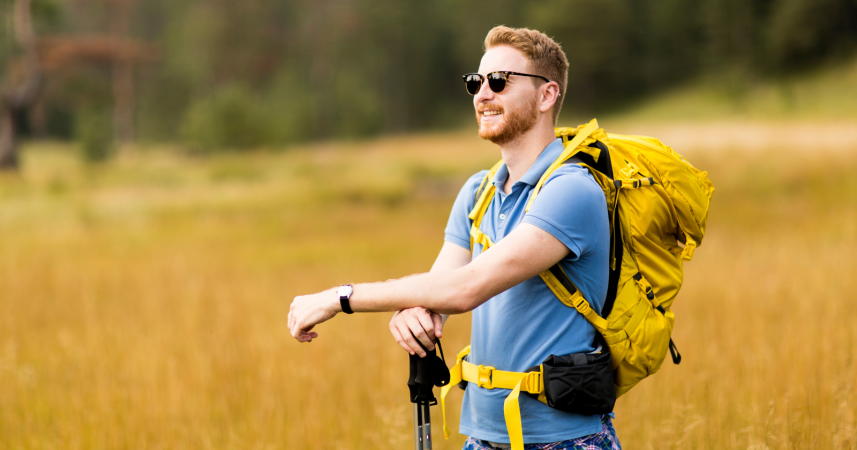
For some, hiking is a social event filled with chatter, shared snacks, and group photos at the summit. But for others, hiking is a solitary pursuit—a quiet conversation between the self and the wilderness.
Hiking alone is both simple and radical.
There’s no one to push you forward, no one to distract you with conversation, no one to blame when you take the wrong turn.
It’s just you, your thoughts, and the steady rhythm of your footsteps.
For many people, this idea sounds intimidating—or even reckless.
But for those who embrace it, solo hiking becomes a mirror that reflects hidden qualities they might not display anywhere else.
Here are eight rare strengths that people who hike alone often share, according to psychology.
1. Remarkable self-reliance
When you hike alone, there’s no safety net.
If you get lost, you find the trail yourself.
If your water runs low, you ration it carefully.
Every decision, big or small, is yours alone to make.
This kind of experience builds a deep sense of self-reliance.
Psychologists call this internal locus of control—the belief that you have power over your own outcomes rather than relying on external forces.
People who consistently hike solo tend to strengthen this belief, gaining confidence not only on the trail but in everyday life.
2. Comfort with solitude
Many people avoid being alone because they equate it with loneliness.
But solo hikers understand the difference between being lonely and being at peace in their own company.
Hiking alone offers hours of uninterrupted quiet, where thoughts can rise and settle like leaves on a stream.
This comfort with solitude reflects emotional maturity.
It shows that you don’t need constant stimulation or validation to feel whole.
According to research on mindfulness, time spent alone in nature can reduce anxiety and increase overall well-being by encouraging deeper self-reflection.
For solo hikers, this isn’t just theory—it’s a lived experience.
3. Strong decision-making skills under pressure
Group hikes often involve shared decision-making.
But when you’re alone, every choice rests on your shoulders.
Which trail to take, when to turn back, how to respond to unexpected weather—there’s no committee to weigh in.
Over time, this strengthens your ability to make clear, confident decisions under pressure.
You learn to assess risks quickly and trust your instincts.
This skill transfers seamlessly to other areas of life, from career challenges to personal relationships.
Because once you’ve navigated a tricky descent alone in fading daylight, a difficult meeting at work feels far less daunting.
4. A rare kind of resilience
Nature is unpredictable.
A solo hiker knows this better than anyone.
There will be days when the trail is washed out, the weather turns suddenly, or exhaustion creeps in miles before the end.
Continuing through these moments requires grit.
Psychology describes resilience as the ability to recover and adapt in the face of adversity.
Each solo hike becomes a quiet training ground for this trait, teaching you how to stay calm, problem-solve, and keep moving forward when things get tough.
The challenges you face alone make your victories that much sweeter.
5. Deep respect for boundaries—yours and nature’s
Hiking solo demands careful attention to limits.
You learn how far your body can go before fatigue sets in, how much daylight you need to safely return, and when a trail simply isn’t worth the risk.
This awareness cultivates a deep respect for boundaries.
Not just physical ones, but emotional ones too.
People who hike alone often carry this skill into other parts of life, setting healthier limits with work, relationships, and commitments.
It’s a quiet strength that others notice, even if they can’t quite name it.
6. Exceptional focus and presence
When you’re with a group, distractions are constant.
Conversations, jokes, and shared snacks can keep your mind buzzing.
But hiking alone sharpens your focus.
You notice the crunch of leaves beneath your boots, the way light filters through the trees, the subtle shift in air temperature as you gain elevation.
This deep presence is similar to what psychologists call flow state—a mental zone where you’re fully immersed and engaged in the moment.
Solo hikers often reach this state naturally, experiencing a sense of calm and clarity that’s hard to find anywhere else.
7. The courage to be misunderstood
Choosing to hike alone sometimes confuses or worries others.
Friends and family might question your safety, your motivations, or even your sanity.
It takes courage to keep doing it anyway.
This strength isn’t about recklessness—it’s about the willingness to follow your own path, even when it doesn’t make sense to those around you.
Solo hikers often develop a quiet confidence rooted in self-knowledge.
They don’t need everyone to approve of their choices.
They simply need to trust themselves.
That kind of courage is rare—and powerful.
8. A unique form of gratitude
Hiking alone strips life down to its essentials.
When you’re miles from civilization with only what you carried on your back, you start to appreciate the simple things: clean water, steady breath, warm sunlight on your skin.
This perspective fosters a unique form of gratitude.
It’s not about grand gestures or dramatic epiphanies.
It’s about noticing small, beautiful moments and feeling thankful for them.
People who cultivate this kind of gratitude tend to experience greater happiness and life satisfaction, according to psychological studies on positive emotion.
For solo hikers, it becomes a way of life, shaped by countless quiet hours on the trail.
The bigger picture
Solo hiking isn’t for everyone.
It requires preparation, awareness, and a willingness to face discomfort head-on.
But for those who embrace it, the rewards go far beyond physical fitness or scenic views.
Each journey into the wilderness becomes a journey inward, strengthening qualities that few people ever fully develop.
These rare strengths don’t just make you a better hiker.
They make you a more resilient, focused, and grounded human being.
Closing thought
When someone chooses to hike alone, it may look like solitude from the outside.
But inside, it’s a powerful act of growth.
Every step taken in silence builds skills and perspectives that ripple into the rest of life.
So the next time you see a lone figure on the trail, don’t just admire their independence.
Recognize the quiet strength it takes to walk that path—both on the mountain and far beyond it.