The best changes don't announce themselves - they just quietly make room for what matters.
Last week, I watched a twenty-something at my local café pull out a small wooden hoop stretched with fabric and start stitching.
Not on a phone. Not half-watching a screen. Just needle, thread, and the slow pull of concentration.
She worked on it for an hour, occasionally sipping her oat latte, completely absorbed.
It struck me as the kind of scene my grandmother would recognize instantly, but one I hadn't expected to see in 2025.
Yet here we are, living in the fastest, most connected era in history, and younger people are gravitating toward pastimes their grandparents would call normal.
The slower things get squeezed out of modern life, the more appealing they become.
Here are eight old-fashioned activities making a surprising comeback.
1. Vinyl record collecting
Vinyl should be obsolete.
Streaming gives you millions of songs instantly, with no storage space, no dust, no skipping needles.
Yet record sales have grown for 17 consecutive years, with younger buyers leading the surge.
What's driving it?
Partly nostalgia for an era they never lived through, but mostly the ritual.
You can't shuffle vinyl. You have to choose an album, drop the needle, and commit.
There's a tactile weight to it, flipping through crates at a record shop, reading liner notes, watching the disc spin.
Music becomes an event again, not background noise.
A friend in her late twenties has a modest collection—maybe 40 records—and she treats Saturday listening sessions like a reset button.
No phone. Just sound filling the room.
2. Film photography
Digital cameras are sharper, faster, and infinitely more forgiving.
So why are film cameras selling out on secondhand markets and developing labs reopening?
Because film makes you slow down.
You get 24 or 36 shots per roll, and each one costs money to develop.
That limitation forces intention. You frame carefully. You wait for the right light.
You don't know what you got until days later when you pick up the prints.
There's something grounding about the mechanics too: winding the film, hearing the shutter click, the physical proof that you captured a moment.
In a world of instant everything, film photography asks you to be patient and present.
3. Hand-writing letters
Email is faster. Texts are easier.
Yet stationery sales are climbing, and younger people are rediscovering the pleasures of pen and paper.
Part of it is the permanence.
A handwritten letter feels weighted with care in a way a quick text never will.
You have to think about what you want to say before you commit ink to paper.
There's no delete button, no autocorrect. Just your thoughts, your handwriting, and the act of choosing someone worth the time.
I know a couple who lives across the country from each other and still writes letters once a month.
Not because they have to—they text daily—but because those letters mean something different.
They're artifacts. Evidence of attention.
4. Needlework and embroidery
Cross-stitch, embroidery, needlepoint—activities once relegated to grandmother's parlor—are now trending on social media.
Young people are stitching everything from traditional florals to profane phrases on throw pillows.
The appeal is straightforward: it's meditative, portable, and produces something tangible.
Each stitch is a tiny decision, a small completion.
In an economy where so much work feels abstract—emails sent, spreadsheets updated, meetings attended—making something with your hands offers proof of effort.
Plus, it's forgiving. Mistakes can be undone. Progress is visible.
And when you finish, you have an object that didn't exist before you sat down.
5. Sourdough bread baking
Sourdough had a pandemic moment, but it's stuck around longer than Zoom happy hours.
Younger bakers are tending starters like pets, learning hydration ratios, and posting crumb shots with the pride of new parents.
Why sourdough and not, say, banana bread?
Because it demands attention. You can't rush fermentation.
You have to feed your starter, watch the dough, learn to read the rise.
It's a practice, not a recipe.
And when it works—when you pull a crackling, golden loaf from the oven—it feels like alchemy.
There's also something quietly rebellious about making bread from scratch in a world optimized for convenience.
It's slow food in the most literal sense.
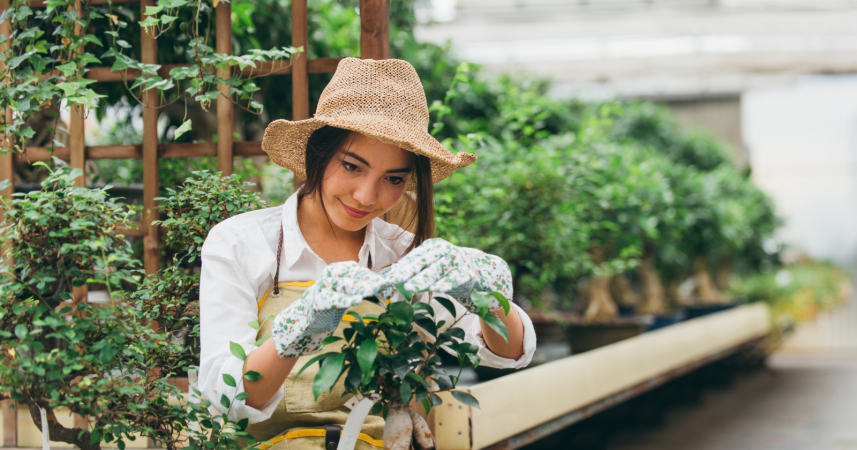
6. Vegetable gardening
Container gardens on apartment balconies. Backyard plots.
Community garden plots with years-long waitlists.
Younger people are growing their own tomatoes, basil, and peppers, often with no childhood farming experience to draw from.
Part of it is practical—grocery prices keep climbing.
But there's more to it.
Gardening connects you to something older than apps and algorithms.
You plant seeds, tend them, and watch them grow on their own schedule, not yours.
The tomatoes ripen when they're ready, not when you want them to.
A neighbor in his early thirties spends his evenings in a small raised bed, pulling weeds and checking for pests.
He says it's the only part of his day where nothing is urgent.
7. Board games and jigsaw puzzles
Board game cafés are packed. Puzzle sales have surged.
Games that require face-to-face interaction and zero Wi-Fi are thriving.
The reason is obvious once you see it: these activities force presence.
You can't scroll while playing Catan or assembling a 1,000-piece landscape.
You're either in or you're not.
And in a culture of constant partial attention, that total immersion feels rare and valuable.
There's also the social element.
Board games create space for conversation and friendly competition without the pressure of "making plans."
You're busy, but together.
8. Thrifting and mending clothes
Fast fashion made clothing disposable.
Younger people are pushing back by hunting for secondhand gems and learning to sew, patch, and alter what they already own.
It's partly environmental—textile waste is staggering—but it's also about individuality.
A thrifted blazer or a visible mend tells a different story than something pulled from an algorithm-curated feed.
You had to look for it. You chose it. You kept it.
I've noticed more visible mending lately: embroidered patches over holes, contrasting thread on hems.
It's not trying to hide the repair. It's highlighting the choice to keep something instead of replacing it.
The thread connecting them all
These pastimes share something essential: they resist speed.
They ask for your attention, your hands, your time.
They produce something real—a loaf, a letter, a photo, a repaired jacket—that exists outside a screen.
In a world optimized for efficiency, these slow activities feel like small rebellions.
Not loud ones. Just the quiet insistence that some things are worth doing the long way.
That presence matters. That making something, even something small, is its own reward.
Maybe that's why they're coming back.
Because the faster everything moves, the more we crave the things that ask us to slow down.
Just launched: Laughing in the Face of Chaos by Rudá Iandê
Exhausted from trying to hold it all together?
You show up. You smile. You say the right things. But under the surface, something’s tightening. Maybe you don’t want to “stay positive” anymore. Maybe you’re done pretending everything’s fine.
This book is your permission slip to stop performing. To understand chaos at its root and all of your emotional layers.
In Laughing in the Face of Chaos, Brazilian shaman Rudá Iandê brings over 30 years of deep, one-on-one work helping people untangle from the roles they’ve been stuck in—so they can return to something real. He exposes the quiet pressure to be good, be successful, be spiritual—and shows how freedom often lives on the other side of that pressure.
This isn’t a book about becoming your best self. It’s about becoming your real self.