Status isn't always about money. Sometimes it's about knowing the right game to play before anyone explains the rules.

Add VegOut to your Google News feed. 
I grew up watching my cousin take piano lessons in a living room with actual sheet music framed on the walls.
She hated practicing. Complained every week.
But by the time she got to college, she could sight-read Chopin and play background music at university events without breaking a sweat.
That skill opened doors she didn't even know existed.
Not because piano makes you smarter or better. But because certain hobbies signal something to the people who recognize them. They whisper education, resources, long-term thinking.
Upper-middle-class families know this. They invest in hobbies that build cultural capital alongside the activity itself.
Here are eight hobbies that quietly communicate status, whether the kids realize it or not.
1. Classical music training
Piano, violin, cello. Usually started young, usually with private lessons.
Classical music training isn't just about learning to play an instrument. It's about discipline, delayed gratification, and fluency in a cultural language that still carries weight in certain circles.
Kids who grow up with this can walk into a room and recognize a Beethoven sonata. They understand the mechanics of music theory. They can discuss composers and movements with ease.
More importantly, they've learned how to practice something difficult over years without immediate reward.
That's a signal. It says their family had the resources for lessons, the stability to commit long-term, and the cultural awareness to value classical training.
When those kids grow up, that background becomes a quiet credential. Not listed on a resume, but felt in conversation.
2. Tennis or squash
Not just any sport. Specifically the ones played at clubs.
Tennis and squash require facilities, equipment, and often membership fees. They're social sports, played in environments where networking happens naturally.
Kids who grow up playing these sports learn the game, but they also learn how to be comfortable in spaces that feel exclusive.
They get used to country clubs, private courts, locker room conversations with adults who have influence.
It's not about being good at the sport (though that helps). It's about familiarity. Knowing how to book a court, understanding club etiquette, feeling at ease in environments that intimidate outsiders.
Later in life, when someone suggests a game of tennis or squash, these kids don't hesitate. They know how to hold a racket. They know the rhythm of the game.
And that ease reads as belonging.
3. Debate or Model UN
Competitive debate and Model UN teach kids how to research, argue, and present ideas convincingly.
But more than that, they teach confidence in formal settings.
Kids in these programs learn how to command a room, structure an argument, speak without filler words. They get comfortable wearing business attire, shaking hands, making eye contact with authority figures.
They travel to competitions, stay in hotels, navigate new cities. They learn how to win gracefully and lose without falling apart.
These are the soft skills that matter in board rooms and interviews. The ability to articulate a position, adapt to questions, project competence.
Upper-middle-class families invest in these programs because they know the skills transfer. A kid who can debate well at 16 can negotiate well at 30.
And the network doesn't hurt either. Debate circuits and Model UN conferences are filled with other families investing in the same kind of future.
4. Horseback riding
Equestrian sports are expensive and time-intensive.
Lessons, boarding fees, competition costs, equipment. It adds up fast, and it's not the kind of hobby you can fake or do casually.
Kids who ride horses learn responsibility and patience. But they also get immersed in a subculture that skews affluent.
Equestrian circles overlap with private schools, vacation homes, generational wealth. The barn becomes a social hub where kids interact with families who have similar resources and expectations.
There's also something about the sport itself. Riding requires control, posture, communication with an animal that won't cooperate unless you earn it.
It's a hobby that builds quiet confidence and a specific kind of poise.
When someone mentions they rode horses growing up, it's not just about the sport. It's a shorthand for a certain kind of upbringing.
5. Sailing
Sailing requires access to water, boats, and usually a yacht club or marina.
It's not a backyard activity. It's a hobby that comes with geographic and financial prerequisites.
Kids who grow up sailing learn navigation, weather patterns, teamwork. But they're also learning how to exist in spaces where boats are normal, where regattas and nautical terms are part of everyday vocabulary.
Sailing families often vacation in places where sailing happens. Coastal towns, islands, places with marinas and seafood restaurants that tourists don't usually find.
It's a world that feels insular if you're not in it, effortless if you are.
And later, when someone casually mentions sailing, it places them. It's a hobby that quietly signals access, tradition, and a specific kind of leisure.
6. Learning a second (or third) language early
Not through an app or a high school elective. Through immersion, travel, or private tutors.
Upper-middle-class families prioritize language learning because they understand it as an investment.
They send kids to language immersion camps, spend summers abroad, hire native speakers for lessons at home.
By the time these kids are teenagers, they're conversational in another language. By adulthood, they're fluent.
That fluency becomes an asset in global companies, international travel, cross-cultural conversations. It signals worldliness and access to experiences beyond the average.
But it also signals something deeper. That their family valued education enough to invest in it outside the classroom. That they had the resources and foresight to prioritize long-term skills over short-term convenience.
When someone mentions they spent a summer in France as a kid, it's not about the vacation. It's about the kind of family that could make that happen year after year.
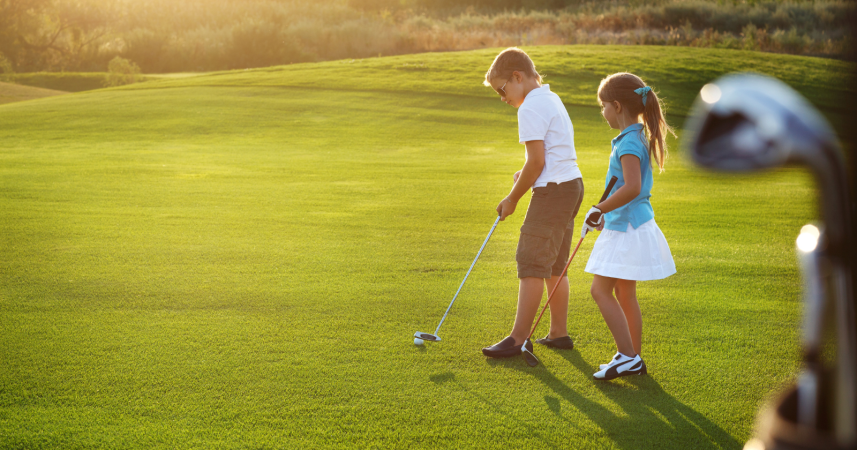
7. Golf
Golf is the sport of business deals and country club Sundays.
It's slow, strategic, and built around conversation. You're not just playing, you're talking. Networking. Building relationships over 18 holes.
Kids who grow up golfing learn the game, but they also absorb the culture around it. Club memberships, etiquette, the unspoken rules of the course.
They get comfortable in settings where deals happen casually, where a round of golf is a meeting without a conference room.
By the time they're adults, golf isn't intimidating. It's familiar. They know how to keep score, how to pace a game, how to make small talk between swings.
That familiarity matters in industries where golf is still a social currency. Finance, law, corporate leadership.
It's not that you can't succeed without golf. But if everyone else in the room plays and you don't, you're on the outside of something.
8. Theater or performing arts
Community theater, drama camps, voice lessons, improv classes.
Performing arts teach kids how to be seen and heard without shrinking.
They learn stage presence, vocal projection, how to hold attention. They get comfortable with an audience, with memorization, with feedback and critique.
But more than that, they learn how to perform confidence even when they don't feel it.
Upper-middle-class families invest in this because they recognize that presence matters. That the ability to walk into a room and command it, to tell a story compellingly, to make people listen, is a skill that translates everywhere.
Theater kids grow up less afraid of public speaking. They're comfortable being the center of attention, or stepping back when someone else needs to shine.
They understand timing, tone, how to read a room and adjust their delivery.
Those skills matter in presentations, pitches, leadership roles. And they're the kind of thing you can't learn from a textbook.
What these hobbies really teach
These hobbies aren't just about the activity itself.
They're about access. Exposure. The slow accumulation of comfort in spaces that exclude people who don't know the codes.
Upper-middle-class families understand that status isn't always loud. Sometimes it's knowing how to hold a tennis racket, or recognizing a Brahms piece, or feeling at ease on a sailboat.
It's the quiet confidence that comes from being in the room before, from knowing the language, from having practiced the thing that others are encountering for the first time.
These hobbies teach kids that they belong in spaces that might intimidate others. And that sense of belonging becomes part of their identity.
Not everyone has access to these hobbies. That's the point.
And the kids who grow up with them carry that advantage forward, often without realizing how much it shapes the doors that open and the rooms they're welcomed into.
What’s Your Plant-Powered Archetype?
Ever wonder what your everyday habits say about your deeper purpose—and how they ripple out to impact the planet?
This 90-second quiz reveals the plant-powered role you’re here to play, and the tiny shift that makes it even more powerful.
12 fun questions. Instant results. Surprisingly accurate.