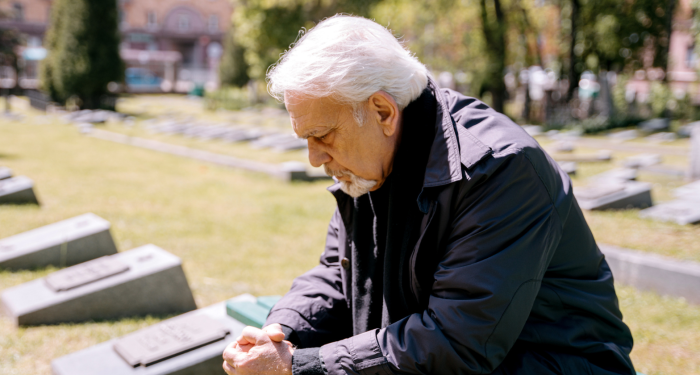
The sharpest minds aren't the ones that consume the most - they're the ones that stay curious about what they don't yet know.
My neighbor Margaret is 72 and sharper than half the people I know in their thirties.
She can recite poetry in three languages, beat me at chess without looking at the board, and last month she identified a bird by its call from inside her kitchen.
When I asked her secret, she laughed and said, "I stay curious."
It's easy to think of retirement as the time when people slow down, kick back, and coast. But the retirees I know who seem most alive aren't relaxing into boredom. They're learning, building, solving, creating.
Meanwhile, a lot of 30-somethings I know are stuck in the scroll-and-stream loop, complaining about brain fog and burnout.
Here are seven hobbies retirees have figured out that younger people are missing out on.
1. Bird watching
This sounds boring until you try it.
Bird watching isn't just standing in a park squinting at trees. It's pattern recognition, memory work, and environmental awareness all rolled into one.
You learn to identify species by shape, color, song, and behavior. You start noticing migration patterns, habitat preferences, seasonal changes.
It gets you outside, walking quietly, paying attention to details most people miss.
And there's a surprising dopamine hit when you finally spot that scarlet tanager you've been tracking for weeks.
Retirees love it because it combines mental stimulation with low-impact movement.
For 30-somethings, it's a built-in reason to put the phone down and actually observe the world.
2. Genealogy research
Genealogy is detective work with personal stakes.
You're digging through records, cross-referencing dates, piecing together narratives from fragments of information. It requires patience, critical thinking, and the ability to follow threads across decades.
Retirees often have the time and motivation to dive deep into family history, but the skills it builds - research literacy, attention to detail, connecting disparate information—are exactly what younger people need in an age of information overload.
Plus, it's oddly grounding.
In a world that feels increasingly rootless, tracing your lineage back a few generations reminds you that you're part of something longer and larger than your own timeline.
A friend recently discovered her great-grandmother was a labor organizer in the 1920s. She'd never heard the story growing up, and it changed how she saw herself.
3. Playing bridge
Bridge is chess for people who like conversation.
It's a trick-taking card game that demands memory, strategy, probability calculation, and partnership communication. You're constantly evaluating risk, reading opponents, and adjusting tactics on the fly.
Retirees have kept bridge clubs alive for decades because the game never gets stale. Every hand is different. Every partner brings a new dynamic.
But 30-somethings overlook it, probably because it sounds like something their grandparents do at the community center.
Which is a shame, because bridge is one of the best cognitive workouts you can get while sitting at a table.
It also builds social connection in a way that most solo hobbies don't. You're talking, laughing, occasionally arguing about a bid, and sharpening your mind at the same time.
4. Woodworking
There's something deeply satisfying about turning a pile of lumber into a functional object.
Woodworking combines math, spatial reasoning, problem-solving, and fine motor skills. You're measuring, cutting, sanding, joining. Every step requires precision and patience.
Retirees gravitate toward it because it's tactile and meditative. You can't rush wood. You have to read the grain, respect the material, adjust your approach when something doesn't fit.
For younger people juggling abstract, screen-heavy work, woodworking offers a rare kind of clarity.
You start with a plan. You execute it. You end with a tangible result - a bookshelf, a cutting board, a small table.
No emails. No revisions from a manager. Just you, the tools, and the satisfaction of making something real.
5. Learning a new language
Retirees learning Spanish, French, Mandarin, Italian - not for work, not for travel, just for the sake of it—are doing something most 30-somethings have written off as impractical.
But language learning is one of the most effective ways to keep your brain flexible.
It strengthens memory, improves multitasking, enhances problem-solving, and builds new neural pathways. The process of switching between languages activates regions of the brain that don't get much use in daily life.
You're also gaining access to entire worlds of literature, film, music, and conversation that don't exist in translation.
I know a retired teacher who started learning Portuguese at 68. She now reads Brazilian novels in the original and has pen pals in Lisbon.
She told me, "I'm not trying to become fluent. I'm trying to stay interested."
6. Astronomy and stargazing
Looking up changes how you think.
Astronomy isn't just identifying constellations - though that's part of it. It's understanding scale, time, physics. It's learning that the light from some stars took longer to reach your eyes than you've been alive.
Retirees with telescopes and star charts are engaging in a hobby that's both humbling and intellectually rigorous.
You're tracking celestial events, learning about planetary motion, understanding why the moon looks different every night.
It's also a hobby that rewards patience. You can't rush the night sky. You have to wait for clear weather, dark skies, the right time of year.
For younger people used to instant results, astronomy teaches you to slow down and pay attention to rhythms that don't care about your schedule.
7. Volunteering as a docent or tour guide
This one surprised me.
Docents at museums, historical sites, botanical gardens - they're not just reading from a script. They're learning deep, specialized knowledge and then translating it for a general audience.
It requires research, public speaking, storytelling, and the ability to answer unpredictable questions on the spot.
Retirees do this because it keeps them engaged with their community and forces them to keep learning. You can't guide a tour on autopilot. Every group is different. Every question makes you think.
For 30-somethings, it's a way to build communication skills, deepen knowledge in an area you care about, and connect with people outside your usual circles.
Plus, teaching something is one of the best ways to actually learn it.
Why retirees get this and younger people don't
Retirees have figured out something that a lot of younger people are still missing: free time without purpose leads to stagnation.
They've lived through the phase where work consumed everything. Now they know that filling the hours with passive entertainment isn't fulfilling. It's numbing.
So they choose hobbies that ask something of them. That build skills. That create community. That keep their minds sharp.
Meanwhile, many 30-somethings are exhausted from work and default to the path of least resistance - streaming, scrolling, zoning out.
Which makes sense in the short term. But those habits don't recharge you. They drain you differently.
The hobbies on this list aren't about productivity or optimization. They're about staying engaged with the world. About choosing curiosity over comfort.
Maybe that's the real lesson. You don't have to wait until retirement to live like someone who values their own attention.