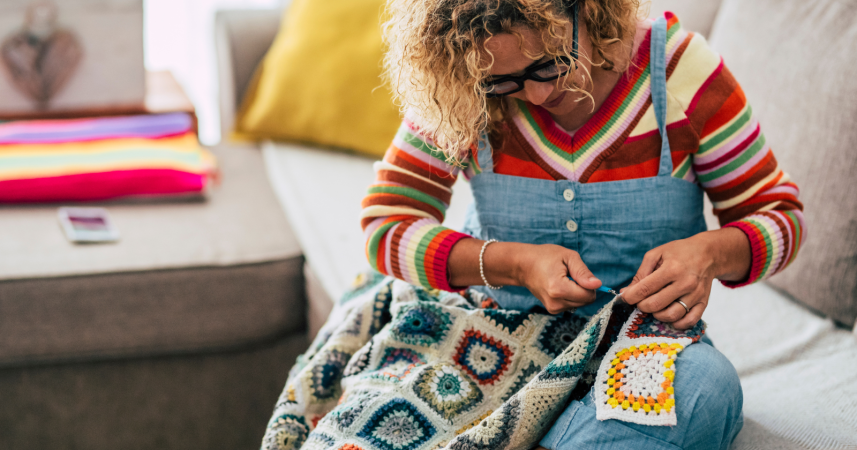
What boomers did out of necessity or simple hobby pursuit, Gen Z has rebranded as intentional lifestyle choices - and the irony is that both generations are doing the same activities for completely different reasons.
My grandmother has knitted for fifty years. It's just something she does while watching TV, a practical skill she learned young and never stopped using.
Now I watch Gen Z creators on social media treating knitting as a mindful, intentional practice. They buy expensive yarns, follow knitting influencers, and frame it as slow living and sustainable fashion.
They're doing the exact same activity my grandmother does. But the meaning is completely different.
Boomers did these things because they were normal, practical, or simply enjoyable. Gen Z has rediscovered them and repackaged them as conscious lifestyle choices that signal specific values.
Here are six activities that made the journey from boomer hobby to Gen Z trend.
1) Knitting and crocheting
For boomers, knitting was a practical skill. You made sweaters, blankets, and scarves because it was cheaper than buying them and gave you something to do with your hands.
My grandmother still knits constantly. She's made countless items for family members over the decades. It's just part of her routine, not a statement about anything.
Gen Z has turned knitting into a wellness practice and sustainability statement. They knit to slow down, to disconnect from screens, to create something with their hands in an increasingly digital world.
They post their projects on TikTok, buy patterns from independent designers, and frame knitting as radical self-care and anti-fast-fashion activism.
The activity is identical. The framing is completely different. Boomers knit because it's practical and relaxing. Gen Z knits because it's intentional and meaningful.
2) Gardening and growing vegetables
Boomers gardened because it saved money on groceries, gave them something to do outside, and provided fresh vegetables. It was a normal suburban activity, not a lifestyle statement.
My parents have had a vegetable garden for forty years. They grow tomatoes, peppers, and herbs because they like having fresh produce and it's a productive use of yard space.
Gen Z treats gardening as resistance to capitalism and industrial agriculture. They film themselves planting seeds, talk about food sovereignty, and frame vegetable growing as political activism.
They use terms like "regenerative agriculture" and "permaculture" for activities that are functionally identical to what suburban boomers have done for decades.
The difference is consciousness. Boomers garden. Gen Z practices food activism that happens to involve gardening.
3) Thrifting and secondhand shopping
Boomers who thrifted did it out of necessity or frugality. You shopped at Goodwill because you needed to stretch your budget, not because it was cool.
My grandmother has shopped at thrift stores her entire adult life. It's how she furnished her home and clothed her kids. It was practical, not a statement.
Gen Z has turned thrifting into sustainable fashion and treasure hunting. They film thrift hauls, curate vintage aesthetics, and frame secondhand shopping as environmental activism and anti-consumerism.
They're shopping at the same Goodwill stores my grandmother frequented for completely different reasons with completely different social meanings.
For boomers, thrifting signaled limited resources. For Gen Z, it signals values and taste.
4) Baking bread from scratch
Boomers who baked bread did it because homemade bread tasted better and cost less than store-bought. It was a practical kitchen skill, often learned from their parents.
My grandmother has been baking bread weekly for as long as I can remember. It's just something she does, like doing laundry or making dinner.
Gen Z discovered bread baking during lockdown and turned it into a whole lifestyle movement. Sourdough starters became pets with names. Bread baking became slow living, mindfulness practice, and rejection of processed foods.
They document every step, share their starter maintenance routines, and treat bread baking as a radical act of self-sufficiency.
The activity is identical. The meaning has been completely transformed.
5) Letter writing and physical correspondence
Boomers wrote letters because that's how you communicated before email and texting. You wrote to relatives, to friends who moved away, to maintain relationships across distance.
My grandmother still writes physical letters to her friends. She's done it for sixty years. It's just how she keeps in touch with certain people.
Gen Z has rediscovered letter writing as intentional communication and analog connection. They buy fancy stationery, use wax seals, and treat physical mail as a mindfulness practice.
They frame letter writing as resistance to digital communication, as slowing down and being present, as creating tangible connection in an intangible world.
For boomers, it was just communication. For Gen Z, it's intentional analog living.
6) Vinyl record collecting
Boomers collected vinyl because that's how music was distributed. You bought records because that's what was available. Building a collection was just normal music consumption.
I still have boxes of vinyl from my music blogging days in the early 2000s. They're just records I bought to listen to music.
Gen Z treats vinyl collecting as authentic music appreciation and tactile media consumption. They buy turntables as lifestyle accessories, display records as décor, and frame vinyl collecting as resistance to streaming culture.
They talk about "the vinyl experience" and "album art appreciation" for an activity that was simply normal music buying for previous generations.
The irony is that many Gen Z vinyl collectors also stream music constantly. The records are as much about aesthetic and values signaling as they are about actually listening to music.
Final thoughts
The pattern across all these activities is the same: boomers did them as normal life activities. Gen Z has rediscovered them and reframed them as intentional lifestyle choices.
Neither approach is wrong. They're just operating from completely different contexts.
Boomers did these things because they were practical, normal, or simply what you did. There was no need to frame them as meaningful because they were just part of regular life.
Gen Z does these same activities as conscious choices in reaction to digital overload, fast fashion, industrial food systems, and disposable consumer culture. The activities matter because they represent values and intentional living.
The irony is that boomers often dismiss Gen Z's framing of these activities as pretentious or overthought, while Gen Z sometimes dismisses boomers' versions as unconscious or lacking awareness.
But they're literally doing the same things.
My grandmother knits while watching TV without thinking deeply about what it means. Gen Z knitters film their process and write captions about slow living and sustainable fashion. Both are knitting.
Understanding this pattern helps explain generational communication gaps. Boomers hear Gen Z's framing and think they're making simple things unnecessarily complicated. Gen Z sees boomers doing these activities without the conscious values framework and assumes they're missing the point.
Really, they're just approaching the same activities from different cultural contexts with different needs for meaning-making.
If you do any of these activities and have strong feelings about whether they need to be framed as intentional lifestyle choices or can just be normal hobbies, your answer probably reveals which generation you belong to.
Boomers: "I just knit, it's not that deep."
Gen Z: "Knitting is a radical act of slow living and sustainable fashion."
Both: *knitting the exact same scarf*
What’s Your Plant-Powered Archetype?
Ever wonder what your everyday habits say about your deeper purpose—and how they ripple out to impact the planet?
This 90-second quiz reveals the plant-powered role you’re here to play, and the tiny shift that makes it even more powerful.
12 fun questions. Instant results. Surprisingly accurate.