Some people get sharper with age while others fade—here's what the ones who thrive are actually doing with their time
Ever notice how some people seem to get sharper with age while others fade? I've been thinking about this lately, especially after spending time with people in their late sixties and seventies who show more curiosity than most people half their age.
The difference isn't genetics or luck. It's about staying engaged.
The brain doesn't retire just because you do, and the people who understand this tend to age differently. They're not just killing time between doctor's appointments. They're building something, learning something, connecting with something that matters.
Today, I want to talk about nine hobbies that keep people over 65 mentally engaged and emotionally grounded. These aren't your standard "stay busy" suggestions. These are activities that actually work, backed by what we know about how the brain stays healthy and how emotional wellbeing gets maintained as we age.
1) Learning a new language
A friend of mine started learning Spanish at 68. Not because he planned to move to Barcelona or anything. He just wanted to understand the songs he heard in his neighborhood café.
Learning a new language forces your brain to build new neural pathways. You're not just memorizing words. You're rewiring how you think, how you process sound, how you construct meaning.
Research from behavioral science shows that bilingual seniors often show delayed cognitive decline compared to their monolingual peers. The constant mental gymnastics of switching between languages keeps the brain flexible.
But here's what makes it emotionally grounding too: language connects you to people. My friend now has coffee with other learners twice a week, and they practice together. That social connection matters as much as the cognitive workout.
You don't need to become fluent. Even basic conversational skills create engagement and purpose.
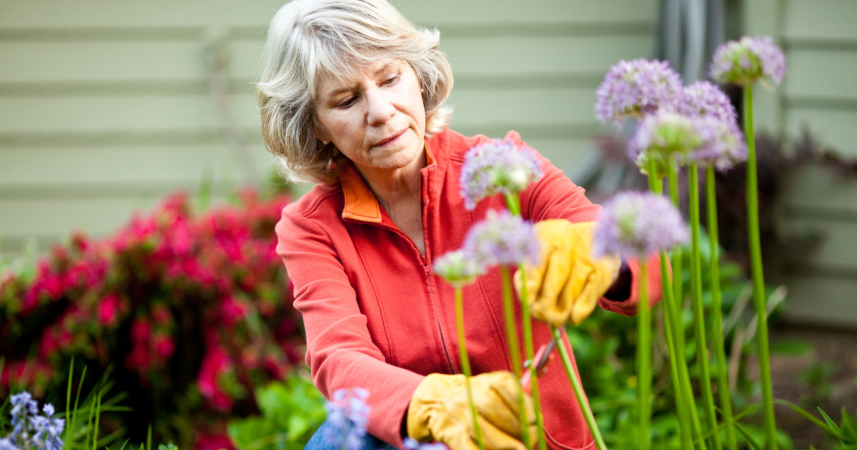
2) Gardening with intention
There's something about putting your hands in soil that cuts through everything else.
Gardening isn't just physical activity, though that matters. It's about tending to something that grows at its own pace, something that doesn't care about your schedule or expectations.
The routine matters. Checking on plants, watering them, watching for signs of growth or disease. It creates structure without rigidity.
And there's the sensory element. The smell of tomato plants, the texture of leaves, the satisfaction of harvesting something you grew yourself. These physical experiences anchor you in the present moment in a way that's increasingly rare in our distracted world.
People who garden regularly report feeling more grounded, more connected to natural rhythms that have nothing to do with social media notifications or news cycles.
3) Playing a musical instrument
You don't need to be good at it. That's the part most people miss.
Playing music engages multiple parts of the brain simultaneously. You're reading notation or remembering patterns, coordinating your hands, listening to what you're producing, and adjusting in real time.
For people over 65, starting or returning to an instrument creates a perfect challenge. It's hard enough to be engaging but not so hard that it becomes frustrating if you approach it with the right mindset.
The emotional grounding comes from the expressive aspect. Music lets you say things you might not have words for. It's a release valve that doesn't require explaining yourself to anyone.
Plus, if you play with others, even informally, you get that social connection again. Community bands, church groups, casual jam sessions. These create belonging.
4) Writing regularly
Not necessarily for publication. Just writing.
Journaling, memoir writing, poetry, letters to grandchildren. The format doesn't matter as much as the practice of translating internal experience into external words.
Writing forces you to organize your thoughts. It makes you confront what you actually think and feel rather than what you assume you think and feel. That's cognitively demanding in a good way.
But it's also emotional processing work. When you write about an experience, you metabolize it differently than when you just replay it in your mind. You create distance and perspective.
I've seen this in my own work. Writing about experiences helps me understand them in ways that just thinking about them never does. For older adults, this can be particularly valuable as they make sense of a lifetime of accumulated experience.
And there's something satisfying about creating a record. Knowing that your thoughts and stories exist in physical form, that they might matter to someone someday.
5) Volunteering strategically
Not just any volunteering. Strategic volunteering that uses your skills and interests.
I know someone who volunteers at a food bank every Saturday. It's not just about giving back, though that matters. It's about having a place where she's expected, where her presence makes a difference, where she has meaningful interactions with other volunteers and the people they serve.
The mental engagement comes from problem solving. Food banks have logistics challenges. How do you organize donations? How do you serve people with dignity? How do you stretch resources when demand exceeds supply?
These aren't trivial questions, and being part of solving them keeps your mind active and focused on things beyond yourself.
The emotional grounding comes from purpose. When you know your contribution matters, when you see the direct impact of your work, it creates meaning that's hard to find in other ways.
6) Photography as observation practice
Photography teaches you to see differently.
I spend a lot of time working on my photography skills around Venice Beach and LA. What I've learned is that the technical aspects matter less than the observational practice.
When you're looking for photographs, you pay attention to light, composition, moments that might otherwise pass unnoticed. You slow down. You become present in your environment in a way that normal walking around doesn't require.
For older adults, this creates a perfect blend of mental and emotional engagement. You're making aesthetic decisions, learning technical skills if you want to, but mostly you're practicing awareness.
And photography gives you something to share. Pictures of grandchildren, nature, your neighborhood. These become conversation starters and connection points.
You don't need expensive equipment. Phone cameras work fine. What matters is the practice of looking closely at the world.
7) Cooking new recipes
Cooking is chemistry, timing, creativity, and sensory experience all rolled into one.
Following a new recipe requires reading comprehension, measurement, sequencing, and problem solving. You're converting written instructions into physical actions, adjusting for variables like your specific oven or ingredients.
But cooking is also immediately rewarding. You create something tangible that you and others can enjoy. The feedback loop is quick and satisfying.
For people over 65, especially those cooking for one or two after years of cooking for larger families, exploring new cuisines or techniques creates novelty and challenge. It fights against the tendency to default to the same five meals on rotation.
And there's the social aspect again. Cooking for others, sharing meals, teaching recipes to younger family members. Food connects people in ways that few other things do.
8) Learning technology with purpose
Learning specific tech skills to accomplish things you care about goes a long way.
Video calling with grandchildren who live far away. Editing digital photos. Following topics you're interested in. Ordering groceries when mobility becomes challenging.
The key is purpose driven learning. When there's a clear reason to master a skill, the cognitive challenge feels worthwhile rather than frustrating.
Technology literacy also prevents isolation. As more of daily life moves online, people who can't navigate digital spaces get increasingly cut off from information, services, and social connection.
And mastering something that intimidated you builds confidence that spills over into other areas. It proves to yourself that you can still learn, still adapt, still grow.
9) Board games and strategic puzzles
Games aren't just entertainment. They're cognitive workouts disguised as fun.
Strategic board games require planning, pattern recognition, probability assessment, and often social interaction if you're playing with others. Your brain gets a comprehensive workout while you're just trying to win at Scrabble or learn a new card game.
What makes this particularly valuable for people over 65 is the social component combined with the mental challenge. Game nights with friends or family create regular social touchpoints that have structure and purpose beyond just "hanging out."
The competitive element, even friendly competition, creates engagement and motivation. Nobody wants to lose, so you focus. You strategize. You stay present.
And unlike passive entertainment, games require active participation. You can't zone out. You have to think, respond, engage.
Conclusion
Aging doesn't mean declining, at least not in the ways we often assume.
The people who stay sharp and grounded into their later years aren't lucky. They're engaged. They've built lives that continue to challenge them mentally and fulfill them emotionally.
These nine hobbies aren't magic. They're just activities that happen to create the conditions for continued growth. They force you to think, connect you to others, give you purpose, and keep you present in your life rather than just drifting through it.
The specific hobby matters less than the commitment to staying engaged with something that challenges and satisfies you.
People don't transform their lives through one single activity. But these things together create a life that's still expanding rather than contracting. Still curious, still learning, still connected.
That's available to anyone willing to build it.