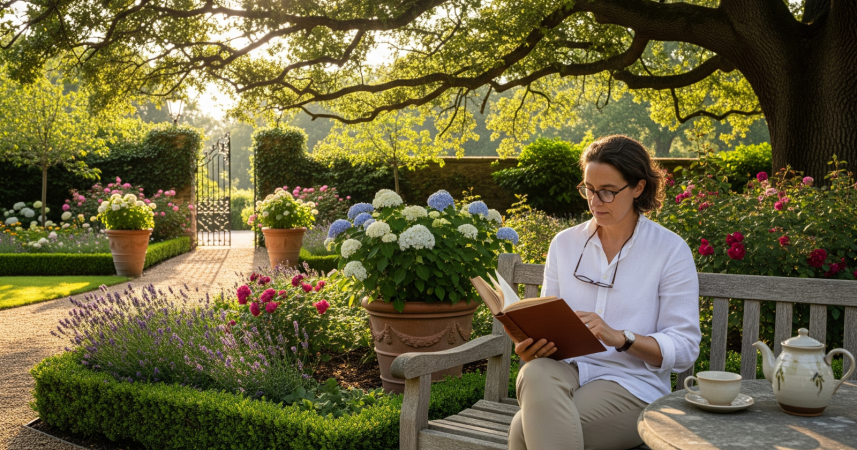
Some pastimes look dull at first glance—but they quietly carry the patience, taste, and discipline that mark true refinement.

Add VegOut to your Google News feed. 
Have you ever noticed how some hobbies get labeled as “boring,” yet the same activities are quietly considered marks of refinement among the wealthy?
It’s funny how perspective works. What feels like a dull way to pass the time to one person can look like sophistication and even status to another.
These hobbies aren’t about flashing wealth. They’re about patience, taste, and sometimes even discipline—the kinds of qualities money alone can’t buy.
Let’s explore nine of them.
1. Reading serious literature
Most people will reach for Netflix at the end of the day. But you’ll often find upper-class circles discussing Tolstoy, Proust, or even dense nonfiction.
Sure, reading a 700-page book can seem painfully boring if you’re not into it. But it’s also a sign of intellectual curiosity and discipline.
As The Reading Agency found, people who read regularly report higher wellbeing, life satisfaction, and empathy. It’s no coincidence that many CEOs are voracious readers—they see books as shortcuts to wisdom.
For me, picking up a challenging book is like going to the gym for my brain. You don’t always want to do it, but you rarely regret it afterward.
2. Gardening
There’s nothing flashy about pulling weeds or waiting weeks for a rose bush to bloom. But in upper-class households, gardening isn’t just about flowers—it’s about stewardship of land and beauty.
A well-maintained garden has long been a status symbol. Think of the sprawling English estates or Japanese Zen gardens. They’re slow art projects where patience is the medium.
Psychologists have noted that gardening reduces stress and improves mood. Research shows it can improve wellbeing, reduce anxiety, and even lower cortisol.
So while others might call it “boring yard work,” to many, it’s therapy disguised as luxury.
3. Collecting art
I once visited a wealthy acquaintance’s home and noticed an entire room dedicated to watercolor paintings. Not flashy Picasso originals—just carefully chosen works from local artists.
At first glance, it felt like an expensive way to clutter walls. But he explained that each piece represented a moment, a story, a relationship.
Art collecting is often misunderstood as hoarding or elitist. But for those who take it seriously, it’s about curating meaning. Collectors don’t just buy objects; they buy into a conversation.
That conversation may not sound exciting to everyone, but it’s deeply fulfilling to those who care about culture.
4. Attending the opera
Opera has a reputation problem. It’s long, dramatic, and performed in languages most people don’t understand.
But for the upper class, it’s a ritual. Dressing up, engaging in the spectacle, and appreciating centuries of artistic tradition.
As LA Opera explains, classical music has the power to lower stress hormones, ease anxiety, and even reduce blood pressure. It can also enhance memory, improve focus, and strengthen emotional regulation.
That’s why opera, often dismissed as outdated or overly dramatic, is still cherished as a profound and healing art form by those who immerse themselves in it.
Personally, I think it’s like wine. The first time you try it, it might feel inaccessible. But the more you learn, the more you can savor its complexity.
5. Writing memoirs or journals
Most people see journaling as something teenagers do with glitter pens. But among the wealthy, reflective writing is often treated as a serious lifelong practice.
Winston Churchill, Marcus Aurelius, and countless modern leaders have relied on journaling as a tool for clarity.
It’s slow, quiet, and deeply unglamorous. Yet psychologists like James Pennebaker have shown that expressive writing improves mental health, reduces stress, and even strengthens immune function.
What looks like scribbling in a notebook is often self-mastery in disguise.
6. Playing classical instruments
If someone tells you they spend hours a week practicing the cello, you might wonder why they don’t pick up a hobby with more immediate payoff.
But in refined circles, classical instruments symbolize dedication. Mastering Bach or Chopin is not just entertainment—it’s discipline turned into music.
Studies show that playing an instrument enhances memory, language processing, and emotional regulation.
It may look “boring” from the outside, but the inner rewards—like flow state and creative expression—are enormous.
7. Birdwatching
Okay, I’ll admit: when I first heard people spent weekends with binoculars chasing rare birds, I thought it sounded mind-numbingly dull.
But after trying it on a trip to Costa Rica, I got it. Birdwatching forces you to slow down. To notice details. To sit in silence.
For many enthusiasts, it’s less about the birds themselves and more about the act of being present. It’s a hobby that teaches patience in a world addicted to speed.
8. Collecting wine
As someone who worked in luxury F&B, I’ve seen firsthand how wine collecting looks absurd to outsiders. Spending thousands on bottles you might never drink? Sounds boring—or even wasteful.
But it’s more like a living library. Each bottle tells a story of soil, weather, craftsmanship, and tradition.
Collectors aren’t just chasing alcohol; they’re curating history. And while it may look passive, it’s a skill. Learning vintages, terroirs, and pairings takes years of study.
9. Practicing calligraphy
Finally, let’s talk about calligraphy. In an age of smartphones and AI, why spend hours perfecting your pen strokes?
Because it’s the opposite of instant gratification. Calligraphy is slow, meditative, and unforgiving—and that’s exactly why refined circles value it.
While others may roll their eyes, those who practice know it’s about cultivating presence and finding beauty in something as simple as the written word.
The bottom line
Here’s the truth: what we call “boring” often says more about our own impatience than about the hobby itself.
The upper class gravitates toward these pursuits not just for status but because they cultivate qualities like patience, taste, and reflection.
It reminded me of something I read recently in Rudá Iandê’s book, Laughing in the Face of Chaos.
He writes, “When we let go of the need to be perfect, we free ourselves to live fully—embracing the mess, complexity, and richness of a life that’s delightfully real.”
That hit me hard. Because ultimately, these so-called boring hobbies aren’t about perfection—they’re about living fully, in your own way.
So maybe the next time you see someone lost in their garden, pouring over a dusty novel, or practicing violin for the hundredth time, you won’t think: boring.
You’ll think: refined.
What’s Your Plant-Powered Archetype?
Ever wonder what your everyday habits say about your deeper purpose—and how they ripple out to impact the planet?
This 90-second quiz reveals the plant-powered role you’re here to play, and the tiny shift that makes it even more powerful.
12 fun questions. Instant results. Surprisingly accurate.