Eight small rituals that reintroduce wonder, creativity, and joy into everyday life because adulthood doesn’t have to feel like a to-do list.
“We don’t stop playing because we grow old; we grow old because we stop playing.” – George Bernard Shaw
At some point, adulthood quietly trades spontaneity for structure. Our calendars get fuller, our routines tighter, and play, the thing that once made time disappear, starts to feel like a luxury instead of a necessity.
But lately, I’ve been experimenting with something different: reintroducing play into my day in small, intentional ways.
Not as a break, but as part of how I live. These eight rituals have shifted the texture of my days from mechanical to meaningful.
1. I take morning walks with no destination
Most of us walk to get somewhere. But one day, I just...didn’t. I left my phone at home, picked a random direction, and wandered.
What surprised me was how alive that felt. According to research, moments of “awe” lower stress and make people feel more connected to others.
And you can trigger awe just by paying attention to light hitting the leaves, the way air smells after rain, the rhythm of your own steps.
It reminded me that purpose doesn’t always require a destination. Sometimes, moving without aim brings the deepest kind of clarity.
2. I doodle instead of scrolling
One night, after mindlessly cycling through news apps, I swapped my phone for a pen. I didn’t draw anything, just doodled lines and loops across a page.
It wasn’t art, just a small act of freedom.”
There’s something quietly therapeutic about letting your hands move without purpose.
You start to notice how rarely we allow ourselves to not produce. No post. No deliverable. Just play.
Creative play rewires the brain for problem-solving in ways logic alone can’t. And if you’ve ever found your best ideas while daydreaming in a meeting, you know this is true.
3. I schedule “unproductive” time
This might sound like an oxymoron, putting unproductive time on your calendar. But it’s been one of the best habits I’ve developed.
I literally block off 30 minutes and label it: “Do something pointless.”
Sometimes that’s playing a song on my guitar I’ll never record. Other times it’s watching squirrels chase each other on the fence outside.
It’s not wasted time, it’s recovered time. Play, after all, is essential for creativity and emotional health.
As noted by researchers, children’s play “fuels brain growth, underpins healthy development, strengthens executive-function abilities, helps buffer stress, and deepens bonds”.
Adults aren’t any different, we just hide our need for it better.
4. I cook something new every week
Cooking used to be another box on my daily checklist, fuel not fun. Then I started treating it like an experiment.
One week, I tried making vegan bao buns. They came out lopsided, but the process was weirdly satisfying.
The next, I tried a Moroccan chickpea stew while playing a playlist of old indie bands I loved in college.
Cooking became less about the outcome and more about curiosity.
There’s a kind of mindfulness that only happens when your hands are covered in flour or you’re smelling spices bloom in a pan. It’s sensory, grounding, and imperfect.
5. I turn my workouts into challenges
I used to approach fitness like a task list: run X miles, lift X weight, repeat. Eventually, I stopped looking forward to it.
Then I gamified it.
I started giving each session a random challenge: beat your last time, try a movement you’ve never done, play music from 2010 and dance between sets.
It transformed something that once felt mechanical into a kind of play.
We underestimate how powerful novelty is for motivation. The brain lights up when we encounter something unexpected.
So I stopped chasing perfect form and started chasing moments of flow.
6. I photograph without a plan
Photography has always been one of my side passions, but somewhere along the way, I turned it into a productivity tool for Instagram content, blog visuals, brand-building.
So I stripped all that away. I started walking around my neighborhood at sunset with my camera, no shot list, no theme. Just curiosity.
Some days, I photograph broken signs or reflections in puddles. Other days, nothing at all.
That’s what makes it powerful: play pulls you into the moment instead of the outcome.
The act of noticing transforms the ordinary into something alive again.
7. I let fear join the game
Play isn’t always lighthearted. Sometimes, it’s stepping into something that scares you, like improv classes, open mics, saying yes to a trip alone.
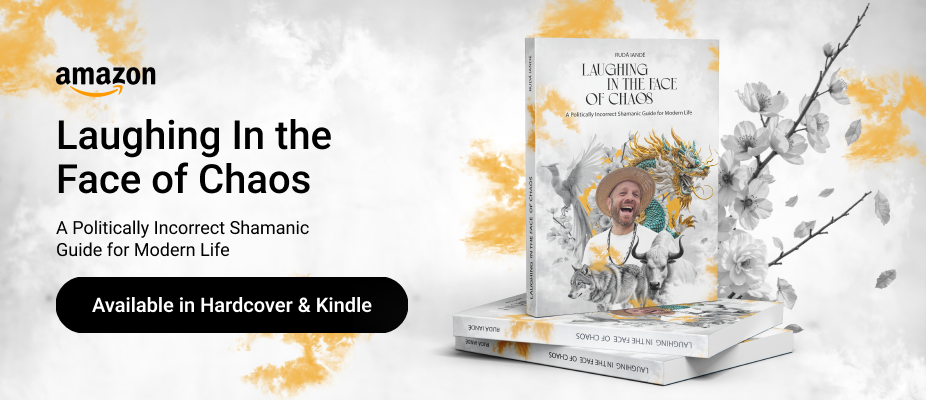
Fear is often a sign you’re expanding. As noted by Rudá Iandê in Laughing in the Face of Chaos, “Fear, when understood, is not our enemy. It's an intrinsic part of the human experience.”
I used to think fear meant I was doing something wrong. Now I see it as proof I’m alive, playing at the edge of what I know.
His insights reminded me that we can’t curate growth without embracing discomfort. Every game worth playing involves a little risk.
8. I make time to be ridiculous
This might be the most underrated ritual of all.
I sing to my coffee machine. I invent fake product pitches with my partner, introducing the world’s first sentient sock. I send my friends voice notes in bad accents.
It’s silly, but it keeps my spirit light.
When life becomes a checklist, joy becomes conditional, something to earn after you’ve done enough. But what if joy itself was part of the work?
One of Rudá’s ideas that stayed with me is that “the greatest gift we can give to ourselves and to each other is the gift of our own wholeness.”
Wholeness, to me, includes the playful parts, the parts that make no sense, the ones that laugh mid-chaos.
The bottom line
Play doesn’t have to mean board games or sports or anything labeled fun.
It’s a mindset, a way of loosening your grip on control and letting curiosity lead.
Since introducing these rituals, I’ve noticed a quiet shift. My days feel less like a series of tasks and more like an unfolding story.
I still get things done. But I also feel more human doing them.
Maybe that’s the point.