People are rediscovering that slowing down and making something with your hands feels surprisingly good in a world where everything moves at internet speed.

Add VegOut to your Google News feed. 
Remember when everyone swore vinyl was dead? Or when knitting was strictly for retirement homes?
Funny how quickly things circle back around.
I've been noticing something fascinating lately. Activities that seemed destined for museum displays are suddenly everywhere again. Your Instagram feed probably looks like a time capsule from 1965, except with better filters and more sourdough content.
The thing is, these aren't just nostalgic throwbacks. People are rediscovering that slowing down and making something with your hands feels surprisingly good in a world where everything moves at internet speed.
Here are eight things boomers did as kids that are making a legitimate comeback.
1. Collecting vinyl records
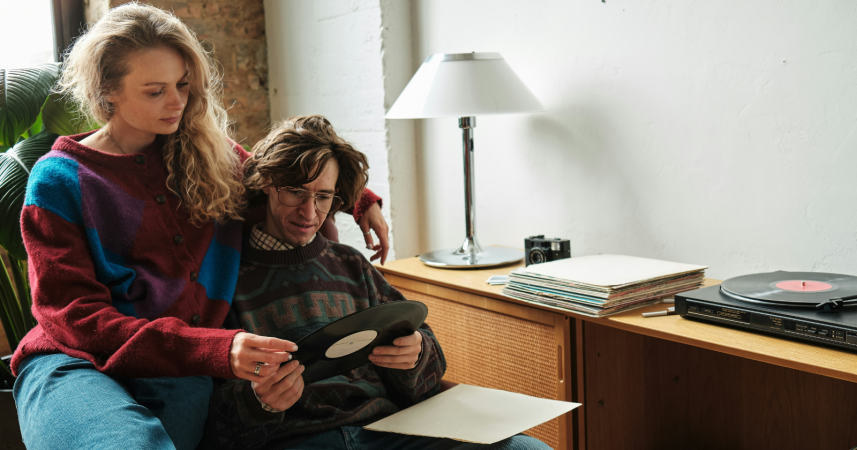
Walk into any record store and you'll see something unexpected. It's not just aging rockers flipping through bins anymore.
Vinyl Alliance released a report showing that younger listeners are the driving force behind vinyl's resurgence, with 59% of them spinning records, CDs, or cassettes at least once a week.
There's something about the ritual that streaming can't replicate. You pull an album from its sleeve, drop the needle, and commit to listening to the whole thing. No skipping. No shuffling. Just you and the music, the way it was meant to be heard.
Plus, album art actually matters when it's twelve inches instead of a thumbnail on your phone.
I started collecting about two years ago after inheriting my uncle's old turntable. Now I spend Sunday mornings at local shops, hunting for hidden gems and chatting with other collectors. It's become less about the music and more about the experience of discovery.
2. Growing your own food
Victory gardens used to be a necessity. Now they're a lifestyle choice.
Gardening has shed its retirement home reputation and become genuinely cool. Urban balconies are sprouting tomatoes. Apartment dwellers are growing herbs in Mason jars. People are documenting their plant journeys with the same enthusiasm they used to reserve for vacation photos.
The appeal makes sense. There's something deeply satisfying about eating a salad made entirely from vegetables you grew yourself. It connects you to something real in a way that's increasingly rare.
Plus, plants are low maintenance friends. They don't ask why you haven't texted back or judge your life choices. They just quietly grow while you figure things out.
3. Baking bread from scratch
Remember the great sourdough starter pandemic of 2020? That wasn't a fluke. It was the moment an entire generation realized that making bread is actually therapeutic.
Boomers baked because it was practical and cheaper. Today's bakers do it because kneading dough for twenty minutes turns out to be excellent anxiety management. Who knew?
There's also the control factor. When you make your own bread, you know exactly what's in it. No preservatives, no mystery ingredients, just flour, water, yeast, and salt doing what they've done for thousands of years.
I didn't get the hype until I made my first loaf on a rainy Saturday. The bread itself was mediocre. But spending two hours with my hands in dough, watching it rise, filling my apartment with that smell? That was something else entirely.
4. Knitting and crochet
Yarn crafts used to be what you did while waiting for the next episode of your favorite show to air. Now they're what you do while binge watching entire seasons.
The numbers tell the story. Sales of crochet supplies jumped 75% between 2020 and 2022, with much of that interest coming from people between 18 and 34. Temperature blankets, stuffed animals, and custom sweaters are trending across social media.
Part of the appeal is the meditative quality. Your hands stay busy while your mind relaxes. It's productive fidgeting that results in something you can actually use or gift to someone.
And honestly, handmade gifts carry a weight that Amazon packages just can't match. When someone hands you a scarf they spent hours making, you feel it.
5. Birdwatching
This one surprised me the most.
Birdwatching used to conjure images of retirees with binoculars and field guides, squinting at distant branches. Now it's attracting twentysomethings looking for something quiet and grounding.
The U.S. Fish and Wildlife Service found that approximately 96.3 million people observed birds in 2022. Even more telling, 15 million people aged 18 to 24 participated in birdwatching around their homes that year.
Apps like Merlin Bird ID have made it incredibly accessible. You don't need expensive equipment or expert knowledge. Just step outside, pay attention, and see what shows up.
There's something calming about watching a cardinal land on a branch or trying to identify a hawk circling overhead. It pulls you into the present moment in a way that feels increasingly valuable.
6. Fishing
Fishing used to be peak dad energy. Sit in a boat. Wait for hours. Maybe catch something. Probably don't.
But here's what younger anglers are discovering: you don't have to catch anything for it to be worth your time. The point isn't the fish. It's the two hours of being unplugged, watching water, letting your thoughts settle.
When you combine that with catch and release ethics and environmental awareness, it transforms from a hobby into something closer to a ritual. A way to connect with nature without demanding anything from it.
I've never been much of an outdoors person, but I went fishing with a friend last summer. We caught nothing. Didn't matter. Spending a morning on the water, away from notifications and obligations, was enough.
7. Thrifting and antiquing
Boomers thrifted because it was budget friendly. Their grandkids are doing it for sustainability and the thrill of the hunt.
According to Capital One Shopping, 16 to 18% of Americans shop at thrift stores yearly, with 93% shopping online for secondhand items.
But it's more than just shopping. It's storytelling. Every vintage lamp, retro Pyrex bowl, and worn denim jacket has a history. You're not just buying an object. You're giving it a second life.
Flea markets and estate sales are drawing younger crowds than ever. The aesthetic is less "I'm saving money" and more "I'm curating a life that feels authentic instead of mass produced."
8. Playing cards
Card games seemed destined to fade into irrelevance, casualties of smartphones and video game consoles.
Instead, they're having a moment. Bridge, rummy, poker, and other classics are being rediscovered by people who want social games that don't require screens. Games where you actually look at each other and interact face to face.
There's something undeniably satisfying about shuffling a deck, dealing hands, and trying to bluff your friends. The psychology is timeless. The social connection feels increasingly rare.
Game nights have become regular gatherings for my friend group. We rotate houses, someone makes snacks, and we play cards for hours. No phones allowed. Just conversation, laughter, and the occasional heated debate about whether someone was counting cards.
Why these hobbies matter
So what's driving all this?
Research has found that 66% of adults between 18 and 34 rated hobbies as extremely important to them. That's up 21 percentage points since 2001.
These activities offer something most of us are starving for: slowness, intention, and connection to something real. They pull you away from screens and into your body. They create tangible results you can see, touch, and share.
Boomers picked up these hobbies out of habit or necessity. Younger generations are choosing them with purpose. And somewhere in the middle, we're all figuring out that the best hobbies aren't always the newest ones.
They're the ones that make us feel more human.
If You Were a Healing Herb, Which Would You Be?
Each herb holds a unique kind of magic — soothing, awakening, grounding, or clarifying.
This 9-question quiz reveals the healing plant that mirrors your energy right now and what it says about your natural rhythm.
✨ Instant results. Deeply insightful.

Jordan Cooper
Jordan Cooper is a pop-culture writer and vegan-snack reviewer with roots in music blogging. Known for approachable, insightful prose, Jordan connects modern trends—from K-pop choreography to kombucha fermentation—with thoughtful food commentary. In his downtime, he enjoys photography, experimenting with fermentation recipes, and discovering new indie music playlists.
More Articles by Jordan