What if your favorite part of the week is the part no one else sees?

Add VegOut to your Google News feed. 
Sometimes the most energizing part of the week is the part no one sees—the hours you spend alone, doing something that quietly lights you up.
I’m not talking about doom-scrolling.
I mean intentional, restorative solo hobbies that feel good in your bones and make your brain hum.
I’ll keep this simple and personal. Here are eight solo pursuits that psychology consistently nods to—activities that help you hit that sweet spot of calm, focus, and meaning.
1. Reading
For introverts, reading is like taking your brain to a spa. It’s immersive, it’s quiet, and it gives you full control over the pace and depth.
I like to rotate between behavioral science (no surprise) and travel memoirs, which scratch the curiosity itch without requiring me to leave the couch.
From a psychology perspective, reading checks a lot of boxes: it offers autonomy (you choose the book), mastery (you get better at understanding complex ideas), and flow (you lose track of time).
As Mihaly Csikszentmihalyi put it, “The best moments… occur when a person’s body or mind is stretched to its limits in a voluntary effort to accomplish something difficult and worthwhile.” I underline “voluntary” because that’s the introvert’s superpower: choosing the depth you want.
2. Journaling
Journaling is the ultimate low-friction habit: pen, page, done. I use two formats. One is a quick “brain dump” for mental clutter.
The other is a three-question check-in: What am I feeling? What’s driving it? What would help?
The benefits aren’t woo. Psychologist James Pennebaker helped popularize expressive writing research, and the gist is powerful.
As the American Psychological Association summarizes, “Writing about emotional upheavals… can improve physical and mental health.” I’ve felt this in real time. When I’m stuck in rumination, five honest minutes of writing converts fog into a map.
3. Cooking
If you’re plant-curious or fully vegan, solo cooking is creative therapy in an apron.
I treat it like low-stakes R&D: one new vegetable each week, one “what happens if…?” sauce. There’s satisfaction in the tangible arc—prep, heat, taste, plate—and the sensory feedback is instant.
It’s mindful because a simmering pot doesn’t care how many emails you sent; it asks for your attention, right now.
Psych-wise, cooking ties into competence (you can literally taste your progress) and self-soothing (the rhythms of chopping, stirring, and plating downshift the nervous system).
Bonus for introverts: no small talk, just you and the soundtrack. I pick indie playlists, a holdover from my music-blogging days, and let the kitchen become a tiny creative studio.
4. Photography
I’ve mentioned this before but my camera is my favorite mindfulness coach. I go on “photo walks” with a simple constraint: shoot one color, one texture, or one theme.
A red door, cracked sidewalks, reflections in puddles. It’s focused scavenger hunting for adults.
Two things happen when you carry a camera alone. First, you become present. Your attention narrows to light, lines, and timing. Second, the world starts handing you gifts—small scenes you would’ve missed at full speed.
Psychologically, this is classic flow territory. You alternate between micro-challenges (exposure, composition) and little wins when the shot clicks. Whether you’re on a phone or a mirrorless, the point is the same: see more, rush less.
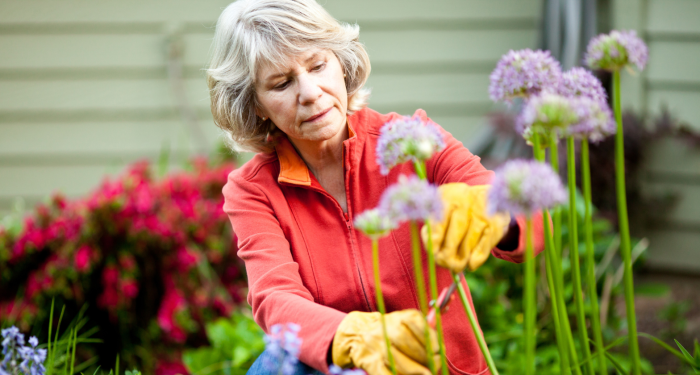
5. Gardening
Even if your “garden” is three herbs on a windowsill, tending plants is a masterclass in quiet satisfaction.
You get these slow-motion milestones—sprouts, new leaves, harvests—that mirror how progress really works in life: gradual, compounding, occasionally surprising.
For introverts, plants are perfect company. They never ask where you’re from or what you do; they just respond to care. On the psych side, gardening offers what researchers call “behavioral activation”—small, doable actions that improve mood by nudging you into meaningful activity.
There’s a reason so many mental health programs include nature-based tasks. And if you’re growing food, there’s a nourishing alignment between effort and outcome that’s hard to beat. Basil-to-pesto is a virtuous cycle.
6. Drawing
You don’t need to be “an artist.” You need a pencil and a willingness to look. I started with blind contour drawings (don’t lift the pencil, don’t peek at the page) because it disables perfectionism. The results are messy and often hilarious—and weirdly beautiful.
Why does this land so well for introverts? Because drawing gives you a private lab to notice and translate.
You toggle between observation and interpretation, which is basically attention training. Over time, your brain starts making finer distinctions—shadow values, edges, negative space—and that heightened perception spills into everyday life.
When a hobby makes the world sharper, it sticks.
7. Puzzles
Crosswords, logic grids, jigsaws, chess… if it lets you wrestle calmly with a problem, it counts.
My ritual is a Saturday morning crossword with coffee.
The first pass is humbling, the second pass is thrilling, and somewhere around minute twenty I find a groove that feels like gentle weightlifting for the mind.
From a psychology lens, puzzles are rapid-fire feedback loops: try, adjust, learn. For introverts, the appeal is the self-paced challenge—no scoreboard, no crowd, just your curiosity and the next clue. They also scratch the competence itch and help regulate attention.
A quick practical tip: pick puzzles that are just outside your current level. Too easy equals boredom; too hard equals frustration. That “just right” zone is where satisfaction lives.
8. Meditation
“Solitude matters,” Susan Cain has said, “and for some people it’s the air they breathe.” Meditation is the structured version of that oxygen. You don’t need a zafu cushion or incense. Five minutes on a chair, eyes soft, attention on breath—that’s enough to begin.
I came to meditation through stress, not enlightenment. What surprised me wasn’t a dramatic transformation but a subtle one: a few extra beats between stimulus and response. That space is gold. It lets you choose a response instead of defaulting to a reaction.
Over time, the practice turns into a portable refuge. Crowded train? Closed eyes, one minute, reset. Big meeting? Two slow inhales, widen the frame, proceed. For introverts, those micro-resets keep your energy yours.
How to choose your “right now” hobby
If two or three of these tug at you, begin there. Ask three questions:
-
Do I feel more like myself after doing this?
-
Can I get started in under five minutes?
-
Does the challenge feel playful, not punishing?
If the answers lean yes, you’ve found a keeper. Start small. Ten minutes of journaling. One plant. Half a chapter. A two-block photo walk. The most sustainable hobbies start where you actually are, not where you think a “serious” hobbyist should be.
What makes these especially satisfying for introverts
There’s a pattern here. Each hobby offers:
-
Autonomy: You choose when, how long, and how deep to go.
-
Immersion: They invite focus that quiets the mental noise.
-
Progress: You can feel competence building session by session.
-
Meaning: They connect to values—curiosity, creativity, nourishment, calm.
That combo is catnip for introverted brains. You don’t need more stimulation; you need the right stimulation. Quiet challenges that give back more energy than they take.
A few gentle guardrails so the hobby fuels you (not the other way around)
-
Keep it device-light. If your phone stays out for music or a reference picture, fine—but default to airplane mode.
-
Name your finish line. “When the kettle whistles, I’m done.” “One page of notes and I close the notebook.” Clear edges prevent decision fatigue.
-
Track vibes, not metrics. A simple “better/same/worse” check-in beats obsessing over streaks. You’re building a relationship, not a scoreboard.
Final thought
The best solo hobbies don’t just pass the time—they deepen it.
They make you more present, more attuned, and more yourself.
Pick one, protect a little corner of your day, and let the quiet do its work.
If You Were a Healing Herb, Which Would You Be?
Each herb holds a unique kind of magic — soothing, awakening, grounding, or clarifying.
This 9-question quiz reveals the healing plant that mirrors your energy right now and what it says about your natural rhythm.
✨ Instant results. Deeply insightful.

Jordan Cooper
Jordan Cooper is a pop-culture writer and vegan-snack reviewer with roots in music blogging. Known for approachable, insightful prose, Jordan connects modern trends—from K-pop choreography to kombucha fermentation—with thoughtful food commentary. In his downtime, he enjoys photography, experimenting with fermentation recipes, and discovering new indie music playlists.
More Articles by Jordan