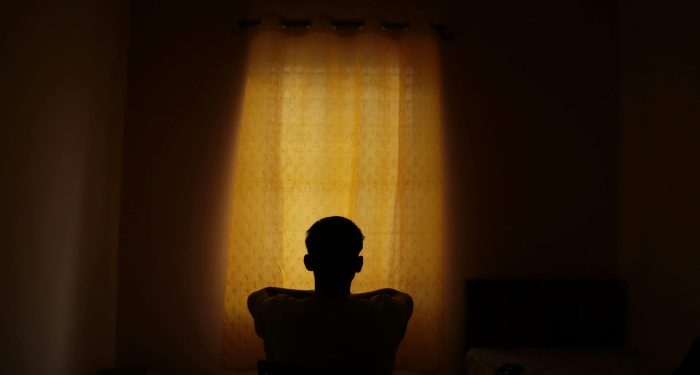
That feeling when a show ends and you stare at the screen, just a little rearranged.
Some stories really reset your brain.
The lights go down, you lean forward, and suddenly you’re living inside someone else’s mind.
When a show does that, you go beyond watching and start metabolizing it. You start making different choices the next morning, because a piece of the story stayed with you.
Here are seven shows that did that for me, the kind that make you think, “I wish I could erase my memory and experience that first watch again.” And because I write for curious self-observers and practical optimists, I’ll share why each one also doubles as a little masterclass in how we grow.
1. Breaking Bad
The first watch is a study in tension.
You meet a mild-mannered chemistry teacher, then watch him take one tiny rationalization after another until he’s someone else completely.
What blew me away wasn’t just the plot. It was how clearly the show maps the psychology of incremental choices. We rarely “become” different overnight. We drift. We justify. We build elaborate stories that make our compromises feel noble.
On a second watch, you can spot the early warning signs everywhere. But on the first? You feel them in your stomach before your head catches up.
Personal takeaway: when I’m tempted to fudge a line in the sand, I ask, “What future self does this decision train?” We’re always rehearsing for a role we’ll eventually play.
2. Fleabag
I remember a friend telling me, “Don’t read anything. Just watch.” Best advice ever.
The magic of that initial season is the intimacy—you’re in on every look, every joke, every deflection. Then season two arrives and somehow raises the emotional stakes without losing an ounce of wit.
As character studies go, it’s a masterclass in how humor shields us and reveals us. The show turns asides into confessionals and confessionals into connection. That first viewing feels like meeting a new friend who’s chaotic and brilliant and deeply human.
I also love how it explores desire, boundaries, and the cost of avoiding the truth. On a rewatch you’ll notice how the bravado flickers just before real vulnerability shows up. But the first time? You just feel seen.
Practical angle: if you’ve ever used jokes to dodge hard feelings (guilty), this one helps you notice the dodge and maybe choose a different move.
3. The Leftovers
I’ve rarely felt a show hold space for grief with this much honesty.
From the opening moments, you know you’re in unfamiliar territory. The premise is wild, but the emotions are painfully recognizable: confusion, anger, bargaining, faith, meaning-making. The first watch is all about surrender—letting the ambiguity do its work on you instead of demanding clean answers.
I watched it during a season when I was losing old versions of my life: a career path I’d outgrown, friendships that no longer fit, assumptions that weren’t serving me. The show didn’t hand me solutions. It gave me a container to feel what I was already feeling, without trying to tidy it up.
I’ve mentioned this before but art that respects your questions is better than advice that disrespects your experience. This show respects your questions.
If you’re navigating any kind of loss, the first viewing hits like a gentle earthquake. You come out rearranged in the best way.
4. Dark
If the word “knot” can be a genre, Dark is it.
The first watch is pure disorientation (in a good way). You’re tracing family trees, tracking timelines, and constantly asking, “Wait, who is that again?” It’s exhilarating to feel your brain stretch as the pieces click into place.
Beyond the puzzle, though, it’s a meditation on determinism versus free will. Are we loops or lines? Do we inherit our patterns or edit them? That existential pressure cooker brings everyday choices into focus: if I don’t want to repeat a cycle, what micro-interrupt could I make today?
Tip for your sanity: the very first time, let yourself get lost. Curiosity is a muscle worth training. You can map the threads later. The joy of that first experience is surrendering to the story and trusting it to carry you.
And yes, the soundtrack will haunt you, in the best, goosebump-y way.
5. Severance
Few pilots have made me whisper “oh wow” out loud. This one did, more than once.
The hook is irresistible: what if your work-self and your home-self were literally separate? The first viewing has that jittery thrill of being let into a pristine thought experiment, and then realizing it’s not an experiment at all; it’s your life.
Watching it the first time helped me name something I’d been feeling in a previous job: the subtle cost of compartmentalizing too hard. We need boundaries, but we also need coherence. If your days require you to regularly be someone you don’t recognize, that comes with a bill.
On rewatch, you’ll admire the craft: the production design, the symbolism, the breadcrumbs. But the first time is about the gasp. The ethical and emotional stakes keep expanding until your empathy is doing cardio.
After the finale, I texted three friends to take a walk. Not to talk about TV. To talk about work, identity, and how we’re designing our weeks. That’s the sign of a story that gets under your skin.
6. The Good Place
It’s rare to find something that’s both candy and kale. This is that.
The first watch is delight: bright colors, sharp jokes, popcorn pacing. Then it quietly sneaks in a rigorous crash course on moral philosophy (Kant, Aristotelian virtue ethics, utilitarian tradeoffs) and turns it into a playground.
I’m not spoiling anything here, but the early reveal is one of those rare TV moments that makes you cheer for the writers’ room. More importantly, it reframes the whole project: this is more than a sitcom; it’s an invitation to examine what “good” means inside messy, modern life.
Here’s what stuck with me on the first viewing: moral growth is social. We get better together. You can read a thousand pages of theory, but most of your daily ethics come down to the habits you practice with the people closest to you.
Practical nudge: if you want to be kinder, plant yourself around kind people. If you want to be braver, befriend courage. Character is contagious.
7. Lost
Few pilots have ever delivered that level of “Did TV just do that?” energy.
The first season, especially, is pure mystery oxygen. You’re discovering the island, the people, the secrets, the rules (and the rule-breaking). Each episode opens a door you didn’t know existed.
Watching it fresh is a reminder that curiosity is one of our most renewable fuels. It pulls you forward through confusion and makes the whole process feel like play. That’s a huge life skill, especially when you’re reinventing a routine, a career, or a belief.
People love to debate endings. I’m more interested in what the beginning did to us. It made us explorers again. It turned questions into companions. It taught us to pay attention.
And that first feeling, the sense of stepping into a world that doesn’t explain itself, is priceless. If you’ve been living on autopilot, this is the narrative caffeine you didn’t know you needed.
How I use first-watch magic in real life
When a show melts your face (scientific term), it entertains you and recalibrates you. Here are a few ways I bottle that “first time” energy off-screen:
- Follow the shiver. If a scene gives you chills, pause and name why. Is it the risk? The truth? The cleverness? Then ask, “What’s the smallest move I can make today that rhymes with that feeling?”
- Let ambiguity breathe. Not every mystery needs an immediate answer. Sit with the question for a day. Journal the three most generous explanations. See what changes.
- Rehearse the person you want to be. Great characters are built through tiny, repeatable actions. So are we. Design the nudge, not the overhaul.
- Make wonder a habit. Try a new genre. Take a different route. Order the thing you’ve never ordered. Novelty keeps your brain awake and your life honest.
I’m a big believer that we become what we consume, and how we consume it. The first watch of a great show is both a treat and training. It trains your attention, your empathy, your tolerance for uncertainty, and your appetite for change.
So pick one from the list you haven’t seen, and give yourself the gift of not knowing.
Don’t research. Don’t read think pieces. Just press play.
Then, when the credits roll and you catch yourself staring at a blank screen a little longer than usual, do one small brave thing.
Text someone you’ve been meaning to text. Start the project. Ask the real question. Take the walk.
Because that’s the quiet power of a truly great first watch; it reminds you that your life can feel like that again, too.