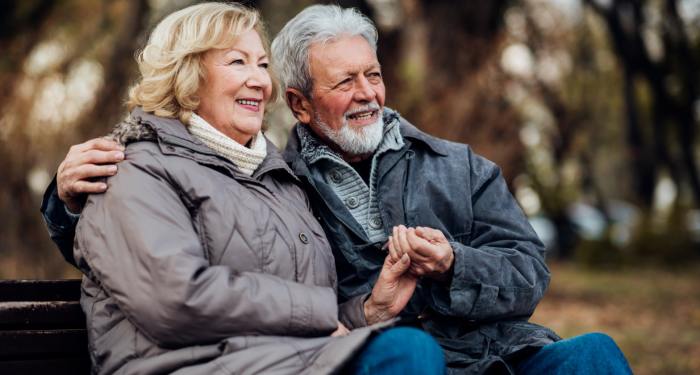
The world's longest-lived people don't pump iron, run marathons or join gyms, they live in environments that constantly nudge them into moving without thinking about it.

Add VegOut to your Google News feed. 
Last month, my husband and I took Emilia to visit his grandparents in Santiago. His grandmother is 94 and still walks to the market every morning. She moves slower than she used to, but she goes. Every single day.
Watching her reminded me of something I'd read about the Japanese approach to aging. Japan has more centenarians per capita than almost anywhere else in the world. And when researchers look at what these people do differently, it's rarely about dramatic lifestyle overhauls or expensive supplements.
It's the small, boring, everyday things that add up over decades.
Here are seven activities that Japanese centenarians practice daily, and what we can learn from them.
1. They walk everywhere, even when they don't have to
In Japan, walking is just how you get around. You walk to the train station. You walk to the grocery store. You walk to meet a friend for coffee.
This constant, low-intensity movement keeps joints flexible and muscles engaged without putting stress on the body. As noted by Dan Buettner, who studied longevity hotspots around the world, "The world's longest-lived people don't pump iron, run marathons or join gyms. Instead, they live in environments that constantly nudge them into moving without thinking about it."
I've noticed this shift in my own routine since moving to São Paulo. Matias and I walk him to work every morning, and Emilia and I walk back through the neighborhood. We stop by the market, chat with neighbors, take the long route home. Those 30 minutes add up, and I feel better on days when we stick to it.
Walking also gives your brain a break. There's something calming about moving your body without a specific goal attached to it. You're not exercising. You're just going somewhere.
2. They eat until they're 80% full, not stuffed
The Okinawan practice of "hara hachi bu" translates roughly to "eat until you're eight parts full." You stop before you feel completely satisfied, leaving a little room.
This habit keeps your digestive system from working overtime and helps maintain a healthy weight without obsessing over calories or portions. It's a form of mindful eating that doesn't require weighing food or tracking macros.
When I first heard about this, I thought it sounded restrictive. But then I realized how often I eat past fullness just because the food is there. I finish what's on my plate even when I'm no longer hungry. I go back for seconds because it tastes good, not because I need it.
Eating to 80% full takes practice. You have to slow down and pay attention. Put your fork down between bites. Notice when your hunger starts to fade, even if the plate isn't empty yet.
It's a subtle shift, but it changes how you feel after meals. You're satisfied without being sluggish.
3. They tend to a garden or care for plants daily
Gardening is huge in Japanese culture, especially among older adults. Even in urban areas, people grow herbs on balconies or tend to small vegetable plots in community gardens.
This daily ritual combines light physical activity with purpose. You're bending, squatting, reaching, and using your hands. You're also creating something and watching it grow, which gives you a sense of accomplishment and connection to the natural world.
I don't have space for a full garden in our apartment, but I keep a few potted herbs on the kitchen windowsill. Basil, mint, cilantro. I water them every morning while the coffee brews, and I use them when I cook. It's a small thing, but it feels grounding.
There's also research suggesting that exposure to soil bacteria can boost mood and immune function. Spending time with plants isn't just relaxing. It might actually be good for your health on a biological level.
4. They maintain strong social connections and gather regularly
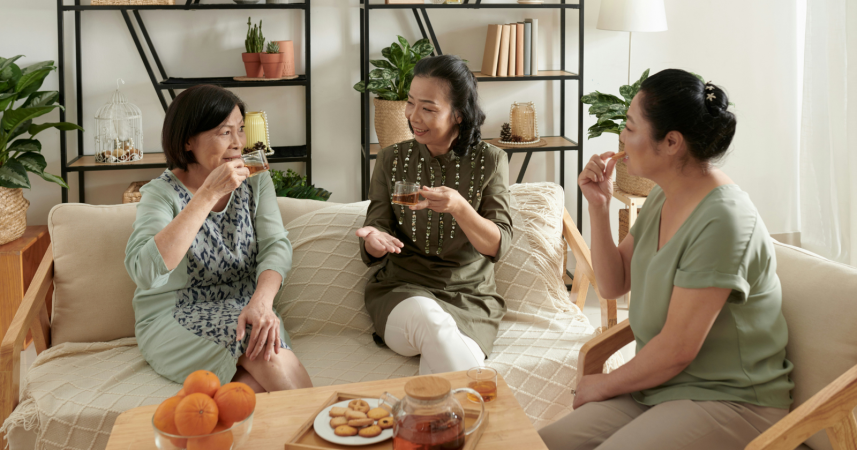
In Okinawa, there's a tradition called "moai," which is essentially a social support group that meets regularly throughout life. These groups provide emotional support, financial assistance when needed, and a built-in social calendar.
Loneliness is a real health risk. Studies show that social isolation can increase mortality risk as much as smoking 15 cigarettes a day. Having people you see regularly, people who check in on you and who you check in on, keeps you connected and engaged.
I see this with my group of girlfriends here in São Paulo. We make time for each other, even when life is busy. We meet for coffee, go on trips, text throughout the day. Those connections matter. They give me something to look forward to and remind me that I'm part of a community.
Japanese centenarians don't just passively hope for social connection. They actively maintain it. They show up. They participate. They make it a priority, just like eating or sleeping.
5. They practice small acts of purpose every day
The Japanese concept of "ikigai" refers to your reason for being. It's the thing that gets you out of bed in the morning and gives your life meaning.
For centenarians, ikigai doesn't have to be grand. It could be as simple as making tea for your family, tending to your garden, or teaching a skill to a younger generation. The key is that it's something you do with intention, something that makes you feel useful and connected to others.
I think about this when I cook dinner for my family every night. Some days it feels like just another task on the list. But when I slow down and remember why I'm doing it, cooking for my family, making sure we sit down together, it shifts from obligation to purpose.
Purpose doesn't have to mean changing the world. It just has to mean something to you. And when you have a reason to keep going, you tend to keep going.
6. They move their bodies in gentle, varied ways
Japanese centenarians don't hit the gym for high-intensity interval training. They move naturally throughout the day in different ways. They stretch. They squat to pick things up. They climb stairs. They kneel and stand repeatedly.
This kind of functional movement keeps the body flexible and strong without beating it up. Research from Harvard Medical School highlights that gentle, regular movement like tai chi improves balance, flexibility, and cardiovascular health while reducing stress.
I've started incorporating more variety into how I move. Instead of always sitting in a chair, I'll sit on the floor and get up without using my hands. I'll take the stairs instead of the elevator. I'll stretch while I'm watching Emilia play.
These small movements add up over time. They keep your body capable of doing the things you need it to do, which becomes more important as you age.
7. They spend time in nature, even if just for a few minutes
The Japanese practice of "shinrin-yoku," or forest bathing, involves spending time in nature to reduce stress and improve wellbeing. You don't have to hike or exercise. You just have to be there.
Centenarians often live in areas where nature is accessible. They walk through parks, sit in gardens, or simply spend time outside. The exposure to fresh air, natural light, and green spaces has measurable effects on mood, blood pressure, and stress levels.
Living in São Paulo means we're surrounded by buildings and traffic most of the time. But on weekends, we make an effort to take Emilia to one of the city's parks. We sit on a blanket, let her run around in the grass, watch the trees move in the wind.
Those moments feel restorative in a way that staying inside never does. Even just ten minutes outside can shift your mood and energy.
Final thoughts
None of these habits are revolutionary. They're simple, accessible, and mostly free. You don't need special equipment or a complete lifestyle overhaul.
What strikes me most about Japanese centenarians is that they've built lives where healthy behaviors happen naturally. They're not forcing themselves to do things they hate. They're just living in a way that supports their bodies and minds over the long term.
You can start with one small shift. Walk a little more. Eat a little less. Spend time with people you care about. Tend to something living. Move your body in gentle ways.
The years add up. So do the habits.
If You Were a Healing Herb, Which Would You Be?
Each herb holds a unique kind of magic — soothing, awakening, grounding, or clarifying.
This 9-question quiz reveals the healing plant that mirrors your energy right now and what it says about your natural rhythm.
✨ Instant results. Deeply insightful.

Ainura Kalau
Ainura was born in Central Asia, spent over a decade in Malaysia, and studied at an Australian university before settling in São Paulo, where she’s now raising her family. Her life blends cultures and perspectives, something that naturally shapes her writing. When she’s not working, she’s usually trying new recipes while binging true crime shows, soaking up sunny Brazilian days at the park or beach, or crafting something with her hands.
More Articles by Ainura