That checkbook isn't about being old-fashioned. It's about trust, control, and a paper trail that actually means something.

Add VegOut to your Google News feed. 
Last week at my local farmers market in Venice Beach, I watched a woman who looked to be in her seventies methodically examine every single avocado before placing three perfect ones in her reusable bag. She spent at least five minutes on this task. The vendor, probably in his twenties, looked bewildered by her dedication.
It got me thinking about the generational divide I see every time I'm at the grocery store. As someone who bridges the gap between digital natives and those who came before, I've noticed patterns that leave younger cashiers scratching their heads. These aren't wrong or right, just different approaches shaped by entirely different eras.
Let's explore some grocery habits that define the over-60 crowd and why they mystify the younger generation ringing them up.
1) They write checks at the register
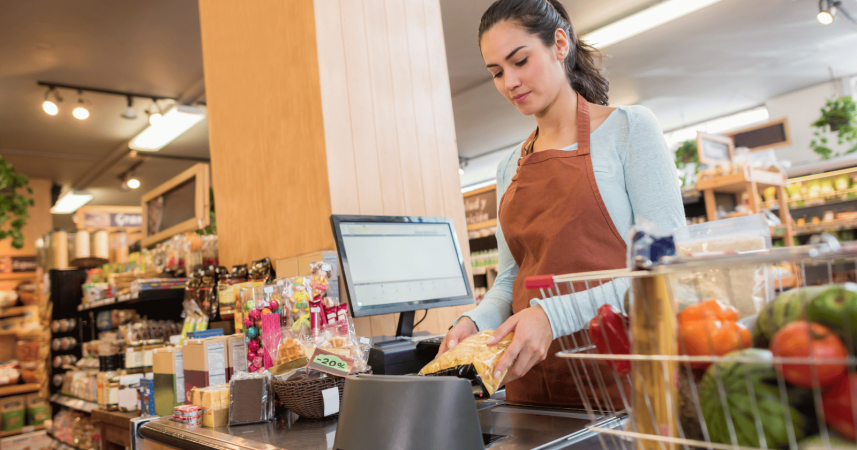
Walk into almost any supermarket and you'll eventually see it. Someone ahead of you pulls out an actual checkbook. The younger cashier's face tells the whole story.
Here's the thing: for people who grew up before debit cards became standard, checks were the non-cash payment method. They provided a paper trail, fraud protection, and a tangible record in that little register at the front of the checkbook.
Even now, some older shoppers find comfort in seeing their balance right there in black and white rather than trusting a digital screen.
What drives younger people crazy isn't just the check itself. It's the timing. Many older shoppers don't pull out the checkbook until everything's rung up and bagged. Then comes the search for a pen, the careful filling out of each line, the recording in the register, the tearing along the perforated edge.
For someone who grew up tapping their phone to pay, this ritual feels like watching paint dry. But for the person writing it, it's simply how you pay for groceries, the same way they've been doing it for decades.
2) They examine every piece of produce like they're buying diamonds
I've seen this play out countless times. An older shopper will pick up a tomato, turn it over slowly, squeeze it gently, smell it, put it back, and repeat the process with five more before selecting the chosen one.
Younger shoppers grab and go. Gen Z is more likely to throw whatever's closest into their cart and keep moving. But people over 60 grew up in an era when you couldn't just return bad produce with a photo and a complaint. You lived with your purchasing decisions.
There's also something else at play. Many older adults learned to shop from parents who lived through the Depression or wartime rationing. Wasting food wasn't just frowned upon, it was practically a moral failing. That scrutiny at the produce section? It's not pickiness. It's insurance against waste.
The twenty-something cashier watching this unfold has probably never been taught to check for firmness or bruising. They're wondering why someone would spend ten minutes selecting bell peppers when you could be in and out in three.
3) They arrive with detailed lists written on actual paper
Shopping lists on paper. Not on a phone app, not in Notes, not even on the back of an old envelope, but on proper notepaper, sometimes organized by aisle.
Older generations plan their shopping trips with military precision. They know exactly what they need before they walk in. Meanwhile, younger shoppers are three times more likely to make impulse purchases and wing it based on what looks good.
I'm somewhere in the middle. I keep a running list on my phone, but I've noticed my grandmother still brings her handwritten list to the store every Saturday. She'll pull it out, check off each item with a pen she keeps in her purse specifically for this purpose, and she never buys anything that's not on the list.
To a young cashier who shops based on Instagram posts and vibes, this level of pre-planning seems excessive. Why not just look around and see what you want?
4) They clip coupons and actually use them
Digital coupons exist. Store apps have them. You can browse them on your phone while standing in the aisle. But try telling that to someone who shows up with an envelope full of carefully clipped paper coupons.
Baby boomers are significantly more likely than younger generations to use coupons and actively seek out sales. They'll drive to a different store to save fifty cents on coffee. They'll buy a different brand because it's a dollar cheaper. This isn't always about need; it's about value as a principle.
I grew up watching my grandmother clip coupons at her kitchen table every Sunday morning. She organized them in an accordion folder and got genuinely excited about double coupon days. At the register, she'd hand over her stack with pride.
For younger cashiers who've maybe used a digital promo code once or twice, watching someone methodically hand over ten different pieces of paper, wait for each to scan, then dispute when one doesn't work properly feels like a different universe.
5) They shop the weekly circular religiously
That newspaper insert with the week's sales? Most people under 40 don't even know it exists. But for many over 60, it's required reading.
Older shoppers often plan their entire week's meals around what's on sale. If chicken is marked down, that's three dinners right there. If canned tomatoes are two for three dollars, they're stocking up whether they need them immediately or not.
This behavior stems from a time when food took up a much larger percentage of household income. Being strategic about grocery shopping wasn't optional; it was survival. That mindset doesn't disappear just because circumstances change.
Younger cashiers, who are more likely to grab whatever they feel like eating that day, find this approach baffling. Why would you build your dinner plans around a sale circular?
6) They want to talk to actual humans about everything
Self-checkout exists. Store apps exist. Price checkers exist. But ask someone over 60 where an item is, and they'll walk right past all that technology to find a person to ask.
This drives younger staff crazy sometimes, especially when they're busy and the answer is literally on the screen in the customer's hand. But here's what they're missing: for older shoppers, the store isn't just a transactional space. It's social.
Many people over 60 are retired, living alone, or have smaller social circles than they once did. That brief conversation with the deli worker or the cashier might be one of their few human interactions that day. What seems like inefficiency to a Gen Z employee used to solving problems through apps is actually connection.
I've noticed this with my partner's grandmother. She knows the names of half the staff at her local market. She asks about their families. Shopping takes her twice as long as it should, but she leaves genuinely happier.
7) They're extremely brand loyal
Pick up a different brand of pasta than usual? That's fine when you're young. You'll try it, see how it goes, maybe post about it if it's terrible. No big deal.
But suggest to someone over 60 that they try a different laundry detergent than they've used for forty years, and you might get a lecture on why this particular brand has the perfect formula and everything else is inferior.
This isn't just stubbornness. Research indicates older generations developed brand loyalty in an era when there were fewer choices and when switching brands felt like more of a risk. If something worked, you stuck with it. Building new trust with an unfamiliar product required convincing evidence.
Younger shoppers treat brands as interchangeable. Whatever's cheapest or most convenient or has better packaging wins. They're comfortable experimenting because there's always another option next week.
For cashiers who can barely remember which brand they bought last week, watching someone reject a reasonable alternative because it's not "their" brand seems oddly stubborn.
8) They refuse to use self-checkout
Here's where the generational divide becomes most visible. Self-checkout lanes sit empty while a long line forms at the one register with a human cashier, filled almost entirely with people over 60.
Ask them why and you'll hear a range of answers. Some don't trust the technology. Some worry about making mistakes. Some genuinely believe they're protecting jobs by avoiding the machines. Some simply prefer human interaction.
But there's also something else. Using self-checkout requires a comfort level with technology that many older adults don't have. It's not that they can't learn; it's that the stakes feel higher when you're unfamiliar. What if something scans wrong? What if the produce code doesn't work? What if the machine freezes and everyone behind you judges your incompetence?
For younger people who grew up pressing buttons and figuring things out through trial and error, this anxiety seems overblown. The machine literally tells you what to do. How hard can it be?
But when you've spent seventy years having someone else ring up your groceries, that machine represents a lot more than convenience.
Conclusion
These habits aren't about being difficult or stuck in the past. They're about shopping in a way that makes sense based on lived experience.
Younger cashiers see inefficiency. Older shoppers see thoroughness, value, and connection. Neither is wrong, they're just operating from completely different frameworks shaped by different eras.
The next time you're behind someone taking forever to write a check or examining every apple in the bin, try cutting them some slack. They're not trying to waste your time. They're just shopping the way they've always shopped, in a world that's moved on without much concern for whether they've caught up.