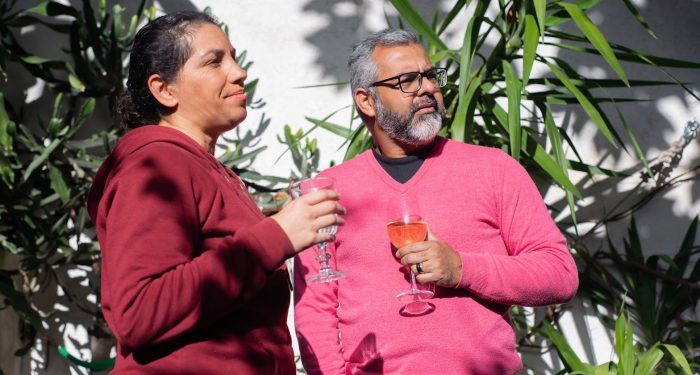
What if the real status symbol today isn’t what you own, but how invisible you’ve learned to be?

Add VegOut to your Google News feed. 
There’s a moment when luxury stops feeling luxurious.
When every influencer is unboxing the same “exclusive” bag, when logos get plastered on everything from water bottles to phone cases, that’s when the quietly rich slip out the back door.
They don’t announce it. They don’t roll their eyes or make speeches about subtlety. They simply move on to something else, something that feels private again.
The truth is, the upper class isn’t chasing status anymore. They’re chasing serenity. And you can see it in what they wear, drive, and even drink.
Here’s what they’ve quietly replaced while everyone else kept chasing the label.
1. Prada → Loro Piana
Prada had its golden moment, the nylon bags, the sleek minimalism, the “intellectual fashion” edge. But like any brand that becomes too familiar, its power to impress faded.
The truly wealthy have pivoted to Loro Piana, an Italian brand built on near-mythical fabric quality. Think baby cashmere and vicuña, fibers so rare that a single coat can cost more than an entire wardrobe of Prada.
There’s no flashy logo, no obvious branding. Just quiet, impeccable tailoring.
"Quiet luxury” has reshaped high-end wardrobes, favoring craftsmanship over clout.
You don’t wear Loro Piana to be seen. You wear it because you know.
And among the quietly affluent, that’s the only approval that matters.
2. Gucci → The Row
Gucci still dominates social media, the loud prints, the monogram belts, the maximalist energy. But those who’ve “been there” now see it as performance, not sophistication.
Enter The Row, founded by Mary-Kate and Ashley Olsen.
It’s the polar opposite: oversized blazers, muted tones, and the kind of simplicity that takes real confidence to pull off. There’s no visible logo because The Row doesn’t need one. The quality does the talking.
What fascinates me is how understated luxury has become the new rebellion.
In Dubai, where I live, you can always tell who actually has money and who’s just borrowing the aesthetic. The former dress in quiet, deliberate pieces that feel almost anonymous.
The latter? They’re still queuing up for the next Gucci drop.
3. Chanel beauty → Augustinus Bader
For decades, Chanel’s creams and lipsticks were the gold standard of aspirational beauty. But now, those in private skincare circles swear by Augustinus Bader, a German brand built on stem-cell science.
The face cream alone can cost over $300. And people happily pay it.
Why? Because it’s not about the packaging or the logo, it’s about results.
Victoria Beckham and Naomi Campbell have both raved about it, and beauty editors who could get any product for free still buy it with their own money.
That says everything.
It’s not skincare for show. It’s skincare for those who’ve stopped needing to prove anything.
4. Louis Vuitton → Hermès
There’s a saying in luxury circles: “When your first designer bag is Louis Vuitton, your last will be Hermès.”
Louis Vuitton is where most people start their luxury journey. But it’s also where the quiet elite have long since exited.
Hermès plays an entirely different game.
You can’t just walk in and buy a Birkin or Kelly. You have to earn it, through spending history, relationship with the boutique, and, frankly, patience.
It’s a brand that prizes exclusivity not through marketing, but through access.
Hermès doesn’t chase the spotlight because it doesn’t need to. It built a world where scarcity equals status.
And that’s why, while Vuitton went mainstream, Hermès became a private language among those who could truly afford to wait.
5. Tesla → Porsche Taycan
Tesla was once a disruptor, the car that screamed innovation and sustainability. But as it became common in driveways everywhere, it lost its edge.
Those who could afford to care about refinement started looking elsewhere.
Their new favorite? The Porsche Taycan.
It’s electric, but with craftsmanship that feels deliberate rather than experimental. It’s quieter, smoother, and unmistakably European in its design philosophy.
Where Tesla relies on hype, Porsche relies on heritage.
When you see a Taycan glide past on Sheikh Zayed Road, you just know, that’s someone who’s moved past the noise.
In many ways, it’s the same story as every other brand here, the rich replacing recognition with peace of mind.
6. Balenciaga → Loewe
Balenciaga used to symbolize avant-garde edge. Then came the controversies, the overexposure, the endless ironic drops that turned fashion into a meme.
And quietly, those who once loved it turned their attention to Loewe.
Under Jonathan Anderson, Loewe became the darling of the art world, playful yet timeless, with craftsmanship rooted in its Spanish leather heritage.
A Loewe bag doesn’t scream luxury. It just feels like it.
And that’s the secret: it’s not trying to be everything to everyone. It’s for people who recognize beauty in detail, not display.
You’ll find Loewe in galleries, on stylists, and in wardrobes of people who think beyond fashion trends.
It’s Balenciaga’s grown-up cousin, the one who doesn’t need to prove they’ve evolved.
7. Starbucks → % Arabica
There’s a global phenomenon happening quietly, coffee snobbery is going minimalist.
Starbucks used to be a symbol of modern success: the to-go cup, the caramel drizzle, the Instagram story. But for those who’ve grown weary of chains, the focus has shifted to % Arabica.
This Japanese coffee brand is now a favorite among global elites for one reason: purity.
Its cafes are designed like temples of calm, white interiors, slow service, beans roasted on-site. Every detail is intentional.
When I first tried % Arabica in Kuala Lumpur, I was struck by how unhurried everything felt. The baristas moved like they were meditating. The coffee wasn’t rushed. The experience was quiet, almost ceremonial.
And that’s what makes it a symbol of modern wealth: time.
Anyone can afford Starbucks. But taking time to appreciate a handcrafted flat white? That’s a different kind of luxury.
8. Dior perfumes → Le Labo
Perfume has always been one of those invisible luxuries, it’s deeply personal, yet strangely performative.
Dior’s Miss Dior and Sauvage remain bestsellers, but their ubiquity has made them predictable. You can identify them in an elevator before you see the person.
That’s why the upper class shifted toward Le Labo.
Each fragrance is hand-blended to order, labeled with your name, and packaged in minimalist glass bottles that look more apothecary than luxury.
There’s no marketing campaign with supermodels. No slogans. Just scent.
Le Labo is the perfume equivalent of whispering in a world where everyone’s shouting.
That whisper says more than any brand name ever could.
Why the quiet shift matters
What fascinates me most about these shifts isn’t just the change in taste, it’s the psychology behind it.
True wealth, especially among those who’ve had it for generations, no longer needs validation. They’re not buying to impress; they’re buying to belong, to a circle that values subtlety, intellect, and quality over spectacle.
The rich have moved beyond logos.
And if you think about it, that mirrors a larger human truth.
We all start by wanting to be seen. Then, as we grow, we crave to simply be.
Final thoughts
There’s a saying I once heard in Dubai: “The real rich don’t shout, they hum.”
That’s the essence of this quiet luxury movement. It’s not about hiding wealth, it’s about expressing it differently. Through craftsmanship, patience, and privacy.
When everyone is fighting to be noticed, the calmest person in the room stands out the most.
And maybe that’s the quiet lesson here.
You don’t have to be rich to practice this kind of refinement.
You just have to stop needing to prove yourself.
If You Were a Healing Herb, Which Would You Be?
Each herb holds a unique kind of magic — soothing, awakening, grounding, or clarifying.
This 9-question quiz reveals the healing plant that mirrors your energy right now and what it says about your natural rhythm.
✨ Instant results. Deeply insightful.
Dania Aziz
Dania writes about living well without pretending to have it all together. From travel and mindset to the messy beauty of everyday life, she’s here to help you find joy, depth, and a little sanity along the way.
More Articles by Dania