Thrift stores taught me that the best finds aren’t new—they’re the ones with history.

Add VegOut to your Google News feed. 
For a long time, thrift shopping felt overwhelming to me. Too many racks, too much chaos, and never the sizes or styles I wanted.
I’d wander through the aisles and leave empty-handed, convinced that secondhand stores were only good for costumes or college furniture.
But one day, I slowed down. I walked into a shop with no real agenda, just curiosity. Instead of looking for something shiny and new, I paid attention to the textures, the history, and the character in the things around me.
That’s when I realized: thrift shopping isn’t about sifting through junk—it’s about discovering treasure that doesn’t scream for attention.
Over the years, I’ve brought home some of my most beloved pieces from thrift stores, items that feel more like stories than purchases. These eight finds changed the way I shop, and they might just make you fall in love with thrifting, too.
1. Quality furniture with real character
The first time I stumbled across a solid wood dresser in a thrift store, I ran my hand across the surface and could feel its age. The joints were sturdy, the drawers slid out smoothly, and there was a weight to it that you just don’t get from flat-pack furniture.
And the price? A fraction of what a new piece would cost.
Furniture like this holds up for decades because it was built to last. The nicks and scratches aren’t flaws—they’re part of the story.
I once found a dining table that had initials carved underneath, clearly from a child many years ago. When I set it in my kitchen, I couldn’t help but imagine all the meals and conversations it had hosted before.
Unlike buying new, where you get something straight from the factory, thrifted furniture already carries a sense of life. That’s something you can’t buy off a showroom floor.
2. Vintage denim that fits like a dream
Have you ever tried on a pair of jeans that felt like they were made for you?
That’s how I felt the first time I slipped into vintage denim from a thrift store. The fabric was softer, heavier, and already broken in. No stiff seams or awkward breaking-in period—just pure comfort.
What makes vintage denim so special is the craftsmanship. The stitching is stronger, the washes are richer, and the fit often feels more honest to the body than fast-fashion trends.
I once scored a Levi’s jacket from the 80s for under $20. I wear it constantly, and it still earns compliments.
New jeans often fade fast and lose their shape. Vintage denim, on the other hand, feels like an old friend the moment you put it on.
3. Kitchenware built to last
Thrift stores are gold mines for the kitchen if you take the time to look.
I’ve found cast iron skillets that just needed a little seasoning, mixing bowls with the weight of real ceramic, and serving spoons that have outlasted all the flimsy utensils I bought new.
One of my favorite finds was a heavy Dutch oven in perfect condition. A little scrubbing and it became the pot I use for Sunday stews.
Good kitchenware has a way of grounding a home. Unlike trendy gadgets that break after a year, thrifted cookware often comes from a time when things were made with durability in mind.
4. Books that feel like hidden treasures
I used to race past the book section in thrift stores, assuming it was just dog-eared paperbacks.
Then one day, I slowed down. Tucked between a pile of cookbooks, I found a beautiful hardcover collection of Maya Angelou’s poetry.
Inside, someone had underlined a line in pencil, and I thought: This book has already meant something to someone else, and now it can mean something to me too.
Since then, I’ve built much of my home library from secondhand shelves. I’ve found classics, first editions, even a signed copy once.
The joy isn’t only in the price—it’s in the surprise. Unlike bookstores where you walk in and know what you’ll find, thrift store book aisles are filled with serendipity.
Books are meant to be passed along. Thrift stores just happen to be one of the best places to catch them in mid-journey.
5. Coats and jackets with timeless style
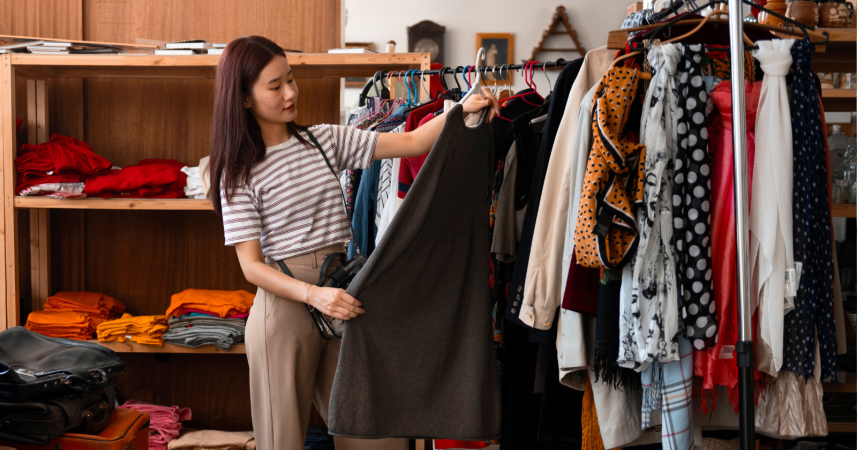
There’s something thrilling about spotting a coat on a rack and realizing it’s made of wool, tailored beautifully, and costs less than a takeout dinner.
Jackets and coats are some of the best things to buy secondhand because people often donate them after just a season or two.
I once found a camel-colored trench coat that looked straight out of a classic film. Every time I wear it, people ask where I got it.
When I say “thrift store,” they never believe me. The truth is, style doesn’t have to come with a luxury price tag. It just requires patience and an eye for timeless cuts.
While new coats can run hundreds of dollars, thrifted ones often cost less than $30. And with a quick trip to the dry cleaner, they feel brand new.
6. Unique home décor
If you want your home to feel like your home, décor from thrift shops is the way to go.
Lamps with quirky bases, mirrors with carved frames, pottery with hand-painted designs—these are the pieces that turn a room into a story.
One of my most treasured finds is a small painting of a seaside town. I don’t know who the artist was, but I love it because it feels personal.
Every time I pass it in my hallway, it makes me pause. You can’t buy that kind of charm at a big-box store.
Home décor doesn’t have to be about matching sets or trends. It can be about collecting little reminders of beauty and history. Thrift shops are full of them if you take the time to look.
7. Children’s clothes and toys
If you’ve ever raised kids, you know how quickly they outgrow everything. Shirts that fit in September are too small by spring, and toys that cost a fortune sit untouched after a few weeks.
That’s why children’s items are one of the smartest things to buy secondhand.
I used to think thrifted clothes for kids would look worn, but most of what I’ve found has barely been used. Parents donate items quickly, so racks are full of brand-name jackets, sturdy shoes, and toys that still work perfectly.
I once picked up a wooden train set that my nephew adored—and it looked like it had barely been touched.
Buying these things secondhand isn’t just smart financially—it’s a way to teach kids about reusing and valuing things beyond their “newness.”
8. Accessories that tell a story
Scarves, handbags, jewelry—these are the finishing touches that bring an outfit together, and thrift stores are bursting with them.
Unlike chain stores where everything looks the same, thrifted accessories often carry history and individuality.
One of my favorite scarves came from a bin in a dusty shop. It’s silk, with colors that remind me of a sunrise. I get compliments on it constantly, and every time I wear it, I feel like I’m carrying a little piece of mystery from someone else’s life.
Accessories are easy to overlook, but they’re often the most joyful finds. They let you experiment, add flair, and tell a story—all for just a few dollars.
Final thoughts
I used to see thrift shopping as a chore. Now, I see it as an adventure.
The best finds aren’t always the ones you set out looking for—they’re the ones that surprise you.
What thrift shopping taught me is that joy isn’t always new, shiny, or straight off the shelf. Sometimes, it’s waiting quietly on a rack or tucked between stacks, ready for you to notice.
And once you do, it feels less like shopping and more like uncovering little treasures that already have soul.