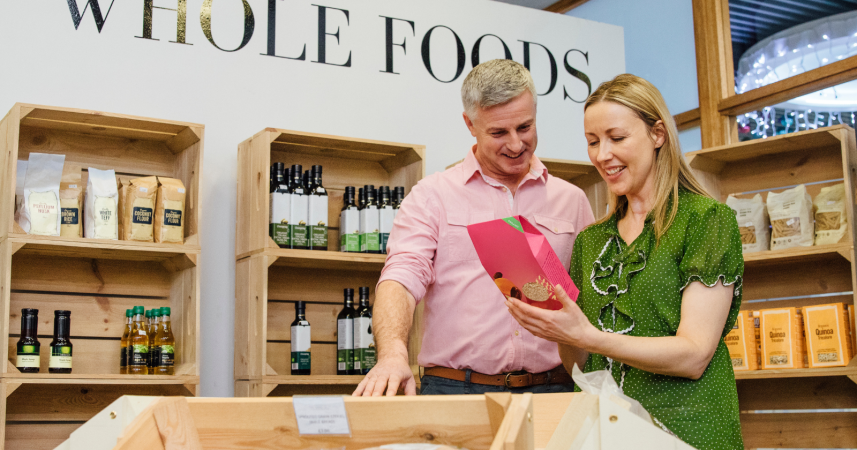
Where you grocery shop says less about your values and more about your privilege than most people want to admit.

Add VegOut to your Google News feed. 
I've shopped at Whole Foods. I've also bought produce from morning markets in Bangkok where vendors spoke no English and prices were negotiated through hand gestures.
I've served ultra-wealthy clients at high-end resorts who considered Whole Foods their only acceptable grocery option.
The difference between these experiences taught me something uncomfortable.
Shopping at Whole Foods exclusively isn't just a preference. It's often a signal of privilege that the shoppers themselves don't recognize.
This isn't about whether Whole Foods sells quality products. They do. It's about the behaviors that emerge when you can afford to never consider alternatives, and how that shapes perspectives in ways that feel invisible from the inside.
Research shows Whole Foods shoppers span diverse demographics now, from Gen Z to boomers, different income levels and household compositions. But people who shop there exclusively, who've never had to calculate whether organic is worth the premium, often display patterns they don't see in themselves.
These seven behaviors aren't malicious. They're unconscious. And that's precisely what makes them worth examining.
1) Assuming everyone shares their food priorities
Exclusive Whole Foods shoppers often talk about food quality, organic certification, and ingredient transparency like these are universal concerns everyone shares equally.
They're not.
For many families, the priority is feeding everyone with whatever money is available. Organic versus conventional isn't a choice, it's a luxury. Worrying about whether produce has GMOs requires first having money left over after buying any produce at all.
I learned this working in restaurant kitchens. Coworkers would bring lunch from home, often simple, inexpensive meals. Meanwhile, other staff would discuss the merits of grass-fed versus grain-fed beef like it was a meaningful moral distinction rather than a price point most couldn't afford.
The assumption that everyone should prioritize the same food values ignores economic reality. It positions personal preferences as ethical imperatives without acknowledging the privilege required to act on them.
2) Treating convenience as a right rather than a luxury
Whole Foods is conveniently located in affluent neighborhoods. The stores are clean, well-stocked, easy to navigate. Parking is available. The shopping experience is frictionless.
Exclusive shoppers often don't realize how much this convenience costs, or that most grocery shopping doesn't work this way.
Many people shop at stores requiring multiple bus transfers. Or in food deserts where fresh produce is scarce regardless of price. Or at places where "organic" isn't even an option on the shelf.
During my Thailand years, I shopped at local markets that required showing up early, navigating crowds, haggling over prices, carrying everything home on foot. It took time and effort. But that's how most of the world shops.
Treating convenient, pleasant grocery shopping as standard rather than exceptional reveals a blindness to how most people actually access food.
3) Using food choices as moral identity
Exclusive Whole Foods shoppers often conflate shopping decisions with personal virtue.
Buying organic becomes a statement about caring for the environment. Choosing grass-fed beef signals concern for animal welfare. Shopping at Whole Foods itself becomes evidence of being a conscious consumer.
The problem isn't caring about these things. It's positioning consumption as the primary way to demonstrate values, which only works if you can afford to shop your beliefs.
It's a fundamentally privileged framework. Someone working two jobs to support their family isn't less ethical because they buy conventional produce at a discount store. They're just operating under different constraints.
I saw this constantly during my hospitality career. Wealthy guests would discuss their food ethics extensively while staff ate whatever was affordable. The disconnect was staggering, but invisible to the people doing the discussing.
True food ethics require acknowledging that not everyone has equal access to make the same choices. Positioning your shopping habits as moral superiority ignores that reality.
4) Dismissing budget concerns as lack of priorities
When price comes up, exclusive Whole Foods shoppers often respond with some version of "you pay for quality" or "health is worth the investment."
These statements assume everyone has investment capacity.
The average Whole Foods basket costs significantly more than the same items at conventional grocery stores. For people living paycheck to paycheck, that difference isn't negligible. It's the difference between eating and not eating, or between groceries and rent.
Suggesting people should "prioritize" more expensive food assumes there's slack in the budget to reallocate. Many families have no slack. Every dollar is already spoken for.
I grew up in a household where my parents, both teachers, valued education over material wealth but still had to watch grocery spending carefully. The idea that we should have paid 30% more for organic versions of everything would have been absurd. Not because we didn't care about quality, but because the math didn't work.
Dismissing budget concerns positions financial constraints as personal failing rather than structural reality. That's privilege showing itself.
5) Assuming their aesthetic preferences are universal standards
Whole Foods has a specific aesthetic. Clean, modern, abundant displays of beautiful produce. Everything looks Instagram-ready. The shopping experience feels curated and pleasant.
Exclusive shoppers often internalize this aesthetic as what grocery shopping should look like, judging other stores as substandard by comparison.
But this is taste, not objective quality. The morning markets in Bangkok where I shopped looked nothing like Whole Foods. Chaotic, crowded, vendors shouting, produce piled high without perfect arrangements. The food was incredibly fresh and flavorful. The experience was authentic and vibrant.
Different isn't worse. It's just different. Treating Whole Foods' aesthetic as the standard reveals class assumptions about what counts as acceptable.
Many excellent grocery stores serve communities perfectly well without looking like Whole Foods. Corner markets, ethnic grocers, discount chains, they all play crucial roles in how people actually eat.
Judging them against Whole Foods' aesthetic is imposing upper-middle-class values on different contexts that don't need them.
6) Overlooking their impact on food systems
Exclusive Whole Foods shoppers often see themselves as supporting better food systems through their purchasing choices.
They're partly right. Buying organic does support certain farming practices. But exclusive Whole Foods shopping also contributes to food system problems they don't see.
The store's presence in neighborhoods often accelerates gentrification, raising rents and pushing out longtime residents. The premium pricing model only works in areas where enough people can afford it, concentrating resources in already privileged communities.
Meanwhile, food deserts persist in lower-income areas where Whole Foods wouldn't consider opening because the demographics don't support their pricing model.
The "better" food system exclusive Whole Foods shoppers support is really a system that serves people like them while leaving others with worse options. That's not moral consumption. That's reinforcing inequality while feeling good about it.
After returning to Austin from Bangkok, I became more aware of how food access varies drastically by neighborhood. Some areas have multiple Whole Foods and specialty grocers. Others have convenience stores and fast food, period.
Shopping exclusively at Whole Foods means participating in that inequality, whether you acknowledge it or not.
7) Confusing access with virtue
This is the core issue underlying all the others.
Exclusive Whole Foods shoppers often see their shopping choices as evidence of superior values, better priorities, more developed consciousness about food and sustainability.
Really, it's evidence of access. Of having money that creates options. Of living in areas where Whole Foods exists. Of having transportation, time, and resources that make that shopping model possible.
There's nothing wrong with shopping at Whole Foods if you can afford it. The problem is mistaking that access for virtue and looking down on people with different constraints.
During my decade in luxury hospitality, I watched this pattern constantly. Wealthy families would praise themselves for conscious choices that were really just selections from options only available to people with money. They couldn't see that the virtue was inseparable from the privilege enabling it.
The most self-aware shoppers I know, the ones who shop at Whole Foods but don't make it their identity, understand this distinction. They recognize they're fortunate to have choices, not morally superior for making them.
Final thoughts
None of these behaviors are malicious. They're unconscious patterns that emerge from privilege.
The issue isn't shopping at Whole Foods. It's shopping there exclusively while assuming everyone else could and should do the same if they just had better priorities.
I shop at Whole Foods sometimes now, back in Austin. I also shop at other places. Farmers markets when they're convenient. Regular grocery stores when I need basics. Corner markets when I'm in neighborhoods where that's what's available.
The variety keeps me honest about my own assumptions. Reminds me that there are many ways to feed yourself well, and access to premium grocery stores is privilege, not virtue.
If you only shop at Whole Foods, try visiting a different grocery store occasionally. Not to judge it, but to observe your reactions. Notice what you assume, what you take for granted, what feels uncomfortable.
Those reactions reveal your blind spots. And blind spots are worth examining, especially when they involve something as fundamental as food access.
The goal isn't guilt. It's awareness. Understanding that your food choices are enabled by circumstances not everyone shares, and those circumstances shape your perspective in ways you don't always see.
If You Were a Healing Herb, Which Would You Be?
Each herb holds a unique kind of magic — soothing, awakening, grounding, or clarifying.
This 9-question quiz reveals the healing plant that mirrors your energy right now and what it says about your natural rhythm.
✨ Instant results. Deeply insightful.

Adam Kelton
Adam Kelton is a writer and culinary professional with deep experience in luxury food and beverage. He began his career in fine-dining restaurants and boutique hotels, training under seasoned chefs and learning classical European technique, menu development, and service precision. He later managed small kitchen teams, coordinated wine programs, and designed seasonal tasting menus that balanced creativity with consistency.
After more than a decade in hospitality, Adam transitioned into private-chef work and food consulting. His clients have included executives, wellness retreats, and lifestyle brands looking to develop flavor-forward, plant-focused menus. He has also advised on recipe testing, product launches, and brand storytelling for food and beverage startups.
At VegOut, Adam brings this experience to his writing on personal development, entrepreneurship, relationships, and food culture. He connects lessons from the kitchen with principles of growth, discipline, and self-mastery.
Outside of work, Adam enjoys strength training, exploring food scenes around the world, and reading nonfiction about psychology, leadership, and creativity. He believes that excellence in cooking and in life comes from attention to detail, curiosity, and consistent practice.
More Articles by Adam