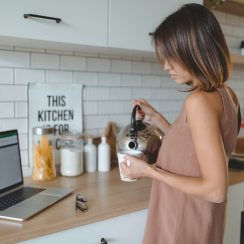
From daily coffee runs to frequent tech upgrades, these nine small luxuries can quietly drain your wallet if you buy them regularly.

Add VegOut to your Google News feed. 
Most people don’t go broke from one massive, reckless purchase.
Instead, financial strain often comes from small, repeated expenses that seem harmless in the moment.
These “little luxuries” feel good, provide instant gratification, and rarely cost much individually.
But when you buy them consistently, they quietly add up to a staggering amount over time.
The danger is that they don’t feel like a big deal—which is exactly why they fly under the radar.
For many people, these habits are so ingrained they don’t even notice how much they’re really spending.
Here are nine common splurges that can slowly drain your bank account without you realizing it.
1. Daily specialty coffee
Grabbing a latte or cold brew on your way to work feels like a small treat.
At five or six dollars a cup, it doesn’t seem like much—until you add it up over weeks and months.
For someone who buys coffee daily, this can easily total more than $1,500 a year.
Brewing coffee at home costs just a fraction of that amount.
The issue isn’t enjoying coffee—it’s making it a non-negotiable habit.
Over time, this ritual becomes an automatic part of your routine, making it harder to cut back.
Middle-class earners especially tend to justify it as a “necessary expense” rather than a luxury.
But a daily cup from a café can quietly eat away at your financial goals.
2. Subscription services
Streaming platforms, meal kits, and premium apps all seem affordable on their own.
The problem is that most people don’t have just one—they have several.
Ten dollars here and fifteen dollars there may not feel significant.
But stacked together, these services can easily total hundreds of dollars a month.
Worse, many subscriptions run automatically, so you pay for things you barely use.
Smart shoppers regularly audit their subscriptions and cancel anything they don’t truly need.
It’s easy to lose track of recurring charges when they’re spread across multiple accounts.
These tiny auto-payments add up faster than most people realize.
3. Takeout and delivery fees
Ordering takeout is undeniably convenient, especially after a long day.
But restaurant meals already cost more than cooking at home—and delivery fees take it even further.
When you add service fees, tips, and inflated menu prices, a simple meal can double or triple in cost.
What feels like a $15 dinner might actually cost closer to $30.
Doing this a few nights a week quickly adds up to hundreds of dollars per month.
The middle class often leans heavily on takeout because it saves time, but at a high financial cost.
Even swapping just one weekly takeout night for a home-cooked meal can make a noticeable difference.
It’s not about giving it up entirely—it’s about making it a treat, not a routine.
4. Brand-name household products
From laundry detergent to paper towels, household essentials are often overpriced simply because of branding.
Many people automatically reach for the most familiar or heavily advertised option.
But store-brand or generic products often perform just as well for a fraction of the price.
When you consistently buy brand-name items, the extra few dollars per product quietly add up.
Over a year, this can amount to hundreds of dollars spent purely on marketing and packaging.
Smart shoppers compare ingredients and performance rather than labels.
The difference in quality is usually minimal, but the savings are substantial.
It’s a small switch that has a big impact over time.
5. Frequent salon treatments
Self-care is important, but some grooming habits can become very costly.
Regular blowouts, manicures, pedicures, and spa treatments add up quickly.
A $40 manicure might seem reasonable until you’re getting one every week or two.
Similarly, coloring or styling your hair professionally every month can cost hundreds of dollars annually.
These treatments can easily become routine rather than occasional indulgences.
DIY alternatives or stretching out the time between appointments can significantly cut costs.
You don’t have to give them up completely—just be strategic about frequency.
Even small adjustments can free up money for other priorities.
6. Fast fashion shopping sprees
Buying inexpensive clothing regularly feels like a harmless way to keep your wardrobe fresh.
Fast fashion stores encourage this behavior with constant new arrivals and low prices.
But cheap items wear out quickly, leading to even more frequent purchases.
Over time, this cycle costs far more than investing in a few quality pieces.
The middle class often falls into this trap because the initial cost seems low.
Smart shoppers focus on timeless, durable staples rather than trendy, disposable items.
Fewer, better-quality clothes ultimately save money and reduce clutter.
It’s about buying intentionally rather than impulsively.
7. Upgrading tech too often
Technology moves fast, and companies are constantly releasing new versions of their products.
Many people upgrade phones, tablets, or laptops the moment a new model comes out.
Even if the old device still works perfectly, marketing creates a sense of urgency to “keep up.”
These upgrades often cost hundreds—or thousands—of dollars each time.
Smart buyers wait until their devices truly need replacing or buy refurbished models at a discount.
Younger generations, especially, tend to overspend on electronics due to peer pressure and hype.
Spreading out upgrade cycles saves significant money over time.
It’s one of the easiest ways to cut hidden expenses.
8. Specialty drinks and snacks
Little extras at the grocery store can quietly blow up your budget.
Flavored waters, energy drinks, protein bars, and gourmet snacks seem cheap individually.
But buying them regularly adds up shockingly fast.
Many of these products are marketed as “essential” or “healthy,” making them harder to resist.
The truth is, most are luxuries disguised as necessities.
Swapping these for simpler, homemade alternatives saves both money and clutter.
Middle-class shoppers often underestimate how much they spend in this category.
Those small, frequent purchases are easy to overlook until the receipts tell the full story.
9. Constant home décor updates
There’s nothing wrong with wanting your home to look nice.
But frequently buying decorative pillows, wall art, or trendy knickknacks can drain your wallet.
Retailers thrive on convincing shoppers that last season’s décor is suddenly outdated.
This creates a constant cycle of replacing perfectly good items just for the sake of novelty.
Over time, these small purchases add up to hundreds—or even thousands—of dollars.
Smart shoppers focus on timeless, versatile pieces that don’t need constant updating.
They also shop secondhand or wait for seasonal clearance sales.
Home décor should enhance your space, not sabotage your budget.
Final thoughts: the danger of “small” expenses
It’s rarely the single big splurge that causes financial trouble.
More often, it’s the accumulation of small, repeated luxuries that slowly eat away at your savings.
These little habits are easy to justify because they don’t feel dramatic in the moment.
But over time, they shape your entire financial picture.
By becoming more mindful of these hidden costs, you can still enjoy occasional indulgences without letting them control your budget.
The key isn’t deprivation—it’s intention.
Small changes today can lead to big financial freedom tomorrow.