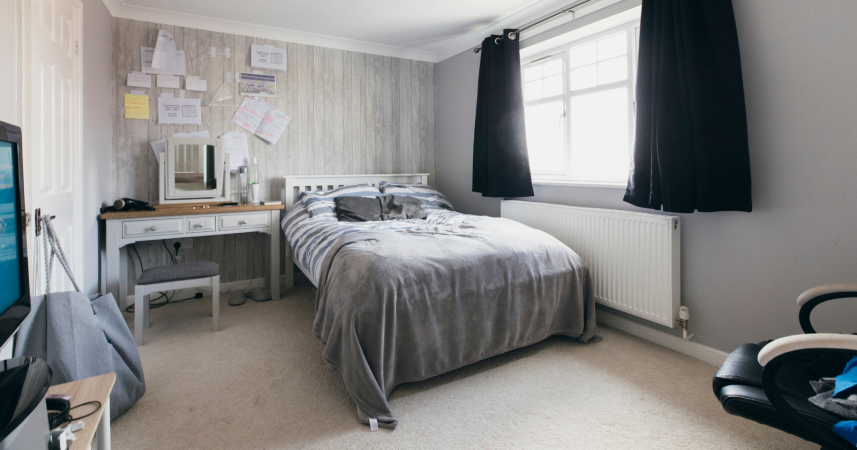
These nine home decor patterns reveal how class background shapes our aesthetic choices in ways we rarely acknowledge, even after we've moved up the economic ladder

Add VegOut to your Google News feed. 
I was photographing a friend's Venice Beach apartment last month when it hit me. Despite the trendy location and expensive rent, something about the space felt deeply familiar. The mass-produced wall art. The entertainment center groaning under too many mismatched electronics. The ambitious dining set squeezed into a too-small room.
It reminded me of my parents' house in Sacramento. Of my grandmother's living room. Of every lower-middle-class home I'd grown up visiting.
Here's the thing about class markers in America. We don't talk about them much, but they're everywhere. And home decor might be one of the most revealing windows into someone's background, even after they've climbed the economic ladder.
These aren't bad choices. They're just choices shaped by specific economic realities, priorities, and cultural contexts. Let's explore nine of them.
1) Furniture sets that match perfectly
Walk into most upper-middle-class homes and you'll notice something interesting. Nothing matches. The coffee table is vintage mid-century. The sofa is contemporary Italian. The side chairs are mismatched antiques collected over years.
Lower-middle-class homes tend to go the opposite direction. The living room set purchased all at once from a furniture warehouse. The bedroom suite that includes bed frame, two nightstands, dresser, and mirror in identical finish.
This isn't about taste. It's about how you buy furniture.
When money is tight, you save up and make one big purchase. You need a complete living room right now, not piece by piece over a decade. The matching set feels like an achievement, proof you can afford to furnish a room properly all at once.
Wealthier families inherit pieces, accumulate slowly, replace items individually as taste evolves. They have the luxury of time and the confidence that eclectic looks intentional rather than incomplete.
2) Prominently displayed electronics and gaming systems
I've noticed this in my own apartment, actually. My partner and I have our PlayStation front and center, controllers charging on display, games stacked nearby. Meanwhile, my friend who grew up in Pacific Palisades has hers tucked in a cabinet that closes completely.
Electronics as decor is a lower-middle-class tell.
When these items represent significant purchases and sources of pride, you display them. The massive TV becomes a centerpiece rather than something downplayed. Gaming consoles, sound systems, smart speakers sit out in full view because they're achievements worth showing off.
Upper-class homes tend to hide technology. Built-in speakers. TVs that disappear into mirrors or cabinets. Gaming systems stored away when not in use. The message is subtle but clear: we're not defined by our stuff.
3) Mass-produced inspirational wall art
"Live Laugh Love." "Home Sweet Home." "Gather."
You know these pieces. Canvas prints from HomeGoods or Target featuring script fonts and generic inspiration. Sometimes with fake weathered wood frames. Often hung in kitchens, entryways, or above beds.
There's nothing wrong with wanting words of encouragement in your home. But there's a reason these specific mass-produced pieces signal a particular class background.
They're affordable, readily available, and they fill space on walls that feel too empty. When you can't afford original art or don't feel confident curating a gallery wall, these pre-made solutions offer instant polish.
Wealthier homes lean toward original art, photography prints, or if they do use words, custom pieces or higher-end options that feel more personalized. The difference isn't necessarily taste but access and cultural capital around art collection.
4) Vertical storage solutions everywhere
Tall bookshelves. Stacking bins. Over-the-door organizers. Furniture that goes up rather than out.
Lower-middle-class homes maximize vertical space because horizontal space is limited. Smaller homes and apartments mean every square foot counts, so storage climbs the walls.
This creates a packed, busy visual feeling. Shelves filled to the top with books, decorative objects, photos, and practical storage bins. Nothing wasted.
I see this in my Venice Beach place. We've got shelves going almost to the ceiling because the square footage is what it is. My friend's house in Manhattan Beach has the same amount of stuff but spreads it across more rooms and more floor space. Different spatial reality entirely.
5) Formal dining rooms used primarily for storage
Here's a weird American middle-class phenomenon. The formal dining room that nobody dines in.
Lower-middle-class families often have a dining room with a nice table and chairs that gets used maybe twice a year for Thanksgiving and Christmas. The rest of the time, it accumulates mail, kids' homework, craft projects, and stuff that doesn't have another home.
Or it's used, but not for formal dining. It becomes the homework station, the wrapping station, the place where Amazon boxes pile up.
This happens because the formal dining room represents aspiration. You're supposed to have one. So you furnish it. But daily life happens in the kitchen or living room, leaving this space in limbo between its intended purpose and its actual use.
Wealthier families either skip the formal dining room entirely in favor of open-concept spaces, or they actually use it regularly because they have help and hosting is part of their social life.
6) Carpet in every room including bathrooms
Carpeted bathrooms are almost exclusively a lower-middle-class thing, and if you grew up with one, you know.
Wall-to-wall carpeting everywhere made sense in the 70s through 90s. It was cheaper than hardwood, warmer than tile, and felt luxurious to families moving up from linoleum.
But it's also impractical, harder to clean, and traps allergens and moisture. Bathrooms with carpet are particularly problematic, yet plenty of lower-middle-class homes still have them, often in dated colors like mauve or forest green.
Replacing flooring is expensive. So carpet stays, even when it's obviously past its prime.
Upper-middle-class homes have moved to hardwood, tile, luxury vinyl. Materials that signal both taste and the resources to maintain them properly.
7) Prominent trophy and achievement displays
Sports trophies lining shelves. Graduation photos in the entryway. Certificates and medals on display in home offices or kids' rooms.
Achievement display is more common in lower-middle-class homes because these accomplishments represent hard-won success. Sports meant scholarships. Degrees meant first-generation college graduation. These items tell a story of striving and making it.
I've mentioned this before but my nephew's soccer trophies are all over my parents' house. Every single one. Because they represent something bigger than youth sports.
Wealthier families tend to display achievements more subtly, if at all. College degrees are assumed, not showcased. Sports are for enrichment, not survival. The diploma from Harvard doesn't need to be framed because everyone in the family has one.
8) Themed rooms that commit hard to a single concept
The nautical bathroom. The Tuscan kitchen. The safari-themed nursery.
Lower-middle-class homes sometimes embrace decorating themes with total commitment. Every element coordinates. The bathroom has anchor hooks, rope mirrors, navy stripes, and seashell soap dispensers.
This approach comes from decorating books and home improvement shows that make design feel achievable through following formulas. Pick a theme, buy the matching accessories, done.
Upper-class homes tend toward more subtle, sophisticated approaches. Maybe there's a coastal influence, but it's expressed through natural textures and muted colors rather than literal anchors everywhere.
The themed approach isn't bad design. It's just a different design language shaped by different resources and cultural exposure.
9) Practical furniture prioritized over aesthetic choices
The recliner that's genuinely ugly but incredibly comfortable. The coffee table chosen because it has storage drawers. The sofa selected because the fabric wipes clean, not because it's beautiful.
Lower-middle-class homes prioritize function because they have to. Furniture needs to work hard. It needs to last. It needs to serve multiple purposes.
My grandmother's house is full of practical choices. The couch with the pull-out bed for guests. The dining table with leaves that expand. The ottoman that opens for storage. Every piece justifies its presence through utility.
Wealthier homes can afford to prioritize aesthetics because they're not worried about durability or multi-functionality in the same way. That beautiful but delicate side chair is fine because it'll never actually get used much. The impractical white sofa works because there's staff or service to keep it clean.
Conclusion
None of these choices are wrong or bad. They're responses to specific economic realities and cultural contexts.
What's fascinating is how sticky they are. People who've moved up economically often keep making these choices out of habit, comfort, or because they genuinely prefer them. And that's fine.
Understanding these markers isn't about judging them. It's about recognizing how deeply class shapes our aesthetic preferences and daily environments, often in ways we don't consciously think about.
Your home tells your story. These details are just part of that narrative.
If You Were a Healing Herb, Which Would You Be?
Each herb holds a unique kind of magic — soothing, awakening, grounding, or clarifying.
This 9-question quiz reveals the healing plant that mirrors your energy right now and what it says about your natural rhythm.
✨ Instant results. Deeply insightful.

Jordan Cooper
Jordan Cooper is a pop-culture writer and vegan-snack reviewer with roots in music blogging. Known for approachable, insightful prose, Jordan connects modern trends—from K-pop choreography to kombucha fermentation—with thoughtful food commentary. In his downtime, he enjoys photography, experimenting with fermentation recipes, and discovering new indie music playlists.
More Articles by Jordan