Some of the best things in life aren’t bought new—and these surprising finds prove it.

Add VegOut to your Google News feed. 
There’s a quiet kind of freedom that comes with buying secondhand.
It’s not just about saving money—though that part is undeniable. It’s about choosing value over hype, character over shine, and sustainability over impulse.
Every time I pick something up used, I feel like I’m rebelling a little against the culture of “new is always better.”
And here’s the truth: I never regret it.
Here are seven things I’ve learned to always buy secondhand.
1. Furniture
Most people’s first instinct is to head to a big-box store when they need a new table or chair. But furniture is one of those things that improves with age.
I once picked up a solid oak desk from a neighbor’s garage sale for $60. A desk like that, new, would have run into the hundreds.
I cleaned it up, sanded down the top, and it became my writing space for years. That desk still has more character than anything I’ve seen in a catalog.
As designer Ilse Crawford once said, “Good design is more than the way it looks. It’s about wellbeing and making life better—not just for us, but for others and the environment”.
Used furniture checks every one of those boxes.
2. Books
Books are meant to be passed along. The smell of a secondhand bookstore, the scrawl of a stranger’s note in the margin—it all adds to the experience.
I’ve found gems in used shops that I might never have paid full price for. Psychology textbooks, travel memoirs, even obscure photography guides.
Sometimes, the $3 copy is the reason I took a chance on a book that later shaped my thinking.
Do I miss the crispness of a brand-new hardcover? Not really.
Because books aren’t trophies—they’re tools. And tools don’t have to be new to be useful.
3. Cars
Let’s be honest—new cars depreciate the moment you drive them off the lot. Why play that game?
Research backs this up. Thomas C. Corley found that “64% of the millionaires described the homes they own as ‘modest.’… 55% buy used cars”.
That tells me that financial wisdom isn’t about flexing with the newest ride, it’s about making practical decisions.
I bought my last car after it had already lived two years with someone else. It ran smoothly, still smelled new, and came with a dramatically lower price tag. I never once wished I’d paid for a showroom model.
4. Clothes
Not every piece in my closet is secondhand—but a surprising number are.
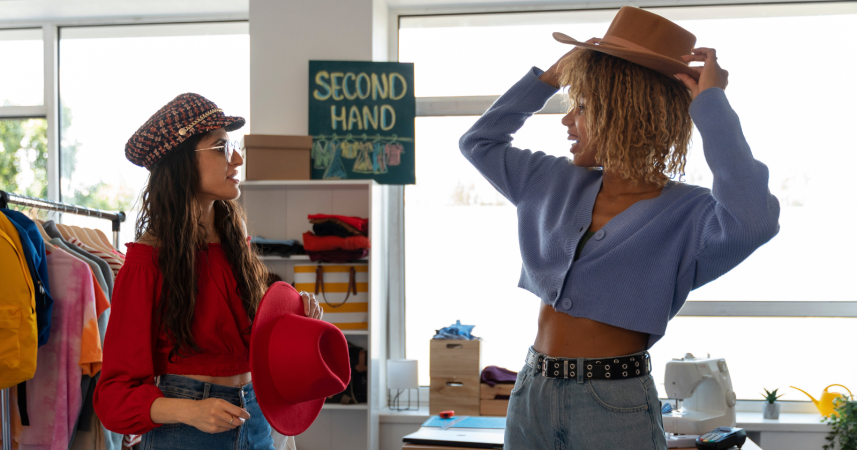
Thrift stores, vintage shops, and even resale apps have given me jackets and shirts that carry more individuality than anything fresh off the rack. And the hunt itself is part of the reward.
Once, while traveling in Tokyo, I found a thrift shop tucked into a basement in Shibuya. For the equivalent of $15, I picked up a denim jacket that still gets compliments today.
It’s not just clothing—it’s a story.
5. Musical instruments
As someone who grew up around indie music, I know the temptation of wanting the latest gear. But some of the best instruments I’ve ever played were pre-loved.
An older guitar often has a richer tone. A secondhand keyboard might come with quirks that spark creativity.
And when you’re not spending thousands, you feel freer to actually play rather than worry about keeping everything pristine.
“Price is what you pay. Value is what you get,” Warren Buffett once said.
That’s never more true than with instruments. You’re paying for the sound and the joy—not the shiny new label.
6. Cameras and lenses
Photography is one of my side passions, and anyone who’s looked at gear prices knows how intense they can get.
But here’s the secret: camera bodies are outdated almost as soon as they’re released, while lenses last decades. Buying them secondhand has saved me thousands.
I bought my favorite 50mm lens from a small shop in San Francisco that specialized in used gear. It had been owned by a photojournalist before me. Every time I shoot with it, I think about the stories that lens has already seen.
And honestly? The photos don’t care whether the lens was new or not.
7. Home decor
This is where secondhand shopping feels the most fun. A vintage lamp, a framed print, even just a quirky ceramic bowl—all of these bring life to a space in a way flat-packed decor rarely does.
I once grabbed a mid-century modern chair from a flea market for less than the price of dinner. Now it’s one of the pieces guests always notice.
It’s not about filling your space with random old stuff. It’s about finding things with soul—pieces that make you feel more at home, because they already carry a history.
The bottom line
Buying secondhand isn’t about deprivation. It’s about choosing smarter.
It’s about value over flash, character over perfection, and sustainability over waste.
The more I’ve embraced it, the less I’ve cared about keeping up with “new.”
And the funny thing? I’ve never once looked back and regretted those choices.