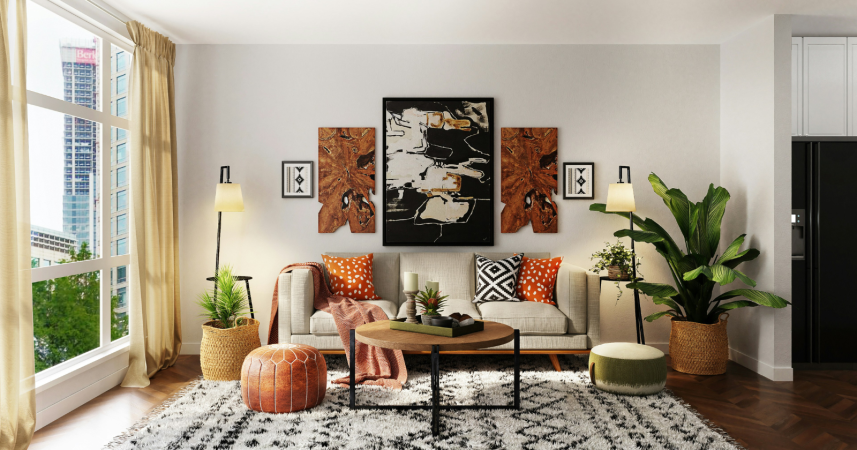
A beautiful home impresses. A functional one supports. The best do both.

Add VegOut to your Google News feed. 
I love a beautiful home. I also love a streamlined day. With a toddler, work, and life in São Paulo, anything that adds friction gets a hard look.
When I walk through our apartment in Itaim Bibi, I ask one simple question: does this make our life easier, warmer, or more meaningful? If not, it probably crept in to impress someone, not to serve us.
If you’re curious whether your space reflects your true values or a quiet need to signal success, start with what’s already on your shelves.
Here are seven common categories that tend to shout status while whispering value.
1. Logo heavy decor
I’m talking about designer shopping bags framed as art, branded candle jars kept long after the scent is gone, or stacked boxes with labels facing out like trophies. I’ve done it too. The high from a special purchase is real, and sometimes we want to hold on to it.
But logos age faster than quality. When I replaced a pile of pretty boxes with a single lidded basket that actually stored Emilia’s toys, the room breathed again.
The look was calmer, and the function was obvious. A quiet object with good materials will always outlast a loud one whose only job is to be seen.
Gut check: if the logo disappeared, would you still love it?
2. Trend of the month accent chairs
Bouclé, then rattan, then lucite. I moved through enough apartments in my twenties to see how fast a “moment” can pass. A chair is not like a top you wear twice. It takes space, scratches easily, and becomes a mini commitment every time you clean around it.
When we were furnishing our living room, I almost bought a sculptural chair I saw all over Instagram. It looked cool, but sitting in it felt like perching on a rock. I picked a simple, well made armchair instead. It does not photograph as “wow,” yet every guest sinks into it and stays. Comfort is the real flex.
Before you buy, sit test if you can. Ask yourself if this will still feel good after a long FaceTime with family or a Sunday reading session. If the answer is maybe, keep walking.
3. Single use kitchen gadgets
An avocado slicer, a banana keeper, a milk frothing contraption that lives in a drawer graveyard. S
ão Paulo supermarkets are dangerous for me because I love cooking daily fresh meals. The aisles are filled with gadgets that promise speed and magic.
In practice, one sharp chef’s knife and a solid cutting board beat a toolkit of novelties. I swapped a drawer of trinkets for a few workhorse tools and noticed something simple. Cooking got faster because I was not searching, charging, or washing five extra parts. The kitchen felt like a studio again, not a showroom.
If a gadget does not save time for at least three dishes you actually make weekly, it is a trinket, not a tool.
4. The museum of glassware
I adore a pretty table. But owning six types of wine glasses, champagne flutes for a party that never happens, and delicate coupes that fear the sponge is a quiet tax on your attention. Every shelf you devote to fragile stemware is a shelf you cannot use for family life.
When we host friends or have our weekly date night at home after Emilia is asleep, we reach for the same two sets: sturdy stemless glasses and versatile stems that handle anything from vinho to sparkling water. We have never had a guest say, “This merlot would taste better in a Bordeaux bowl.”
Choose pieces that earn their keep. If you only use something twice a year, consider renting for special occasions or storing one stylish set at a relative’s home if that is an option when you travel to Santiago.
5. Candle piles and perfume stick homes
Scent is powerful. It can make a small apartment feel like a spa. The trap is treating fragrance like wallpaper. When every room has a different signature scent and ten half burned candles, you are paying for mood without considering air quality, maintenance, or your own nose’s fatigue.
I used to collect fancy candles because they looked beautiful on a coffee table. One day, I realized I was lighting them only when people visited. On regular nights, a window cracked open after dinner and a single candle we truly loved felt better. Like a deep breath.
If you keep a candle library, pick one you will actually finish this month. Everything else gets stored or gifted. A home that smells clean and lived in beats a bouquet of brand names.
6. Coffee table books you never open
Coffee table books can be inspiring. They can also be expensive dust platforms. I kept a stack for years because it made me feel like the kind of person who reads at leisure in perfect daylight. Then I had a baby. Now I read in bursts on the floor during snack time, and the books that remain are the ones I reach for during those five minute pockets.
I keep only three out at a time. They rotate with seasons and moods, like art you can actually touch. The rest live on a bookshelf where they belong. A book is a tool for thought.
If it is only there to color match your sofa, you are paying for props.
Here is a small ritual that helps. Put a sticky note inside with one page you loved. Next time you sit, you will open it on purpose, not by default.
7. Seasonal decor hauls
I grew up in Central Asia where decor changed with seasons in small, intentional ways. A different tablecloth, a new fruit, maybe a handmade textile. In Brazil I have noticed bigger seasonal spins, often full of plastic, glitter, and storage chores. Buying twelve themed items might feel festive, but storing them all year is a hidden cost.
Our home got calmer when we set a rule. Choose seasonal changes you can eat, plant, or reuse. We switch pillow covers, hang one meaningful piece from a trip, and light a scent that reminds us of that city. Emilia notices the change, we feel the shift, and nothing goes back into a sad bin for eleven months.
If a holiday box stresses you out when you see it, it is not tradition, it is homework.
So how do you pivot from status to substance without turning into a minimalist monk overnight?
Here is the rhythm I use.
First, zoom in on one area, not the entire home. I started with our living room because we spend the most time there. I cleared surfaces and put everything into two categories: helps our day, or helps our ego.
It sounds blunt, but it freed me. Things that helped our day stayed within reach. Ego items got a second chance if they were truly functional. Otherwise they were donated or sold.
Second, align purchases with routines, not wishes. On weekdays we wake at 7, have breakfast around the kitchen island, then walk Matias to work. That routine tells me what matters. Durable mugs that survive a toddler cheer. A wipeable runner by the door. A stroller hook that holds market bags when Emi and I drop by the supermarket. When your stuff serves your actual morning, it earns its place.
Third, test the cost per use in real life. I love the idea of buying better and buying less. But I check the math. If a vase costs more than the flowers I buy in a month, it needs to be exceptional. If a throw blanket is pricey, it better be the one we all reach for during story time. This mindset keeps me selective without becoming a scold.
One more thing. Living around upper class circles in São Paulo, I see two versions of luxury. There is the loud kind that tries to prove something. Then there is the quiet kind that chooses ease, comfort, and longevity. The second one looks like well oiled hinges, soft lamps, and furniture that still feels good after five years. It is a luxury you feel on Tuesday nights when you finally sit down.
If you are looking around your home now and spotting a few status stars, do not panic. This is not a call to toss everything. It is an invitation to match your space with your real life. Start small. Swap the branded display for a handmade bowl. Donate the single use gadget and sharpen your knife. Light one candle, not five. Open one book and mark a page.
Quality has a quiet energy. It makes the room kinder to your body and your schedule. It lets you be more present with the people you love. That is the kind of home I want Emilia to grow up in. Not a place that performs, but a place that holds us.
Final thoughts
If your home has some of these items, welcome to the club. I still catch myself wanting the chair everyone has or the sleek gadget that promises to fix dinner. The difference now is that I pause and ask a few grounding questions.
Will I use this every week? Does it simplify a daily moment we actually live? Am I keeping it because I love it, or because it signals something I want others to see?
When your answers are honest, your space becomes honest too. And an honest home is one you can relax in, even on a messy Wednesday with pasta water on the stove and toys under the table. That is my version of luxury these days.
Refillable, human, and built to last.