A tested plant-based recipe from Oliver Park
This is the recipe I make when the fridge is looking sparse, my wrists are aching, and I still want something that feels like a real meal. During my years at GreenWheel in San Francisco, we had a riff on coconut curry noodles that customers would line up for: rich, fast, deeply satisfying. This is the home version I've been refining ever since, stripped down to what actually matters: a flavorful broth that comes together in minutes, thick slippery udon, and mushrooms with enough crisp on them to make you forget they're not the headliner protein.
The secret weapon here is miso. A spoonful stirred in at the end (off heat, so you don't kill the live cultures) adds the kind of savory backbone that most quick curries lack. It's the difference between a dish that's merely acceptable and one that genuinely impresses people with its restaurant-quality flavor achieved in minimal time. If you keep miso, coconut milk, and curry paste in your pantry (and honestly, you should), you're always about 20 minutes away from this dinner.
A few notes on greens: I call for baby spinach because it wilts in seconds and doesn't require any prep beyond opening the bag. Bok choy works beautifully if you want more crunch — just quarter it lengthwise and give it an extra minute in the broth. Kale is fine too, but tear it small and add it a couple minutes earlier. This recipe is forgiving. The mushrooms are not optional, though. That's the move.
Weeknight Coconut Curry Udon With Crispy Mushrooms and Wilted Greens
Ingredients
Crispy Mushrooms
- 8 oz (225g) king oyster or maitake mushrooms, torn into bite-sized pieces (see Notes)
- 1 tablespoon neutral oil (avocado or grapeseed)
- Pinch of salt
Coconut Curry Broth
- 1 tablespoon coconut oil or neutral oil
- 3 cloves garlic, thinly sliced
- 1-inch piece fresh ginger, grated on a microplane (about 1 tablespoon)
- 2 tablespoons Thai red curry paste (I use Mae Ploy; check that yours is plant-based, as some contain shrimp paste)
- 1 can (13.5 oz / 400ml) full-fat coconut milk. Shake it well before opening.
- ¾ cup (180ml) vegetable broth or water
- 1 tablespoon soy sauce or tamari
- 1 teaspoon maple syrup or coconut sugar
- 1 tablespoon white or yellow miso paste
Noodles and Greens
- 7 oz (200g) fresh or frozen udon noodles (see Notes)
- 3 large handfuls baby spinach (about 3 oz / 85g)
- Juice of half a lime (about 1 tablespoon)
To Finish
- Chili oil or chili crisp
- Fresh cilantro or Thai basil
- Toasted sesame seeds
- Lime wedges
Instructions
- Start the mushrooms. Heat a large skillet or wok over medium-high heat. Add the neutral oil and let it shimmer. Add the torn mushrooms in a single layer; don't crowd them. Let them sit undisturbed for 3–4 minutes until golden and crispy on the bottom. Flip, season with a pinch of salt, and cook another 2 minutes. Transfer to a plate and set aside. Don't wash the pan.
- Build the broth. Return the same pan to medium heat. Add the coconut oil, sliced garlic, and grated ginger. Stir for about 30 seconds until it's fragrant, not browned. Add the curry paste and stir it into the oil for another 30 seconds until it darkens slightly and smells incredible.
- Add the liquids. Pour in the coconut milk, vegetable broth, soy sauce, and maple syrup. Stir everything together and bring to a gentle simmer. Let it bubble for 3–4 minutes to meld the flavors.
- Cook the noodles. While the broth simmers, cook the udon according to package directions. Fresh udon typically just needs 1–2 minutes in boiling water; frozen needs about 2–3 minutes. Drain and rinse briefly under warm water to prevent sticking.
- Wilt the greens. Add the baby spinach directly to the simmering broth. Stir gently until just wilted, about 30 seconds. Remove the pan from heat.
- Finish with miso. Scoop the miso paste into a small bowl or ladle. Add a splash of the hot broth and stir until the miso dissolves into a smooth slurry. This prevents clumps. Pour the slurry back into the pan and stir through. Add the lime juice.
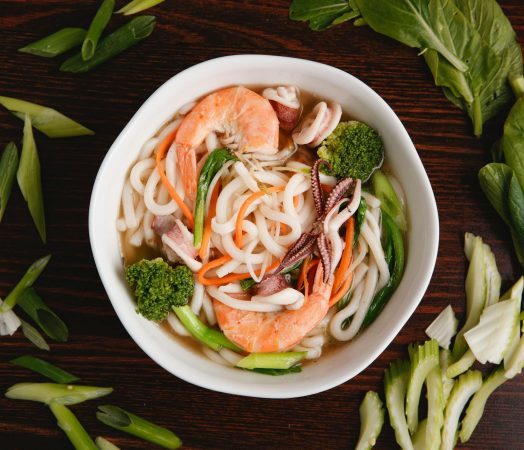
- Assemble. Divide the udon between two deep bowls. Ladle the coconut curry broth and greens over the noodles. Top with the crispy mushrooms, a drizzle of chili oil, fresh herbs, sesame seeds, and a lime wedge.
Notes & Tips
- Mushroom choice matters here. King oyster mushrooms, torn lengthwise into shreds, give you the best texture: almost meaty, with edges that crisp up well. Maitake (hen of the wood) is even better if you can find it; it practically shatters into crispy petals. Regular cremini or button mushrooms will work in a pinch, but slice them thin (about ¼ inch) so they actually get golden instead of steaming.
- On udon: Fresh or frozen udon from an Asian grocery store is vastly superior to the shelf-stable dried kind. The texture is thicker, chewier, more satisfying. If you can only find dried, use it, just cook it fully according to the package and accept slightly thinner noodles. Rice noodles or ramen also work as a swap.
- Curry paste: Mae Ploy and Maesri are widely available and plant-based. Some Thai curry pastes include shrimp paste, so flip the jar and check. If you want more heat, add ½ teaspoon of sambal oelek or a pinch of cayenne to the broth.
- Miso goes in off heat. High temperatures kill the beneficial bacteria in unpasteurized miso. Dissolving it in a bit of broth first also keeps you from getting little salty miso pockets in the soup.
- Storage: This is best eaten immediately because udon absorbs broth as it sits. If you're meal prepping, store the broth, noodles, and mushrooms separately. Reheat the broth, stir in the miso fresh, and assemble.
- Make it heartier: Add a block of crispy pan-fried tofu, or stir a tablespoon of peanut butter into the broth for a richer, satay-adjacent version.