A tested plant-based recipe from Oliver Park
I've made a lot of chickpea dishes in my career. Hundreds, probably. In the professional kitchens where I spent a decade, first at the CIA in Hyde Park, then through a string of restaurant gigs that eventually wrecked my knees and wrists, chickpeas were workhorses. Reliable, cheap, always in the walk-in. But rarely the star. When I shifted to plant-based cooking about five years ago, chickpeas became something different for me. They became the canvas. And this recipe is the best thing I've ever painted on one.
Here's what happened: I was testing harissa-roasted vegetable combinations for a different piece entirely, and I threw a can of chickpeas into the pan almost as an afterthought, along with some cherry tomatoes, a generous smear of harissa paste, and a few things from the fridge. Twenty-five minutes later, I pulled out something so good I ate it standing up at the counter. The chickpeas had crisped on top where they poked above the sauce. The tomatoes had burst into this jammy, spiced slick. The whole thing smelled like a place I wanted to live. I made it again the next day. Then the rest of the test kitchen started making it. Then they started requesting it. That's never happened before with something this simple.
What makes it work is the combination of high heat and harissa doing what harissa does best — bringing smoky depth, a slow-building warmth, and a complexity that tastes like you cooked for hours. A spoonful of white miso stirred into the sauce is the quiet engine underneath everything (fermentation nerds, you already know). Serve it with crusty bread to drag through the pan, or over couscous, or just eat it straight. This is weeknight cooking at its absolute ceiling.
One-Pan Harissa Chickpea Bake
Yield: 3–4 servings
Prep Time: 8 minutes
Cook Time: 25 minutes
Difficulty: Easy
Ingredients
- 2 cans (15 oz each) chickpeas, drained and rinsed
- 2 cups (about 12 oz) cherry or grape tomatoes
- 1 medium red onion, cut into thin wedges (root end intact so they hold together)
- 4 cloves garlic, smashed and roughly chopped
- 3 tablespoons harissa paste (not harissa powder; see notes)
- 1 tablespoon white miso paste
- 3 tablespoons extra-virgin olive oil, divided
- 1 tablespoon maple syrup
- 1 teaspoon smoked paprika
- ½ teaspoon ground cumin
- ½ teaspoon fine sea salt (adjust depending on your harissa's salt level)
- Black pepper to taste
- Big handful of fresh cilantro or parsley, roughly chopped (for serving)
- 1 lemon, halved (for serving)
- Crusty bread, couscous, or flatbread (for serving)
Instructions
- Preheat your oven to 425°F (220°C) with a rack in the center position. Place a large rimmed sheet pan or oven-safe skillet (12-inch cast iron works perfectly) in the oven while it preheats. You want that pan hot when the food hits it because this is what gives the chickpeas their crispy edges.
- While the oven heats, pat the drained chickpeas as dry as you reasonably can with a clean kitchen towel or paper towels. They don't need to be bone dry, but removing surface moisture matters for texture. Toss them into a large mixing bowl along with the cherry tomatoes and red onion wedges.
- In a small bowl, whisk together the harissa paste, miso paste, 2 tablespoons of the olive oil, maple syrup, smoked paprika, and cumin until smooth. This is your sauce. It should look like a thick, rust-colored dressing. Taste it. It should be punchy, a little sweet, noticeably spicy. If your harissa is mild, add more. If it's very salty, hold back on the sea salt in the next step.
- Pour the harissa mixture over the chickpeas, tomatoes, and onion. Add the chopped garlic, salt, and several grinds of black pepper. Toss everything with your hands or a spatula until evenly coated. Every chickpea should be wearing that sauce.
- Carefully remove the hot pan from the oven. Drizzle the remaining 1 tablespoon of olive oil across the surface, then spread the chickpea mixture in a single, even layer. Don't crowd or stack. Give everything room to roast, not steam. If your pan is too small, use two.
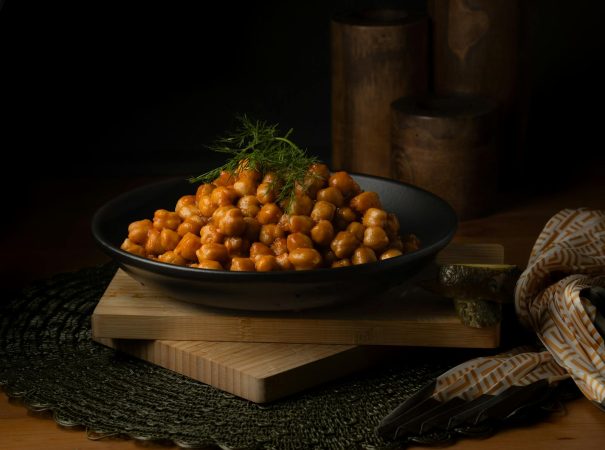
- Roast for 25 minutes without stirring. Seriously, leave it alone. You want the bottom layer to caramelize and the tomatoes to burst. At the 25-minute mark, the top chickpeas should be visibly crisped, the tomatoes should be collapsed and jammy, and the onion wedges should be charred at the tips.
- Remove from the oven. Squeeze half the lemon directly over the pan — the sizzle is part of the experience. Scatter the cilantro or parsley over the top. Cut the remaining lemon half into wedges for the table. Serve straight from the pan with bread, over couscous, or honestly, just with a spoon.
Notes & Tips
- Harissa paste matters. The brand makes a real difference. Beldi, NY Shuk, and DEA are all excellent. Trader Joe's harissa is fine in a pinch. The stuff in tubes from the international aisle works too. What you want is paste: thick, concentrated, oily. Harissa powder or the thin, pourable "harissa sauce" won't give you the same result. If you can only find powder, mix 2 tablespoons with 1 tablespoon olive oil and 1 tablespoon tomato paste as a substitute.
- The miso is non-negotiable. I know it seems odd in a North African-inspired dish. It's not there for flavor identity; it's there for umami. White (shiro) miso adds a savory backbone that makes everything taste deeper and more complete. You won't taste "miso." You'll just wonder why it's so good.
- Drying the chickpeas: If you skip this step, they'll steam instead of crisp. Even 60 seconds with a towel makes a noticeable difference.
- Heat level: Harissa brands vary wildly in spice. Taste your paste before mixing the sauce. If you're sensitive to heat, start with 2 tablespoons and add more after tasting. If you love heat, go to 4 tablespoons and don't look back.
- Make it a bigger meal: Add a handful of roughly torn lacinato kale during the last 5 minutes of roasting. Or serve over a smear of coconut yogurt. The cool creaminess against the spiced chickpeas is excellent.
- Storage: Leftovers keep in the fridge for 3–4 days. The chickpeas will lose their crispness but the flavor actually improves overnight. Reheat in a hot skillet rather than the microwave to recover some texture.
- For meal prep: Double the batch on two sheet pans. It reheats well tossed into grain bowls with greens and a drizzle of tahini.