Sometimes the best secrets are hiding in your pantry.
Last month, I brought brownies to my book club. Sarah took one bite and asked what kind of chocolate I used. Marcus wanted to know if I'd added espresso. Jennifer asked for the recipe immediately, which she never does.
"Black beans," I said.
The room went silent in that specific way that happens when people are recalculating everything they thought they knew about food.
The accidental discovery
I wasn't trying to make vegan brownies. I was trying to use up a can of black beans before moving apartments. I'd seen something on TikTok about bean brownies months earlier, filed it away in the "probably terrible but maybe?" category of my brain, and figured pre-move desperation was the perfect time to experiment.
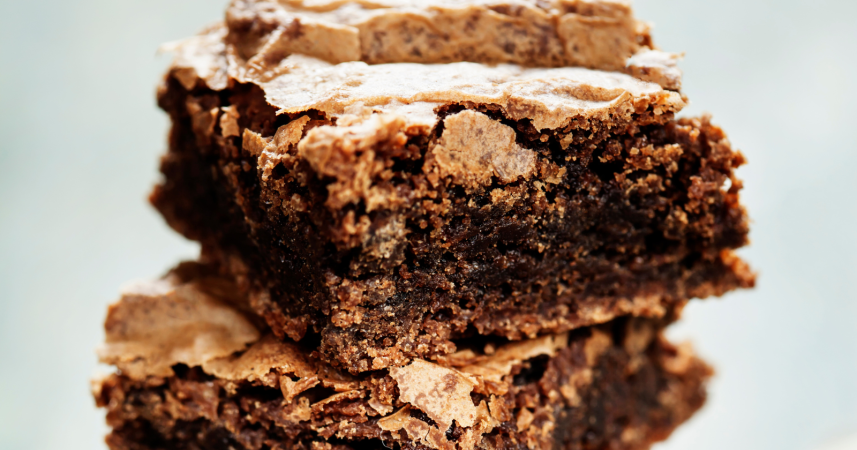
The first batch was perfect. Not "good for bean brownies" perfect. Actually perfect. Fudgy in that dense, almost-raw way that makes people ask if they're underbaked. Rich enough that one square feels like enough (but you eat three anyway). The kind of texture that usually requires eggs and butter to achieve—that glossy, crackly top and molten center that defines a perfect brownie.
The black beans don't add protein for protein's sake. They create structure. They provide the binding and moisture that eggs usually handle, but with more complexity. Puréed beans create this creamy, dense base that cocoa powder can actually cling to. The bean starches create fudginess during baking without the greasiness that sometimes plagues vegan brownies made with just oil.
The recipe that converted skeptics
Black Bean Brownies That Don't Taste Like Compromise Makes 16 small squares or 9 large
- 1 can (15 oz) black beans, drained and rinsed thoroughly
- 3 tablespoons cocoa powder
- ½ cup quick oats (or ½ cup oat flour—just blend oats if needed)
- ¼ teaspoon salt
- ⅓ cup maple syrup
- ¼ cup coconut oil, melted and slightly cooled
- 2 teaspoons vanilla
- ½ teaspoon baking powder
- ½ cup dairy-free chocolate chips, plus more for topping
Heat oven to 350°F. Line an 8x8 pan with parchment and grease the parchment lightly.
Here's the non-negotiable part: you need a food processor. A high-powered blender works in a pinch but makes them too smooth. You want some texture remaining, just barely.
Rinse the beans thoroughly to remove any bean liquid taste. Process everything except chocolate chips until smooth but not liquified—about 2 minutes. The batter should be thick like hummus, not thin like pancake batter. Fold in chocolate chips.
Spread in prepared pan. The batter won't pour—you'll need to smooth it with a spatula. Sprinkle more chocolate chips on top because we're not here for restraint.
Bake 15-18 minutes. They'll look underdone. The tops will look set but not dry. The center should barely jiggle when shaken. That's correct. They continue cooking as they cool, and overbaking is the only way to ruin these.
Cool completely before cutting. I mean it. They need time to set up properly.
Store covered at room temperature for up to 3 days, refrigerated for a week, or freeze for up to 3 months.
Why everyone wants the recipe
My coworker, who "doesn't eat vegan food," has made these four times. My mother, who believes butter is a food group, asked if I could make them for Easter. My teenage nephew, who survives entirely on chicken nuggets and skepticism, ate three squares before anyone told him they were beans.
They work because they're not trying to be traditional brownies. They're their own thing that happens to be better. Each square has about 3 grams of protein and 2 grams of fiber (based on standard nutrition calculations), but that's not why you make them. You make them because they're legitimately one of the best brownies you'll ever eat, and the fact that they're accidentally healthy feels like cheating the system.
The beans save you money too—a can costs about a dollar versus several dollars for eggs and butter. They're shelf-stable until you need them. If you use certified gluten-free oats, the brownies are naturally gluten-free. They stay fudgy for days (if they last that long). You can even use white beans or pinto beans as alternatives—they work just as well.
The part nobody believes
They don't taste like beans. At all. Not even a hint. The cocoa and vanilla completely mask any bean flavor, while the beans provide pure structure and moisture. It's like discovering that the secret to perfect pasta sauce is anchovy paste—an ingredient that disappears completely while making everything else better.
Last week, I made a double batch for a bake sale (yes, the recipe doubles perfectly for a 9x13 pan). I labeled them simply: "Fudge Brownies - Gluten-Free (with certified oats), Vegan, $3."
They sold out in an hour.
The mom running the sale asked, "What makes them so fudgy?"
"Trade secret," I said.
Sometimes the best secrets are hiding in your pantry.
Just launched: Laughing in the Face of Chaos by Rudá Iandê
Exhausted from trying to hold it all together?
You show up. You smile. You say the right things. But under the surface, something’s tightening. Maybe you don’t want to “stay positive” anymore. Maybe you’re done pretending everything’s fine.
This book is your permission slip to stop performing. To understand chaos at its root and all of your emotional layers.
In Laughing in the Face of Chaos, Brazilian shaman Rudá Iandê brings over 30 years of deep, one-on-one work helping people untangle from the roles they’ve been stuck in—so they can return to something real. He exposes the quiet pressure to be good, be successful, be spiritual—and shows how freedom often lives on the other side of that pressure.
This isn’t a book about becoming your best self. It’s about becoming your real self.