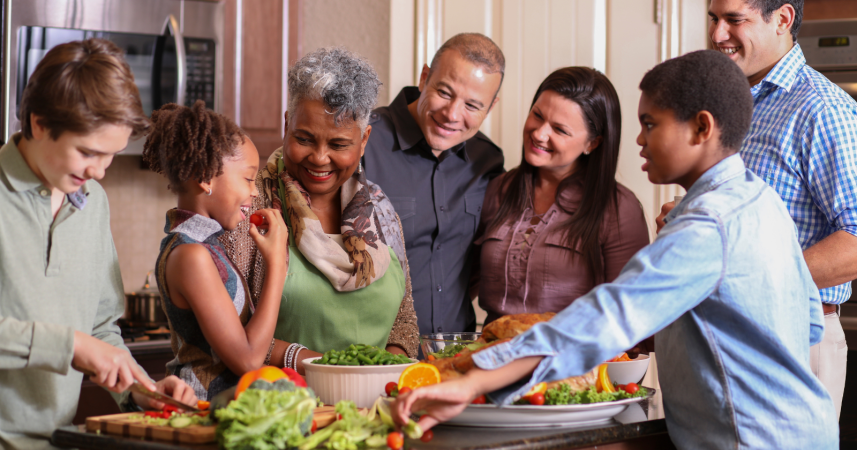
No matter the family story, these three “secret” recipes always tasted like love, comfort, and Sunday afternoons.
My girlfriend's grandmother pulled me aside at Thanksgiving last year, voice low and serious. "I'm going to give you our family's secret dip recipe," she said, glancing around like she was passing state secrets. "But you can't share it with anyone." Twenty minutes later, I watched her mix Lipton onion soup mix into sour cream. I acted like I'd witnessed alchemy. Because in her kitchen, with her hands, served in her mother's bowl—maybe I had.
1. "Nana's famous dip" (Lipton onion soup mix + sour cream)
Every family has an aunt, grandmother, or mom who makes "the dip" that everyone loses their minds over at gatherings. The recipe, guarded like a Swiss bank account number, is one packet of Lipton onion soup mix stirred into 16 ounces of sour cream. That's it. That's the family treasure.
My buddy Marcus thought his family's version was unique because his grandmother added "a secret ingredient." The secret? She uses one and a half packets. Another friend's mom swears their variation is special because she makes it the night before. "It needs to marry," she says, like she's aging wine.
The truth: Lipton literally prints this recipe on their box. Has since 1958, when they finally tracked down the recipe that some anonymous California home cook created in 1954. Your Nana knows this. She saw it at Sharon's Tupperware party in 1973 and has been taking credit ever since. God bless her, genuinely.
Why it wins: Honestly? It's perfect. MSG, dried onions, and fat. Your brain's pleasure centers don't stand a chance. No one's improving on this formula. Stop trying.
2. "The casserole we only make for holidays" (green beans + cream of mushroom + French's onions)
This one comes with lore. "Your great-aunt brought this to a church potluck in 1962 and the pastor's wife begged for the recipe." The recipe: frozen green beans, Campbell's cream of mushroom soup, and French's fried onions. Every family swears they invented this combination. French's and Campbell's shareholders thank them.
The variations that make each family believe theirs is different: some use fresh green beans (fancy), some add soy sauce (the real secret, actually), some mix cheese into it (chaos). My mom adds slivered almonds and calls it "California style," which means nothing but I support her.
The origin story: Dorcas Reilly created this for Campbell's test kitchen in 1955. It's been on millions of tables ever since, each family convinced theirs is special because Meemaw uses the good baking dish.
Why it's immortal: It's vegetables that taste like gravy covered in fried onions. It's everything good about America in casserole form. It reheats perfectly. It travels well. Kids eat it. What more do you want from food?
3. "Grammy's celebration bars" (seven layers of grocery store baking aisle)
Graham crackers, butter, chocolate chips, butterscotch chips, coconut, sweetened condensed milk, and walnuts. Layered in that exact order in a 9x13 pan. "The secret," your friend's mom whispers, "is pressing the graham cracker crust really firmly." That's not a secret, Carol. That's just physics.
Alternative ending: the family whose "secret recipe" is Rice Krispies treats but they add vanilla extract. "It makes all the difference," they say. The difference is one teaspoon of vanilla that you cannot taste under all that marshmallow. But sure, Aunt Linda invented something Kellogg's didn't think of.
The real story: Seven layer bars exploded across America in the late 1960s, right when Hello Dolly was on Broadway and sweetened condensed milk became widely available. Every community cookbook had the same recipe by 1968. Rice Krispies treats? Kellogg's home economists Mildred Day and Malitta Jensen created them in 1939. The recipe first appeared on cereal boxes in 1941. Your family did not independently discover either combination.
Why they endure: Effort-to-payoff ratio is unmatched. Seven layers bars require no mixing bowl. Rice Krispies treats take six minutes. Both make people disproportionately happy. That's the actual secret.
The inheritance we're actually passing down
Here's what working in restaurants taught me: every chef has their version of these same classics, they just use words like "deconstructed" and "elevated" and charge $12 for them. That green bean casserole becomes "haricots verts with mushroom velouté and crispy shallots." Same dish. Four times the price. Half the love.
Your family's "secret recipes" aren't secret and they're barely recipes. But they're yours. Made by the same hands, served in the same dishes, told with the same stories about the time Pastor Jim ate three helpings. That's the part worth protecting.
Last week, I taught my girlfriend how to make "Nana's dip"—her grandmother was watching TV in the other room. I showed her the secret: one packet, 16 ounces, stir until smooth, refrigerate overnight. "Don't tell anyone," I said, serious as her grandmother. "It's a family recipe."
She nodded solemnly. The tradition continues. The Lipton shareholders rejoice.
Some secrets are worth keeping, even when everyone knows.
What’s Your Plant-Powered Archetype?
Ever wonder what your everyday habits say about your deeper purpose—and how they ripple out to impact the planet?
This 90-second quiz reveals the plant-powered role you’re here to play, and the tiny shift that makes it even more powerful.
12 fun questions. Instant results. Surprisingly accurate.