After nearly a dozen failed attempts, I finally cracked the code on tofu scramble, and it changed how I think about vegan comfort food forever.
I used to think tofu scramble was just something vegans settled for. A sad, pale substitute that we pretended to enjoy while secretly mourning our Sunday morning eggs.
Then I spent three months obsessing over getting it right, failing spectacularly ten times, and finally landing on something that genuinely makes me excited to wake up on weekends.
The thing about tofu scramble is that most recipes treat it like a simple swap. Crumble tofu, add turmeric, call it breakfast. But eggs aren't just about protein on a plate. They're about texture, richness, that satisfying savory quality that makes breakfast feel like breakfast.
Getting tofu to deliver that experience requires understanding what you're actually trying to recreate.
Why most tofu scrambles fall flat
The biggest mistake I made in my early attempts was treating tofu like a blank canvas that just needed color. I'd add turmeric for that golden hue, some salt, maybe nutritional yeast, and wonder why it tasted like seasoned sponge.
The problem was moisture. Tofu holds water like nobody's business, and that water dilutes flavor while creating a texture that's more steamed than scrambled.
Pressing your tofu matters, but not in the way most people do it. You don't need a fancy press or hours of waiting. Wrap your block in a clean kitchen towel, give it a firm squeeze over the sink, and let it sit for ten minutes while you prep everything else. That simple step changed everything for my scrambles.
The fat factor nobody talks about
Eggs are rich because they contain fat. Tofu, especially the firm variety you want for scrambles, is relatively lean.
This is where a lot of vegan recipes go wrong. They skip the fat and end up with something that tastes healthy in the worst way possible. I'm not here for health food that makes me sad.
I use a generous amount of vegan butter in my pan. Not oil, butter. The richness it adds is non-negotiable. Some folks swear by coconut oil, but I find it adds a subtle sweetness that throws off the savory vibe. Let that butter get hot before your tofu hits the pan, and you're already ahead of most scrambles out there.
Building flavor in layers
Here's where behavioral science actually helped me think about cooking differently. Our taste perception works in layers. We experience food in sequence, not all at once. So building a tofu scramble means thinking about what hits first, what lingers, and what ties everything together.
I start with sautéed onions and garlic as my base layer. Then the tofu goes in with turmeric and a pinch of black pepper, which actually helps your body absorb the turmeric's compounds.
Nutritional yeast comes next for that cheesy, umami depth. But the secret weapon? A splash of pickle brine or a tiny bit of black salt, also called kala namak. That sulfurous quality mimics the eggy taste your brain is looking for.
The texture trick that changed everything
Attempt number seven taught me something crucial. I'd been crumbling my tofu too uniformly, creating a monotonous mouthfeel that got boring after a few bites. Real scrambled eggs have variation. Some bits are fluffy, some are slightly firmer, some are almost creamy.
Now I break my tofu unevenly on purpose. Some chunks stay bigger, some get mashed almost into a paste. I also vary my cooking time across the pan, letting some pieces get slightly crispy edges while others stay soft.
This creates the textural interest that keeps each bite engaging. It sounds fussy, but once you do it a few times, it becomes second nature.
The final recipe that actually delivers
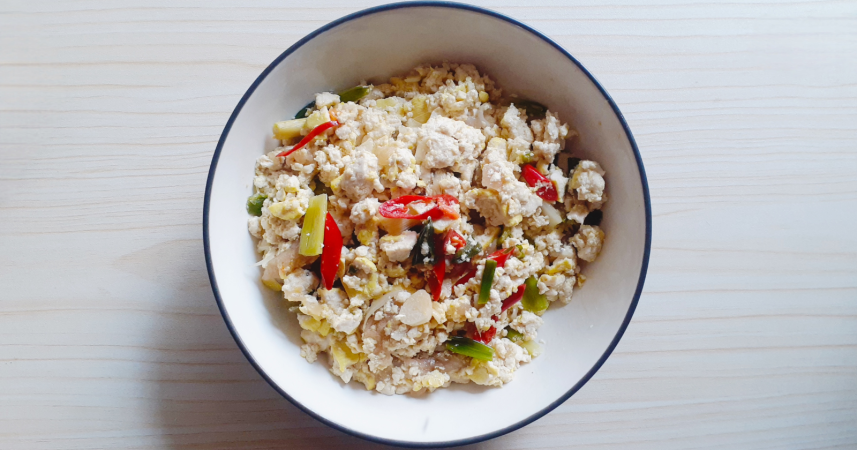
Press a block of extra-firm tofu for ten minutes. Heat two tablespoons of vegan butter in a large skillet over medium-high heat. Sauté half a diced onion and two minced garlic cloves until softened. Crumble the tofu unevenly into the pan. Add half a teaspoon of turmeric, a quarter teaspoon of black pepper, and a generous pinch of salt.
Cook for five to seven minutes, stirring occasionally but not constantly. You want some pieces to get golden. Add three tablespoons of nutritional yeast and a quarter teaspoon of black salt. Stir to combine.
Finish with a tablespoon of pickle brine or lemon juice. Serve immediately with hot sauce and fresh herbs if you're feeling fancy.
Final thoughts
The eleven attempts weren't wasted time. Each failure taught me something about what I was actually craving and how to get there. Tofu scramble isn't about perfectly replicating eggs. It's about creating something that satisfies the same craving while being delicious in its own right.
What surprised me most was how my preferences shifted. After making this version regularly for a few months, I stopped thinking about eggs entirely. The craving rewired itself. Now when I want that cozy weekend breakfast feeling, this is what my brain pictures.
Not a substitute, not a compromise. Just breakfast.