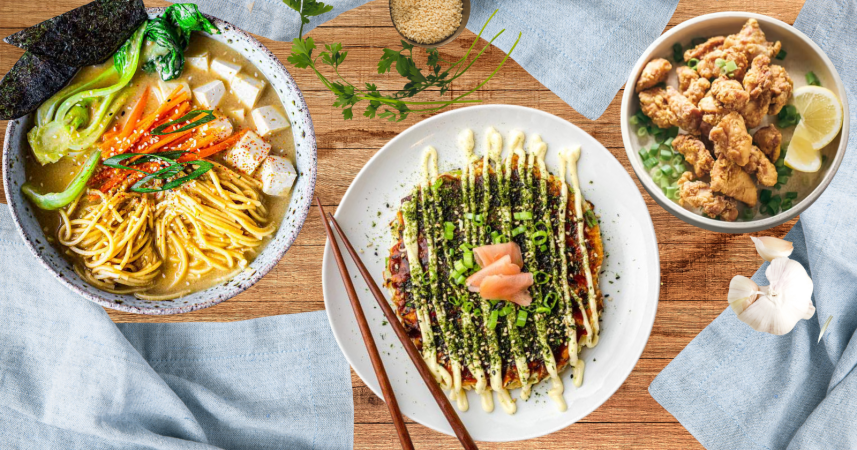
From umami-rich ramen to crispy karaage, these plant-based versions capture the soul of Japanese comfort food.
I haven't been to Tokyo since 2019, and my cravings have reached critical levels. You know it's bad when you start dreaming about konbini onigiri and wake up googling flights you can't afford.
So I did what any reasonable person would do: turned my kitchen into a makeshift izakaya. After weeks of testing and more miso than any one person should consume, I've nailed down three recipes that capture that specific satisfaction you get from Japanese comfort food—all completely plant-based.
These aren't sad substitutes to "get you by." They're legitimately crave-worthy dishes that scratch that particular itch for umami-rich, soul-warming Japanese flavors. My Japanese exchange student friend Yuki summed it up best: "This doesn't taste vegan. It just tastes correct."
Until we can all wander through Shibuya at 2 AM looking for ramen again, these will more than do.
Creamy miso ramen with garlic oil
Time: 45 minutes (plus overnight for best kombu dashi) | Serves: 4
This isn't trying to be tonkotsu—it's its own beautiful thing. The sesame-miso base creates richness without pork, while kombu dashi adds that essential ocean depth.
For the kombu dashi (make ahead)
- 4 cups water
- 1 piece (4-inch) kombu (or 2 tsp kombu dashi powder)
- 3-4 dried shiitake mushrooms
Can't find kombu? Use kombu dashi powder (check the Asian aisle) or make mushroom dashi with just shiitakes—double the mushrooms and add 1 tbsp soy sauce for depth.
For the tare (flavor base)
- 3 tbsp white or red miso
- 1 tbsp tahini
- 1 tbsp soy sauce
- 1 tsp mirin
For the aromatic oil
- 2 tbsp neutral oil
- 4 garlic cloves, minced
- 1 tsp grated ginger
For serving
- 12 oz fresh ramen noodles (or dried ramen, cooked separately)
- 2 cups unsweetened soy milk
- Toppings: corn, menma (bamboo shoots), nori, scallions, sesame seeds
Instructions
- Make dashi (ideally night before): Combine water, kombu, and shiitakes in a pot. Let soak overnight, or bring to just below boiling, then remove from heat and steep 30 minutes. Remove kombu and mushrooms (save mushrooms for topping).
- Prepare tare: Whisk together miso, tahini, soy sauce, and mirin in a small bowl until smooth.
- Make aromatic oil: Heat oil in a small pan, add garlic and ginger, cook until fragrant and golden. Set aside.
- Build the broth: In a pot, warm the dashi. Whisk in the tare until dissolved. Add soy milk and heat gently (don't boil or it'll curdle).
- Cook noodles according to package directions. Divide between bowls.
- Assemble: Ladle hot broth over noodles. Drizzle with garlic oil. Top with corn, sliced shiitakes, menma, nori, scallions, and sesame seeds.
Crispy karaage (mushroom or tofu)
Time: 30 minutes plus marinating | Serves: 4 as appetizer
The secret to great karaage isn't the protein—it's the double-fry method and that addictive ginger-soy marinade. Unlike tempura's wet batter, karaage uses a dry coating that creates its signature crispy shell. Both versions here nail the crispy-juicy contrast.
For marinade
- 3 tbsp soy sauce
- 2 tbsp sake (or mirin)
- 1 tbsp grated ginger
- 2 garlic cloves, grated
- 1 tsp sesame oil
For coating
- ½ cup potato starch (or cornstarch)
- ½ cup all-purpose flour
For the protein
- 1 lb oyster mushrooms, torn into 2-inch pieces OR
- 14 oz extra-firm tofu, pressed and cubed
Note: Tear, don't cut, for the best texture—this creates natural ridges that grab the coating beautifully.
Instructions
- Marinate: Mix all marinade ingredients. Add mushrooms or tofu, toss well, marinate 30 minutes (or up to 2 hours).
- Coat: Mix potato starch and flour. Remove protein from marinade (don't pat dry—the moisture helps coating stick). Toss in flour mixture until well coated.
- First fry: Heat oil to 340°F. Fry in batches for 2-3 minutes until light golden. Drain on paper towels.
- Second fry: Increase oil to 350°F. Fry again for 1-2 minutes until deep golden and extra crispy.
- Serve immediately with lemon wedges and vegan mayo mixed with sriracha.
Okonomiyaki
Time: 30 minutes | Serves: 2 large or 4 small
This savory cabbage pancake is already vegetable-forward—making it vegan just requires smart swaps. The result is just as satisfying as any late-night street food hunt in Osaka.
For batter
- 1 cup all-purpose flour
- ¾ cup water or kombu dashi
- 1 tbsp ground flaxseed mixed with 3 tbsp water (flax egg)
- 1 tsp soy sauce
- ½ tsp salt
For filling
- 3 cups cabbage, finely shredded
- 2 scallions, chopped
- ½ cup corn kernels
- 2 tbsp pickled ginger, chopped
- Optional: ½ cup vegan bacon bits or crumbled tempeh
For topping
- Okonomiyaki sauce (or mix 2 tbsp ketchup + 1 tbsp Worcestershire + 1 tsp soy sauce)
- Vegan mayo
- Aonori (green seaweed flakes) - or use crushed nori sheets
- Beni shoga (pickled ginger)
Instructions
- Make flax egg: Mix ground flaxseed with water, let sit 5 minutes until gooey.
- Mix batter: Whisk flour, water, flax egg, soy sauce, and salt until smooth. Let rest 10 minutes.
- Combine: Fold cabbage, scallions, corn, pickled ginger, and any add-ins into batter.
- Cook: Heat a nonstick pan with oil over medium heat. Pour in half the mixture, shape into a 6-inch circle about ¾-inch thick. Cook 5-6 minutes until bottom is golden.
- Flip carefully: Use a large spatula (or two spatulas). Cook another 5-6 minutes.
- Serve: Transfer to plate, drizzle with sauce and mayo in crosshatch pattern. Sprinkle with aonori.
The joy of plant-based Japanese cooking
What I've learned from this deep dive: Japanese cuisine naturally builds on umami—miso, soy sauce, mushrooms, kombu. These ingredients are already vegan powerhouses. Once you master these building blocks, you're not creating substitutes—you're working within a tradition that's always celebrated vegetables and fermentation.
My kitchen now permanently smells like dashi. I've got three types of miso in my fridge. And I haven't thought about booking that Tokyo flight in at least... okay, two days.
These recipes won't replace the experience of slurping ramen in a tiny Shinjuku shop or grabbing karaage from a konbini at midnight. But they'll satisfy those cravings with honor—and maybe even create some new ones.
What’s Your Plant-Powered Archetype?
Ever wonder what your everyday habits say about your deeper purpose—and how they ripple out to impact the planet?
This 90-second quiz reveals the plant-powered role you’re here to play, and the tiny shift that makes it even more powerful.
12 fun questions. Instant results. Surprisingly accurate.