Nine low-sugar desserts—creamy, crunchy, and indulgent—that skip the syrup bombs but keep all the joy.
Dessert without a sugar crash isn’t a myth — it’s just rare in a world where every “healthy” sweet seems to be a date paste in disguise or a maple tidal wave.
I’ve spent years taste-testing across cafés and rental kitchens, learning which desserts feel indulgent but don’t boomerang into a glucose hangover.
The trick isn’t finding the cleverest sugar substitute — it’s stacking flavor, fat, texture, and temperature so your brain gets “treat!” without your blood sugar filing a complaint.
Below are nine low-sugar desserts I keep in rotation. They’re satisfying on their own terms—creamy, crunchy, cold, warm—without leaning on syrup bombs.
Each one includes a quick “why it works,” a simple method, and playful variations so you can riff with what’s already in your kitchen.
1) Dark chocolate bark with nuts and seeds
Why it works: High-cocoa chocolate (85–90%) brings bitterness and cocoa depth. Fat and crunch from nuts and seeds slow the roll of any sugar that is present. A pinch of salt makes it taste sweeter than it is.
How: Melt 200 g (7 oz) 85–90% dark chocolate over a gentle double boiler. Stir in a tiny knob of butter or coconut oil (½ tsp) for snap. Spread thin on parchment. Shower with ⅓ cup roasted almonds or hazelnuts (chopped), 2 tbsp pumpkin seeds, and a pinch of flaky salt. Chill 20 minutes; crack into shards.
Riffs: Add toasted coconut flakes or cacao nibs. Swirl in a teaspoon of tahini before spreading for halva vibes. Infuse the melted chocolate with a shot of espresso for mocha bark. Store in the fridge in a tin; it keeps for two weeks and portion-controls itself.
2) Berries with whipped coconut cream
Why it works: Berries are naturally lower in sugar than tropical fruits and come with fiber. Unsweetened coconut cream adds lushness without sweetness; vanilla and acid trick your palate into “dessert.”
How: Chill a can of full-fat coconut milk overnight. Scoop the thick cream into a cold bowl; whisk with ½ tsp vanilla and a pinch of salt until soft peaks form. Pile over mixed berries (blueberries, raspberries, sliced strawberries). Finish with lemon zest.
Riffs: Fold in toasted almonds or pistachios for crunch. Add a teaspoon of chia seeds to the body. If you want barely-there sweetness, a few drops of liquid stevia or a drizzle (teaspoon) of honey across the whole bowl will do; you don’t need much when the berries are singing.
3) Chia pudding, not candy
Why it works: Chia seeds thicken without starch; their fiber and fat make a small portion satisfying. Cinnamon, vanilla, and salt enhance perceived sweetness so you can keep actual sweeteners minimal or at zero.
How: In a jar, combine 3 tbsp chia seeds, ¾ cup unsweetened almond (or soy) milk, ½ tsp vanilla, ¼ tsp cinnamon, and a pinch of salt. Shake, wait 10 minutes, shake again, chill 2–3 hours. Serve with a spoon of plain yogurt and a few sliced strawberries or a scatter of cacao nibs.
Riffs: Stir in 1 tsp peanut butter and top with shaved dark chocolate for PB-cup energy. For “rice pudding” vibes, add a dash of cardamom and orange zest. If you must sweeten, start with ½ teaspoon of date syrup across the entire serving—enough to perfume, not drench.
4) Lemon-pistachio ricotta bowl
Why it works: Creamy dairy or plant-based ricotta satisfies with protein and fat. Lemon zest and a whisper of olive oil create a Mediterranean dessert that reads luxe without sugar.
How: In a small bowl, whisk ½ cup ricotta (dairy or almond-based) with a pinch of salt and a drizzle (½ tsp) good olive oil. Mound into a dish, top with lots of lemon zest and 2 tbsp crushed pistachios. Optional: a few blueberries or a torn basil leaf.
Riffs: Swap ricotta for skyr or thick Greek yogurt. Use orange zest and toasted almonds for winter, lime and toasted coconut for summer. For a barely sweet note, crush one ripe raspberry over the top and swirl.
5) Frozen banana “nice cream,” grown-up edition
Why it works: Bananas bring body and sweetness, but the cocoa and salt rein it in. A small scoop scratches the ice-cream itch with minimal sugar compared to the real thing.
How: In a food processor, blitz 2 frozen banana chunks with 1 tbsp unsweetened cocoa powder, a splash of unsweetened milk, and a pinch of salt until whipped and creamy. Eat immediately like soft-serve.
Riffs: Add 1 tbsp peanut butter or tahini for richness. Pulse in toasted peanuts or cacao nibs for crunch. Switch cocoa for matcha if you like it earthy, or blend in a few frozen cherries for a Black Forest wink.
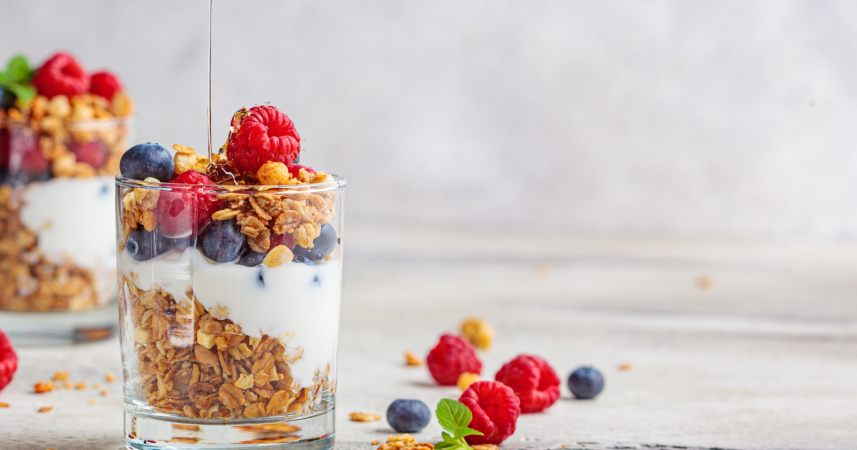
6) Yogurt parfait with cinnamon-toasted seeds
Why it works: Unsweetened yogurt provides protein and tang; cinnamon and roasted seeds bring warmth and crunch—both boost flavor without sugar.
How: Toast 2 tbsp pumpkin seeds and 1 tbsp sesame seeds in a dry skillet until they pop; toss with a pinch of cinnamon and salt. Layer ¾ cup plain Greek or coconut yogurt with a few thin pear slices and the warm seed mix.
Riffs: Add a spoon of chia jam: cook down ½ cup frozen berries with a splash of water until syrupy, stir in 1 tbsp chia seeds, cool. It’s tart, thick, and needs no added sugar when the fruit is ripe.
7) Baked apple with nuts and spice
Why it works: Heat concentrates an apple’s natural sugars; fat and spice make it feel dessert-level without extras. It’s pie energy minus the crust (and the sugar avalanche).
How: Core a firm apple. Stuff the cavity with 1 tbsp chopped walnuts, a pinch of cinnamon, and a dot of butter or coconut oil. Bake at 190°C/375°F for 25–30 minutes until slouchy and tender. Serve warm with a spoon of yogurt.
Riffs: Use cardamom and pistachios for a Persian note; add a splash of vanilla to the pan juices and baste. Swap apple for pear, or bake halved stone fruit in summer. A dusting of cocoa on top is shockingly good.
8) Avocado chocolate mousse
Why it works: Avocado gives a silky texture that feels decadent. Cocoa provides the chocolate hit; vanilla and espresso amplify flavor so very little sweetener is needed—often none if your palate is acclimated.
How: Blend 1 ripe avocado, 2 tbsp unsweetened cocoa powder, 2–3 tbsp unsweetened almond milk, ½ tsp vanilla, a pinch of salt, and (optional) a teaspoon of instant espresso until glossy. Chill 30 minutes.
Riffs: Top with toasted hazelnuts for Nutella energy. Fold in a spoon of coconut cream if you want it fluffier. If sharing with a sugar-loving friend, sweeten the batch with ½–1 tsp maple—not per serving; per bowl. You’ll be surprised how far it goes.
9) Matcha-milk pudding (agar or gelatin)
Why it works: Gentle bitterness from matcha balances any sweetness; the set texture reads like dessert even without sugar. It’s light, clean, and wake-up-friendly.
How: Warm 1½ cups unsweetened almond (or dairy) milk with 1 tsp culinary matcha whisked smooth and a pinch of vanilla and salt. Bloom 1 tsp powdered gelatin in 2 tbsp cold water (or use 1 tsp agar-agar powder). Stir into the warm milk until dissolved. Pour into small cups; chill to set, about 2 hours.
Riffs: Top with a dollop of whipped coconut cream and a scatter of toasted sesame. For coffee lovers, swap matcha for instant espresso and dust with cocoa.
Flavor math: how to make low-sugar taste like dessert
When you cut sugar, lean on the other levers:
-
Fat = luxury. Coconut cream, yogurt, nuts, nut butters, olive oil—these add mouthfeel and satisfaction.
-
Acid = sparkle. Lemon juice, zest, vinegar, or tart berries brighten and make “less sweet” read as “balanced.”
-
Salt = amplifier. A pinch in chocolate, fruit, or cream wakes up flavor and reduces the need for sweeteners.
-
Bitterness = adulting. Cocoa, coffee, tea, toasted nuts—bitterness keeps desserts from tasting like diet food.
-
Temperature & texture = trickery. Cold + creamy, warm + soft with crunchy toppings, or silky + crackly (hello, bark) give your brain the contrasts it associates with treats.
If you use non-nutritive sweeteners, go light and choose ones you actually enjoy (a couple of stevia drops, a sprinkle of monk fruit). The goal isn’t to out-sweet sugar; it’s to make sweetness optional.
FAQ I get all the time
Can I make these vegan?
Yes. Swap dairy yogurt/ricotta for coconut or almond versions; use agar instead of gelatin; choose dark chocolate without milk solids.
How sweet are we talking?
Think “elegantly not-too-sweet European café,” not “Halloween bucket.” If you need to step down, add ½–1 tsp honey or maple to the whole batch and rely on acid/salt to do the rest.
What about fruit sugars?
Fruit brings fiber and water, which blunt the spike. Keep portions reasonable and pair with fat or protein (yogurt, nuts) and you’ll stay steady.
Final slice: pleasure first, sugar second
The best low-sugar desserts don’t apologize. They’re desserts because they deliver pleasure: the snap of chocolate, the cool sigh of coconut cream, the perfume of lemon zest, the hush of warm fruit on a cold spoon.
Build your treats around those sensations and you won’t miss the syrup. In a week or two, your palate recalibrates and the old sugar bombs taste… loud.
You’ll find yourself craving bark over brownies, ricotta over frosting, berries over candy—not because you’re “being good,” but because your taste buds finally get a vote.
Pick two of these to slot into your week and let them do their quiet work.
Dessert should feel like a wink, not a wallop—and your future self will thank you when you wake up satisfied, clear-headed, and ready for coffee that doesn’t have to play firefighter.
If You Were a Healing Herb, Which Would You Be?
Each herb holds a unique kind of magic — soothing, awakening, grounding, or clarifying.
This 9-question quiz reveals the healing plant that mirrors your energy right now and what it says about your natural rhythm.
✨ Instant results. Deeply insightful.