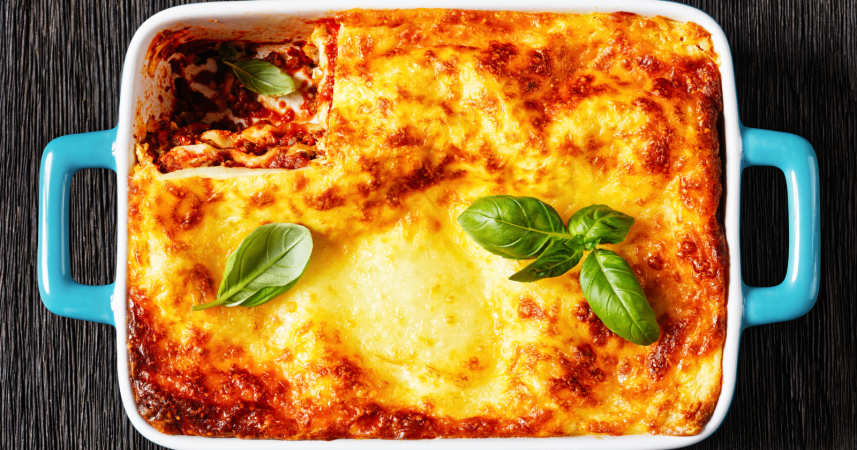
Nonna-approved tweaks that transform any pan—especially tip #4.
Some family secrets aren’t about ingredients; they’re about behavior.
Lasagna is one of those dishes where technique carries more weight than labels—and yes, nonna-level results are absolutely possible without animal products.
Italian grandmothers don’t chase hacks — they repeat tiny rituals that add up to silkier layers, sturdier slices, and flavor that tastes like it’s been loved for hours.
Here’s how I make a fully plant-based lasagna that still makes the table go quiet, borrowing the habits the pros at home use—translated into vegan form.
1. Make two sauces on purpose: a bright ragù and a silky “béchamel”
Classic lasagna lives on contrast: savory tomato depth against a soft, milky layer. For the ragù, sweat onion, carrot, and celery slowly in olive oil until sweet, then add minced mushrooms and finely chopped walnuts or lentils and cook them down until they stop steaming and actually sizzle — that’s when umami wakes up.
Stir in tomato paste and toast it for a minute before adding crushed tomatoes and a splash of red wine.
Simmer low until the edges look glossy and the spoon leaves a trail. In a second pot, build a vegan béchamel: warm olive oil with a little vegan butter, whisk in flour until it smells nutty, then slowly add warm unsweetened soy milk, whisking like it owes you rent.
A pinch of nutmeg, white miso for savor, and a squeeze of lemon at the end make it taste like “ricotta energy” without trying to mimic anything.
2. Season each component “to the fork,” not “to the pot”
Nonna-taught rule: every element must taste right before it ever meets the next. Salt your ragù so a small spoonful sings on its own—balanced acidity, gentle heat, roundness from olive oil.
Season your béchamel more than you think: it should taste slightly savory in the pot because starch and pasta will mute it later.
If you’re using a tofu ricotta layer (crumbled firm tofu with lemon, olive oil, nooch, garlic, and herbs), season that too until it feels snackable straight out of the bowl.
Under-seasoned parts stack into a bland whole. Perfectly seasoned parts click together like a choir.
3. Par-cook or soak the pasta so the bake is about melding, not boiling
Grandmothers don’t leave structural integrity to chance.
If you’re using dried sheets, either par-boil for 4–5 minutes in aggressively salted water or soak in very hot salted water for 20–30 minutes until pliable.
Drain and lay them flat on tea towels so they don’t fuse.
If you’re using fresh vegan pasta, a brief dip is enough. The goal is bendy but not floppy.
Lasagna shouldn’t need the oven to cook the pasta through — the oven’s job is to marry and set.
This one step is what keeps corners from going leathery and centers from tasting raw.
4. Build thin layers and repeat them—restraint beats thick stacks
The most common mistake I see is trying to cram the lasagna into four skyscraper layers.
Nonna logic says go thinner and repeat more: a smear of ragù, a whisper of béchamel, a net of pasta, then again.
When layers are thin, heat moves evenly and slices stand tall. Aim for six to eight layers in a standard pan. Tuck edges with a spoon so sheets don’t curl.
If you want a ricotta vibe, dot small spoonfuls of your tofu mix between béchamel and ragù rather than spreading a heavy slab. It melts into the whole instead of creating a chalky band.
5. Roast your vegetables before they ever meet the pan
Water is the enemy of set lasagna.
If you’re adding vegetables beyond the soffritto—zucchini, eggplant, spinach, peppers—roast or sauté them until their moisture is mostly gone and their flavor is concentrated.
Salted, sliced eggplant gets a light oil brush and a high-heat roast until supple and browned; zucchini gets the same. Spinach should be wilted in a dry pan and squeezed like it owes you secrets.
Layer these as accents, not as slabs, so they behave like flavor notes rather than soggy dividers. The payoff is a slice that cuts clean and tastes like vegetables, not rinse water.
6. Use umami boosters the way nonna uses cheese
Italian grannies use Parm to add salinity, nutty depth, and finish.
We can do that without dairy.
Shower your béchamel with nutritional yeast; whisk a spoon of white miso into it for aged complexity; add a splash of good soy sauce or tamari to the ragù in the last minutes to round edges; finish the top with a fine dusting of almond meal mixed with nooch, lemon zest, and a pinch of salt for a faux-gratina crunch.
None of these should shout. They should make people wonder why your tomato tastes like it took a semester abroad in Bologna.
7. Bake lower and longer, then rest like you mean it
Lasagna hates high heat and impatience.
Bake covered at 180°C / 350°F until the edges bubble gently and the center registers hot—usually 35–45 minutes depending on depth.
Uncover for the last 10–15 minutes to brown the top. Then do the hardest, most nonna move: rest it. Twenty to thirty minutes on a rack, loosely tented, lets starches set and sauces thicken so your slice stays proud.
If you want perfect squares for guests, rest 45 minutes and rewarm briefly; restaurants do this because it works.
A blueprint you can run this weekend
Make ragù with finely chopped mushrooms and walnuts, a soffritto, tomato paste, crushed tomatoes, and a splash of red wine.
Let it simmer until thick and shiny. Make béchamel with olive oil, a little vegan butter, flour, warm soy milk, nutmeg, white miso, and lemon.
Season your tofu ricotta—crumbled firm tofu, olive oil, lemon zest and juice, nutritional yeast, garlic, parsley—until it’s lively.
Par-boil or soak your sheets. Roast coins of zucchini and slices of eggplant until they give up most of their water. Layer in a 9×13 pan: a spoon of ragù to prevent sticking, pasta, ragù, béchamel, a few dabs of ricotta, scattered veg, repeat.
Finish with béchamel and a light sprinkle of almond–nooch “parm.”
Bake covered, uncover to kiss with color, rest, slice, and listen to the room go quiet.
Troubleshooting like a nonna who’s seen everything
If your slice slumps, your sauces were too loose or you cut too soon. Thicken the béchamel a touch next time and simmer ragù until you see a light oil sheen.
If the top dries, you baked too hot or uncovered too long; add a final veil of béchamel before the oven. If flavor reads flat, you likely skipped acid.
A squeeze of lemon in béchamel and a tiny splash of red wine vinegar in ragù at the end wake the whole dish. If it tastes “vegetably” in a shy way, you didn’t brown enough—color equals flavor.
Final thoughts
Vegan lasagna isn’t a compromise when you keep faith with the things that actually make lasagna great: contrast, patience, and respect for water and heat.
Make two sauces that know their jobs.
Season each piece like it will be tasted alone.
Pre-tame your pasta and veg. Layer thin. Bake calm.
Rest like you’re being watched by someone’s grandmother. Do that, and you won’t need cheese to make people close their eyes on the second bite.
You’ll need to remember where you put the extra pan, because they’ll ask you to make it again.