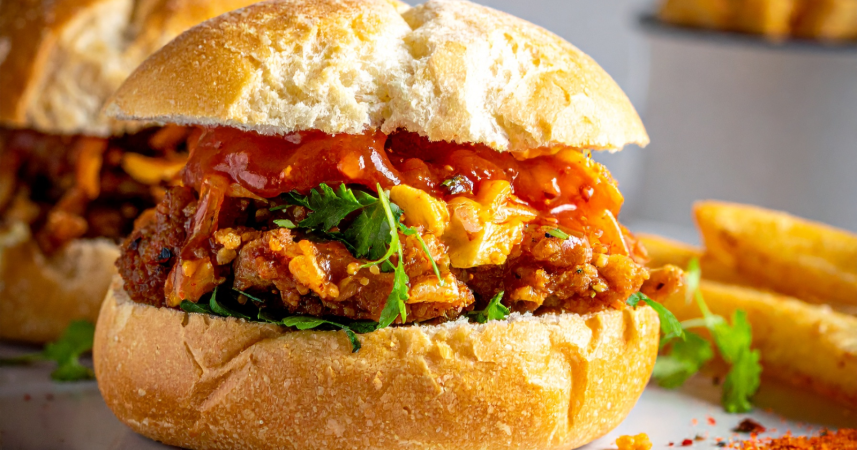
A smoky, saucy twist on a comfort-food classic proves you don’t need meat to savor tradition—or to surprise your taste buds.
The smell hit me first. Sweet smoke, a whisper of chili, that tangy zip of vinegar that always meant one thing growing up above our family’s corner taquería—someone was braising pork for tacos.
But here’s the twist: the pot in front of me wasn’t full of pork. It was young jackfruit, tumbling into shreds under my spoon, soaking up barbecue sauce until it looked (and smelled) like the real deal.
That moment felt like a revelation. I could keep the flavor memories I loved—the messy sandwiches, the backyard gatherings, the comfort of slow-cooked meat—while leaving the animal part behind.
Jackfruit became my bridge: a way to honor heritage flavors while cooking in a way that felt right for my body and the planet.
The fruit that cooks like meat
If you’ve never worked with it, jackfruit might sound like an odd substitute. It grows wild and massive—up to 80 pounds per fruit—across South and Southeast Asia, where it’s been a staple for centuries.
Here’s why it’s showing up in so many plant-based kitchens today:
- Texture magic: When unripe, young jackfruit has a stringy, fibrous body that mimics shredded pork or chicken almost eerily well.
- Neutral base: It doesn’t have much flavor on its own, so it happily soaks up spices and sauces—whether you lean Texan BBQ or Oaxacan chile rojo.
- Health bonus: Unlike pork, jackfruit is low in calories and fat but packed with fiber and micronutrients like vitamin C, potassium, and magnesium.
And here’s the kicker: life cycle assessments show that plant-based alternatives can use 79–95% less land and water—and emit far fewer greenhouse gases—than conventional meat.
Even better, jackfruit trees themselves are climate-resilient: they thrive in hot, humid regions where droughts are becoming more common.
Recipe: smoky BBQ jackfruit “pulled pork” sandwiches
Ingredients (serves 4)
- 2 (20-ounce) cans young green jackfruit in brine or water (not ripe jackfruit in syrup)
- 2 tablespoons olive oil or avocado oil
- 1 medium yellow onion, thinly sliced
- 3 cloves garlic, minced
- 1 teaspoon smoked paprika
- 1 teaspoon ground cumin
- ½ teaspoon chili powder (optional for heat)
- 1 teaspoon sea salt
- ½ teaspoon black pepper
- 1 cup vegan BBQ sauce (plus more for serving)
- ½ cup vegetable broth or water
- 4 burger buns, toasted
- Toppings: crunchy slaw, pickled red onions, or sliced avocado
Instructions
- Prep the jackfruit
Drain and rinse the jackfruit well. Pat dry. Cut away any firm core pieces, then use your hands or two forks to pull it apart into shreds. Don’t worry if some chunks remain—they’ll soften as they cook. - Build the flavor base
Heat oil in a large skillet or Dutch oven over medium heat. Add onion and sauté 5–6 minutes until softened and golden. Stir in garlic, paprika, cumin, chili powder, salt, and pepper. Cook 1 minute more, until fragrant. - Simmer into tenderness
Add shredded jackfruit, BBQ sauce, and broth. Stir to coat everything. Cover and simmer on low for 20–25 minutes, stirring occasionally, until the jackfruit is tender and has absorbed the flavors. - Crisp the edges (optional but magical)
For extra “pulled pork” texture, spread the jackfruit mixture onto a parchment-lined baking sheet. Bake at 400°F for 15–20 minutes, stirring once, until the edges begin to caramelize. - Assemble the sandwiches
Pile saucy jackfruit high onto toasted buns. Top with slaw, pickled onions, or your favorite add-ins. Drizzle with extra BBQ sauce if you’re feeling bold.
Why it matters: comfort with a conscience
Every bite of this sandwich satisfies on two levels:
- Comfort: It scratches that smoky, saucy, finger-licking itch without the heaviness of pork.
- Conscience: Pork production generates up to 12 times more greenhouse gases than jackfruit farming. Choosing this sandwich isn’t just tasty—it’s a tangible way to lighten your climate impact.
Meanwhile, you’re also supporting farmers. In India, where jackfruit is native, farmers who once saw it as a “poor man’s crop” are now exporting it worldwide as demand rises.
In Mexico, where my own roots run deep, small-scale growers are experimenting with jackfruit orchards as a climate-smart alternative.
Every can of jackfruit you buy is a vote for those transitions.
A sandwich with many stories
Food always carries stories. For my family, pulled pork was tied to taquería Saturdays—pots simmering on the stove, tortillas warming on the comal, cousins sneaking bites straight from the pan.
Cooking this jackfruit version feels like carrying those stories forward without the parts I’ve outgrown.
But jackfruit carries its own stories too—of South Asian markets where fruit towers taller than a child, of Filipino kitchens where jackfruit stews into ginataang langka, of Sri Lankan curries where it’s known as “kos.”
When we cook with jackfruit, we’re not just making a meat swap—we’re stepping into a much older food tradition.
Step beyond the sandwich: how to use leftover jackfruit
One of the best parts about cooking a batch of jackfruit is how versatile it is. Leftovers can transform into:
- Tacos: Toss reheated jackfruit in extra chili sauce and tuck into warm corn tortillas.
- Nachos: Layer over chips with vegan cheese, beans, and jalapeños.
- Bowls: Serve with rice, roasted veggies, and avocado crema for a weeknight dinner.
- Breakfast hash: Fry jackfruit with potatoes and peppers for a hearty morning skillet.
Cook once, eat many times—that’s sustainable kitchen wisdom.
Final bite
The first time I made this sandwich for my cousin—who swore he’d “never give up carnitas”—he paused after one bite, raised an eyebrow, and said, “This isn’t pork?!” That’s when I knew jackfruit had earned its place on our family table.
So go ahead: make a pot, toast some buns, and let the sauce drip down your wrist.
With every messy bite, you’re not just feeding yourself—you’re feeding a shift toward a future where comfort food and conscious choices share the same plate.
What’s Your Plant-Powered Archetype?
Ever wonder what your everyday habits say about your deeper purpose—and how they ripple out to impact the planet?
This 90-second quiz reveals the plant-powered role you’re here to play, and the tiny shift that makes it even more powerful.
12 fun questions. Instant results. Surprisingly accurate.