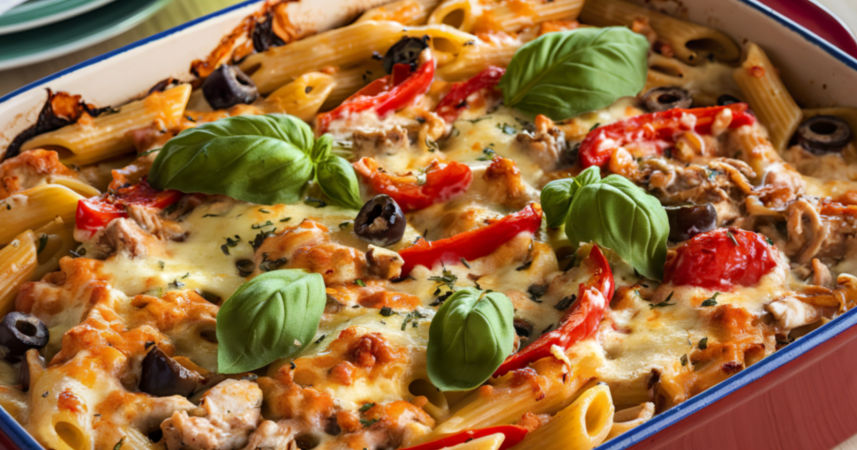
Skip the stovetop and let the oven do the work. This creamy, saucy vegan pasta bakes to perfection without boiling a single noodle.
It started with a fridge raid. Half a jar of marinara. A few handfuls of spinach. One lonely zucchini. And, to be honest, zero desire to boil water.
As someone who spent his 20s in fine dining, I’m wired to believe good food requires precision, technique, mise en place, maybe even a little drama.
But this time, I had none of that in me. I wanted something that practically cooked itself.
So I layered everything in a baking dish: dry pasta, sauce, vegetables, and a splash of plant milk. I hoped for the best.
An hour later, the result was shockingly good. Creamy, flavorful, perfectly tender noodles that hadn’t seen a pot of boiling water.
That night turned into a ritual. I’ve since made this dish for friends, dates, and family dinners. And every single time, someone asks, “You didn’t even boil the pasta?”
Nope. That’s the whole point.
The beauty of skipping the boil
At first, I thought this was just a lazy-cook hack. But it turns out there’s a deeper reason it works and why it matters.
Boiling pasta for 10 minutes uses nearly a gallon of water. Multiply that by weekly cooking habits, and we’re talking hundreds of gallons a year.
When you bake your pasta directly in the sauce, that moisture gets absorbed instead of discarded. You save time, energy, and yes, a little piece of the planet.
Beyond that, this method teaches something every chef learns early on: restraint. You don’t need a dozen steps or gadgets to make something delicious.
Sometimes, the simplest approach, done thoughtfully, is the most elegant.
No-boil baked vegan pasta (serves 4–6)
A creamy, comforting pasta that cooks entirely in the oven. No pre-boiling required.
Ingredients
- 12 oz uncooked short pasta (penne, rigatoni, or fusilli; whole wheat or lentil pasta both work)
- 2 ½ cups marinara sauce (homemade or store-bought)
- 2 cups unsweetened oat milk (or other neutral plant-based milk)
- 1 ½ cups vegan mozzarella shreds
- 1 cup vegan ricotta or blended silken tofu
- 2 cups fresh spinach, roughly chopped
- 1 small zucchini, diced
- 1 small red onion, thinly sliced
- 3 cloves garlic, minced
- 2 tbsp olive oil
- 1 tsp salt
- ½ tsp black pepper
- ½ tsp dried oregano
- ¼ tsp chili flakes (optional)
- 2 tbsp nutritional yeast (optional, for depth and umami)
Directions
- Preheat your oven to 400°F (200°C).
- Grease a 9x13-inch baking dish with olive oil.
- Layer thoughtfully: Spread a thin layer of marinara on the bottom. Add half of the dry pasta, half the vegetables, half the cheese, and a bit more sauce. Repeat the layers.
- Combine and pour: Whisk together the oat milk and any remaining sauce. Pour evenly over the dish so the liquid just covers the top layer of pasta.
- Cover tightly with foil to trap steam and help the pasta cook evenly.
- Bake for 45 minutes, then remove the foil and bake an additional 10–15 minutes until golden and bubbling at the edges.
- Rest for 10 minutes before serving. The sauce will thicken beautifully as it cools slightly.
- Garnish with fresh basil, cracked pepper, or a sprinkle of vegan parmesan.
Why it works (chef’s insight)
This recipe borrows from the same principle chefs use in braising: low, consistent heat and trapped moisture. Instead of water boiling away, the starch from the pasta mingles with the sauce, creating a naturally creamy texture without any roux or cream.
Think of it as letting the oven do what great cooks do instinctively: control time and temperature until every bite feels intentional.
Flavor variations to keep it interesting
Once you’ve mastered the method, the variations are endless.
- Smoky Veggie Bake: Add roasted red peppers, smoked paprika, and vegan sausage crumbles.
- Creamy Spinach Alfredo: Swap the marinara for cashew cream, stir in nutmeg, and top with extra nutritional yeast.
- Mediterranean Style: Use artichoke hearts, sun-dried tomatoes, and olives for a briny kick.
- Protein Boost: Toss in cooked lentils or white beans before baking.
You can even split the base recipe into two smaller pans, one tomato-based and one creamy, and bake them side by side for a dinner party that feels restaurant-worthy but takes the same effort as one.
Sustainability hidden in plain sight
Every skipped pot of boiling water saves roughly one gallon. If you make pasta twice a week, that’s about a hundred gallons of water a year, not to mention the energy used to heat it.
Small shifts like this may seem trivial, but they add up quickly when scaled across communities.
And that’s the quiet revolution of plant-based comfort food. It’s not about sacrifice. It’s about simplicity, making something so good people forget it’s also sustainable.
As someone who’s spent years in luxury dining, I find that deeply satisfying. The elegance isn’t in how complicated it is, but in how effortless it feels.
Hosting tip from a former restaurant guy
If you’re feeding a crowd, double the recipe and prepare it in two pans. Keep one classic red and make the other white and creamy.
Bake them side by side, and you’ll have dinner for a dozen guests with minimal cleanup and time to actually sit down with them.
Pair it with a simple salad, a loaf of crusty bread, and maybe a chilled bottle of natural wine. That’s hospitality at its most genuine: relaxed, unfussy, and deliciously human.
Final bite
There’s something almost poetic about food that rewards you for slowing down.
The sauce bubbles, the noodles soften, the aroma fills the kitchen. For an hour, the oven handles everything.
When it’s done, you pull out this golden, steaming dish that looks and smells like effort, but really, it’s freedom disguised as comfort food.
And that, to me, is the heart of great cooking: knowing when to do less so the ingredients can do more.