A comfort classic gets a plant-based upgrade—and the secret ingredient might just surprise you.

Add VegOut to your Google News feed. 
From white-glove wine pairings on the Amalfi Coast to sizzling yakitori stalls in Osaka, I’ve had the privilege of experiencing food that speaks every language.
And I’ll be honest—when I first heard about “chickpea pasta,” I filed it under the same category as oat milk cheese and jackfruit pulled pork: noble, but rarely memorable.
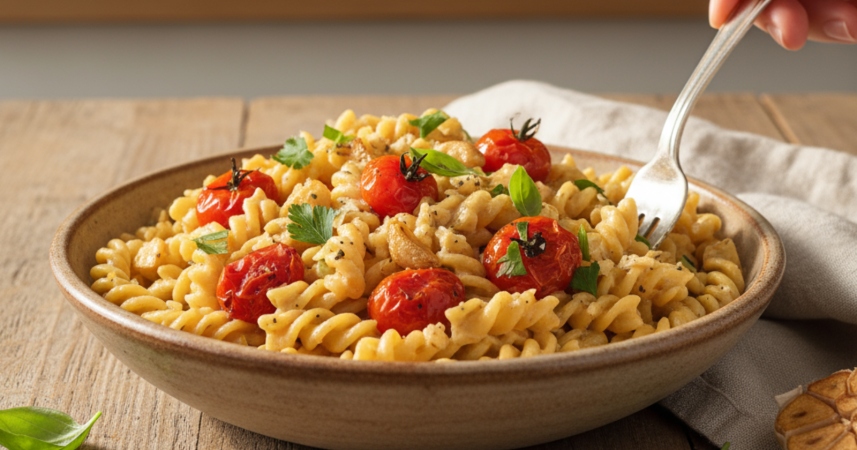
But here’s the kicker: one night, a friend made me a bowl of creamy chickpea pasta with garlic, olive oil, blistered tomatoes, and fresh herbs.
It was rich. It was satisfying. It was comforting in the way good Italian food should be. And it didn’t leave me in a food coma or wondering what I just did to my cholesterol.
That was the beginning of a small obsession—not just with chickpea pasta, but with a broader question: Can we make the kind of food we crave… without wrecking our health or the planet?
Spoiler: yes. And chickpea pasta is an excellent place to start.
Why chickpea pasta hits the sweet spot for flavor, health, and sustainability
We’re in a moment of food reckoning. Climate change is accelerating, grocery prices are climbing, and more of us are rethinking what it means to eat well—for our bodies, our wallets, and the planet. That’s where chickpea pasta quietly shines.
It satisfies your cravings—without the crash.
Traditional pasta is pure comfort, but it can be a blood sugar rollercoaster. Thanks to its high protein and fiber content, chickpea pasta delivers a slower, more stable energy release. Translation? You get that hearty, belly-warming satisfaction without the post-lunch slump or carb hangover.
It’s a quiet win for the planet.
Legumes like chickpeas are climate-friendly MVPs. They use less water than wheat, enrich the soil with nitrogen, and support regenerative farming. According to a 2021 Nature Food study, animal-based foods account for 57% of food-related greenhouse gas emissions, while plant-based foods account for just 29%. So swapping your spaghetti night for chickpea penne isn’t just a personal upgrade—it’s an environmental one.
It plays well with bold flavors.
Today’s chickpea pastas—think Banza, Chickapea, or Barilla’s legume line—are a far cry from the grainy substitutes of the past. They cook up al dente, with a mild, nutty flavor that holds sauce like a pro. Whether you're going for silky garlic cream or a spicy tomato pesto, chickpea pasta delivers on texture and taste.
It supports a better food system.
Many brands sourcing chickpeas today are partnering with small farms, investing in food equity, and rethinking how business can be done. That means every box you buy isn’t just a dinner—it’s a vote for fairer, smarter, more sustainable food.
The upshot?
Chickpea pasta isn’t just a health trend or a gluten-free alternative. It’s a micro-shift that touches everything: your cravings, your energy, your values. And it proves you don’t need to compromise indulgence to make a better choice.
Step-by-step: How to make chickpea pasta feel like a five-star meal
Whether you’re meal-prepping for the week or hosting a Friday dinner party, chickpea pasta can play the main character. The secret is treating it with the same respect you'd give traditional pasta—plus a few smart upgrades.
Step 1: Start with a quality brand
Not all chickpea pastas are created equal. Look for options with just one or two ingredients (ideally 100% chickpeas), and experiment until you find your favorite texture. I personally lean toward Banza’s penne or Chickapea’s spirals.
Step 2: Salt your water like the Mediterranean
Yes, even chickpea pasta needs well-salted water. Bring it to a rolling boil and add enough salt that it tastes like a mild ocean. This infuses flavor from the inside out.
Step 3: Cook until barely al dente
Chickpea pasta goes from perfect to mushy quickly. Undercook it by 30–60 seconds, then finish in the sauce for that coveted restaurant-level cohesion.
Step 4: Go bold with sauce
Chickpea pasta’s nutty base welcomes richness. Some of my go-to combos:
- Roasted red pepper + cashew cream + chili flakes
- Lemon zest + olive oil + sautéed kale + white beans
- Sun-dried tomato pesto + vegan parmesan + pine nuts
- Blistered cherry tomatoes + garlic + basil + plant butter
And yes—if you’re feeling decadent, a touch of oat-based heavy cream or truffle oil doesn’t hurt.
Step 5: Finish like a pro
Add a splash of pasta water to marry the sauce and noodles. Then top with cracked pepper, fresh herbs, and something crunchy (like toasted breadcrumbs or chopped walnuts). This step separates “meh” from “wow.”
Want to level it up? Try these comfort-forward recipes
Here are two tried-and-true favorites that have earned repeat status in my own kitchen.
1. Creamy chickpea carbonara (vegan)
Ingredients:
- 1 box chickpea spaghetti
- 1 tbsp olive oil
- 2 cloves garlic, minced
- 1/2 cup unsweetened oat milk
- 1 tbsp nutritional yeast
- 1/2 tsp turmeric
- 1/2 tsp smoked paprika
- Salt and pepper to taste
- 1/4 cup vegan bacon or tempeh bits
Instructions:
- Cook pasta until al dente. Reserve 1/2 cup of pasta water.
- In a skillet, heat olive oil and sauté garlic for 1–2 minutes.
- Add oat milk, nutritional yeast, turmeric, and paprika. Simmer until slightly thickened.
- Stir in pasta and a bit of pasta water to loosen.
- Top with vegan bacon and cracked pepper.
2. Herby tomato and chickpea penne
Ingredients:
- 1 box chickpea penne
- 2 cups cherry tomatoes
- 1 tbsp olive oil
- 2 cloves garlic, sliced
- 1/4 cup chopped fresh basil
- Salt and red pepper flakes
- Optional: vegan feta or almond ricotta
Instructions:
- Toss tomatoes with olive oil and roast at 400°F for 15–20 minutes until blistered.
- Cook pasta al dente. Drain and reserve 1/4 cup pasta water.
- In a pan, sauté garlic, then add roasted tomatoes and pasta water.
- Add pasta and toss to coat. Finish with basil, salt, and heat.
- Crumble vegan cheese on top, if using.
Final thoughts: it’s not about giving up—it’s about leveling up
If there’s one thing I’ve learned from working in high-end kitchens, it’s this: Comfort food is about memory.
It’s about warmth, texture, generosity. Chickpea pasta doesn’t ask you to give that up—it invites you to redefine it.
And for someone like me—someone who still craves buttered noodles and midnight cacio e pepe—it’s a way to keep the soul of Italian cooking alive…without compromising on the things that matter most.
So no, you don’t have to be vegan to fall in love with chickpea pasta. But once you taste it done right, you might start seeing plant-based comfort food in a whole new light.
If You Were a Healing Herb, Which Would You Be?
Each herb holds a unique kind of magic — soothing, awakening, grounding, or clarifying.
This 9-question quiz reveals the healing plant that mirrors your energy right now and what it says about your natural rhythm.
✨ Instant results. Deeply insightful.

Adam Kelton
Adam Kelton is a writer and culinary professional with deep experience in luxury food and beverage. He began his career in fine-dining restaurants and boutique hotels, training under seasoned chefs and learning classical European technique, menu development, and service precision. He later managed small kitchen teams, coordinated wine programs, and designed seasonal tasting menus that balanced creativity with consistency.
After more than a decade in hospitality, Adam transitioned into private-chef work and food consulting. His clients have included executives, wellness retreats, and lifestyle brands looking to develop flavor-forward, plant-focused menus. He has also advised on recipe testing, product launches, and brand storytelling for food and beverage startups.
At VegOut, Adam brings this experience to his writing on personal development, entrepreneurship, relationships, and food culture. He connects lessons from the kitchen with principles of growth, discipline, and self-mastery.
Outside of work, Adam enjoys strength training, exploring food scenes around the world, and reading nonfiction about psychology, leadership, and creativity. He believes that excellence in cooking and in life comes from attention to detail, curiosity, and consistent practice.
More Articles by Adam