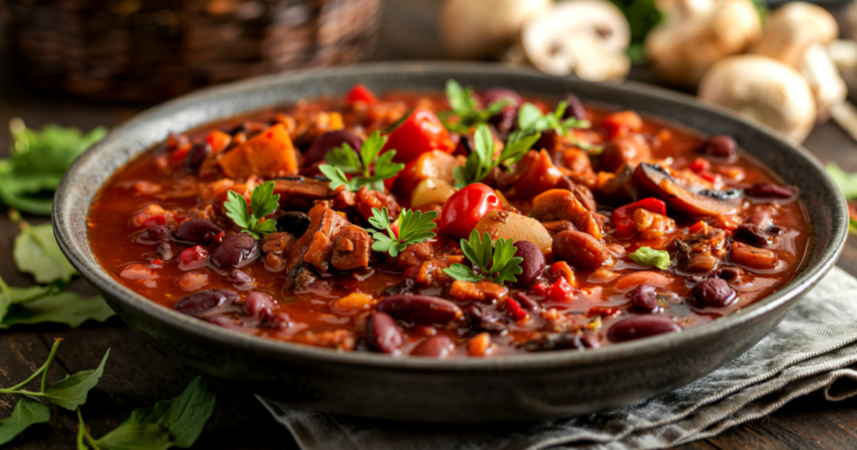
This plant-powered comfort food proves that rich flavor, hearty texture, and sustainability can all simmer together in one irresistible pot.
If there’s one dish that has the power to unite a table full of carnivores and vegans, it’s chili. Think about it: hearty beans, smoky spices, a rich tomato base—it’s the kind of bowl that warms you from the inside out.
As someone who grew up working in fine dining, I used to think chili was too rustic, too casual to impress. But here’s the kicker: when you approach it with the same attention to layering flavors that chefs bring to a stockpot or braise, you realize chili is a blank canvas for deep, complex cooking.
And when you make it plant-based? You’re not just cutting out meat—you’re reducing your carbon footprint, slashing saturated fat, and building a meal that nourishes community.
And when you make it plant-based? You’re not just cutting out meat—you’re reducing your carbon footprint, slashing saturated fat, and building a meal that nourishes community.
A University of Michigan and Tulane University study found that replacing just half of the animal products in the average American diet with plant-based alternatives could cut diet-related greenhouse gas emissions by about 35% by 2030.
The secret is in the base
Every great chili starts with a strong foundation. Forget the idea that flavor only comes from meat. Here’s how to build depth from plants alone:
- Aromatics first: Sweat onions, garlic, and bell peppers slowly in olive oil until they’re golden. This step builds the sweetness that balances the heat.
- Spice bloom: Don’t just sprinkle in chili powder—toast your cumin, smoked paprika, and ancho chili powder in the oil before liquids go in. It unlocks an earthier punch.
- Umami booster: Add a tablespoon of tomato paste and let it caramelize. A splash of soy sauce or tamari takes it even further.
This is where the pot starts to smell like something special—and where skeptics lean in, spoon ready.
Beans, lentils, and vegetables: the holy trinity
Most chili recipes lean on kidney beans alone. To make a vegan chili that satisfies even steak lovers, think variety:
- Kidney beans for that classic bite.
- Black beans for creaminess.
- Green or brown lentils to mimic the ground-meat texture.
- Mushrooms finely chopped, which add a meaty chew and soak up spice.
- Sweet potato or butternut squash for natural sweetness that tempers the heat.
The upshot? Each spoonful has texture, color, and balance—the things that make a dish feel complete.
Balancing health, climate, and community
Here’s the bigger picture:
- Health: A bowl of vegan chili is loaded with plant protein, soluble fiber, and antioxidants. It keeps blood sugar steady and lowers LDL cholesterol.
- Climate: Beans require a fraction of the land and water compared to beef. Just one pound of beef generates about 27 kilograms of CO₂-equivalent emissions, while beans generate under 2.
- Community: Chili is shared food. It’s the dish you set in the middle of the table with a ladle, letting everyone build their bowl with toppings. That act alone makes it more than food—it’s hospitality in its purest form.
Step-by-step: how to make it
Here’s the roadmap to the ultimate one-pot vegan chili.
- Prep the base
- 2 tbsp olive oil
- 1 large onion, diced
- 3 garlic cloves, minced
- 1 red bell pepper, diced
- Sauté until golden and fragrant, 6–8 minutes.
- Bloom the spices
- 2 tbsp chili powder
- 2 tsp cumin
- 1 tsp smoked paprika
- ½ tsp cayenne (optional for heat)
- Toast in the oil for 1–2 minutes.
- Build the body
- 2 tbsp tomato paste
- 1 cup diced mushrooms
- 1 cup cubed sweet potato
- 1 tbsp soy sauce or tamari
- Stir and let everything caramelize for another 5 minutes.
- Add the bulk
- 1 can kidney beans, drained
- 1 can black beans, drained
- 1 cup cooked lentils
- 1 can crushed tomatoes (28 oz)
- 2 cups vegetable broth
- Bring to a boil, reduce to simmer, and let it bubble gently for 30–40 minutes until thickened.
- Finish strong
- Season with salt and black pepper.
- Add a squeeze of lime juice and a handful of chopped cilantro before serving.
Toppings that seal the deal
If you want to win over carnivores, toppings matter:
- Avocado slices for richness
- Cashew crema as the dairy-free “sour cream”
- Pickled jalapeños for tang
- Crushed tortilla chips for crunch
Lay them out buffet-style and watch the table go quiet—always the sign of a good meal.
The upshot
One-pot vegan chili isn’t just a recipe—it’s proof that plant-based eating can be indulgent, crave-worthy, and communal. When you put time into layering flavors and textures, no one misses the meat.
And maybe that’s the bigger lesson: you don’t need to abandon tradition to eat more sustainably. Sometimes, the dishes that feel the most familiar—the ones that smell like home—are the best vehicles for change.
So the next time you want to impress a mixed crowd, break out the biggest pot you own. Ladle generously. And enjoy the quiet moment when even the most die-hard carnivore goes back for seconds.