This plant-based twist on a classic comfort dish proves cozy, creamy indulgence doesn’t have to come at the cost of health or sustainability.
There’s a particular kind of comfort food that feels like a hug in a bowl. For me, stroganoff has always been one of those dishes.
Maybe it’s the silky noodles tangled up in a sauce that clings just right. Maybe it’s the aroma of garlic, mushrooms, and herbs filling the kitchen. Or maybe it’s because it bridges two worlds—hearty enough for a dinner party, cozy enough for a solo Tuesday night.
Traditionally, stroganoff leans heavily on beef and sour cream, which makes it off-limits for anyone trying to eat more plant-based.
But here’s the thing: once I swapped in mushrooms for meat and cashew cream for dairy, I realized the essence of stroganoff wasn’t about beef at all.
It was about richness, warmth, and the kind of flavor layers that make you go back for seconds.
That’s the story of this creamy vegan stroganoff—a recipe that proves comfort food doesn’t need compromise.
And beyond flavor, it’s also about something bigger: how plant-based cooking can nourish our health, lighten our footprint, and bring people together at the table.
Start with the right base
Classic stroganoff is often served with wide egg noodles. In the vegan version, you have options: pappardelle, tagliatelle, or even gluten-free ribbons made from lentils or chickpeas. The wide shape holds up beautifully against the creamy sauce, and if you’re choosing legume-based pasta, you’re also sneaking in extra protein and fiber.
One lesson I learned working in restaurants is that the starch matters as much as the sauce. If you’ve only got spaghetti in the pantry, use it. But if you want that authentic stroganoff feel, go wide.
Build depth with mushrooms
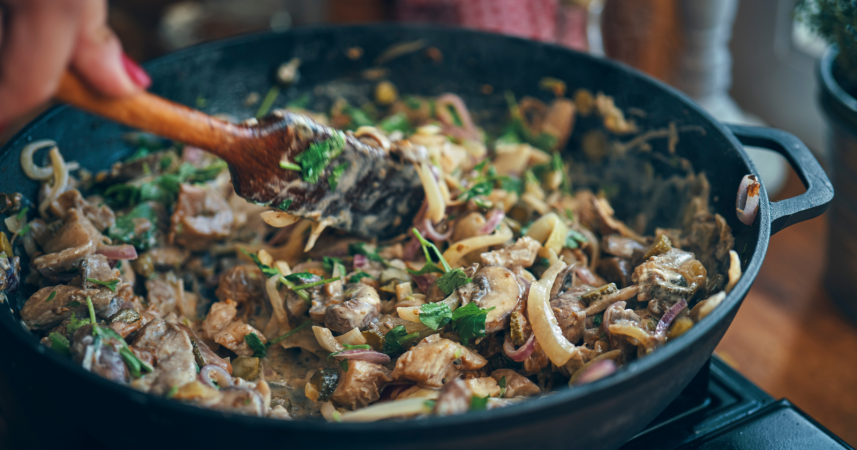
Here’s where the magic happens. Mushrooms are nature’s umami bomb, and they carry the savory heft that beef once supplied. A mix works best: cremini for earthiness, portobello for chew, shiitake for smoky depth.
The technique is just as important as the ingredient. Don’t crowd the pan. Give the mushrooms space, cook them in batches, and let them sear until golden brown. This step alone is what makes your sauce taste restaurant-worthy. As I used to remind new line cooks: color equals flavor.
Make it creamy without dairy
This is where skeptics raise an eyebrow—can you really get that luscious stroganoff texture without sour cream? Absolutely. You’ve got options:
- Cashew cream for richness with a neutral flavor.
- Oat cream for a lighter touch.
- Full-fat coconut milk if you don’t mind a subtle sweetness.
Personally, I like blending soaked cashews with veggie broth and a splash of white wine. It creates a sauce so silky, even my meat-loving friends don’t miss the dairy.
Recipe: creamy vegan mushroom stroganoff
Serves: 4
Time: 40 minutes
Ingredients
- 12 oz wide pasta (pappardelle, tagliatelle, or gluten-free noodles)
- 2 tbsp olive oil or vegan butter
- 1 medium onion, finely chopped
- 3 garlic cloves, minced
- 16 oz mixed mushrooms (cremini, portobello, shiitake), thickly sliced
- 2 tbsp all-purpose flour (or cornstarch for gluten-free)
- 1 ½ cups vegetable broth
- ½ cup dry white wine (optional but recommended)
- 1 cup cashew cream (blend ¾ cup soaked cashews with 1 cup water) OR 1 cup oat cream
- 1 tbsp Dijon mustard
- 1 tsp smoked paprika
- 1 tbsp tamari or soy sauce
- Salt and black pepper, to taste
- Fresh parsley, chopped, for garnish
Instructions
- Cook pasta according to package directions until al dente. Reserve ½ cup pasta water, then drain.
- Sear mushrooms. In a large skillet, heat oil over medium-high. Add mushrooms in batches so they brown instead of steam. Cook for 6–8 minutes until golden. Remove and set aside.
- Build aromatics. In the same pan, sauté onion until soft (4 minutes). Add garlic, cook 1 minute more.
- Make roux. Sprinkle flour over onions, stirring for 1–2 minutes until slightly nutty. Slowly whisk in broth and wine to create a smooth sauce.
- Go creamy. Stir in cashew cream, mustard, paprika, tamari, and seared mushrooms. Simmer for 5–7 minutes until thickened. If too thick, loosen with reserved pasta water.
- Season and serve. Taste, adjust salt and pepper. Toss with noodles. Garnish with parsley and cracked black pepper.
Pro tip: For extra depth, add a splash of balsamic vinegar or a pinch of nutritional yeast before serving.
Add aromatics and flavor boosters
The reason stroganoff works is because it layers flavors. After the mushrooms, you bring in onion and garlic—simple, yes, but essential.
A spoonful of Dijon mustard sharpens the creaminess, smoked paprika lends warmth, and tamari adds that background bass note of umami.
Every great restaurant dish has what I call a “signature whisper”—the ingredient you don’t quite notice until you miss it. In stroganoff, it’s the mustard. Don’t skip it.
Thicken and finish the sauce
A quick roux (that flour-onion mix) ties the sauce together, and fresh herbs like parsley or thyme lift it at the end. Here’s a chef’s tip: always taste and tweak before plating. Add salt in pinches, not pours. Grind pepper fresh. Cooking, like hospitality, is all about noticing the small details.
Why this dish matters beyond the bowl
Yes, this is a comforting dinner. But it’s also a quiet act of sustainability.
Consider this: red meat—especially beef—has among the highest greenhouse gas emissions of all common foods. According to Our World in Data, beef produces 60 kg of CO₂-equivalent emissions per kilogram of meat, compared with just 0.5–1 kg for vegetables like mushrooms. That’s a staggering difference.
Another study published in Nature found that replacing a portion of ruminant meat (like beef) with fungal-based or plant protein alternatives could cut global deforestation by half by 2050. Swapping beef for mushrooms isn’t just a kitchen choice—it’s a climate choice.
On the health side, dairy cream is high in saturated fat and cholesterol. Cashew cream, by contrast, contains heart-healthy unsaturated fats and zero cholesterol. It’s also a source of minerals like magnesium and copper.
Cashews and mushrooms both provide dietary fiber, something 95% of Americans don’t get enough of. Fiber supports digestion, helps regulate blood sugar, and contributes to a feeling of satiety that makes plant-based meals satisfying.
And then there’s community. When I serve vegan stroganoff at a dinner party, nobody feels left out. My plant-based friends eat happily, my meat-eater friends forget to ask where the beef is, and everyone goes home satisfied. That’s what food is supposed to do—bring us together.
A final note from the table
Cozy nights call for food that fills you up and slows you down. This vegan stroganoff does both.
It’s indulgent enough to impress guests, easy enough for weeknights, and meaningful enough to remind us that comfort food can still care for the planet.
As someone who’s worked in fine dining and eaten my fair share of buttery, meaty pastas, I can tell you: you won’t feel like you’re missing anything here. In fact, you may just gain something—a new favorite ritual.
Because at the end of the day, no one’s asking where the beef is. They’re asking for seconds.
What’s Your Plant-Powered Archetype?
Ever wonder what your everyday habits say about your deeper purpose—and how they ripple out to impact the planet?
This 90-second quiz reveals the plant-powered role you’re here to play, and the tiny shift that makes it even more powerful.
12 fun questions. Instant results. Surprisingly accurate.