True strength isn’t built for mirrors—it’s the quiet force that could decide how fully, and how long, you get to live.
We often think of health in terms of cardio fitness or clean eating. Sure, those matter. But here’s the thing most people overlook: strength is one of the biggest predictors of how long you’ll live.
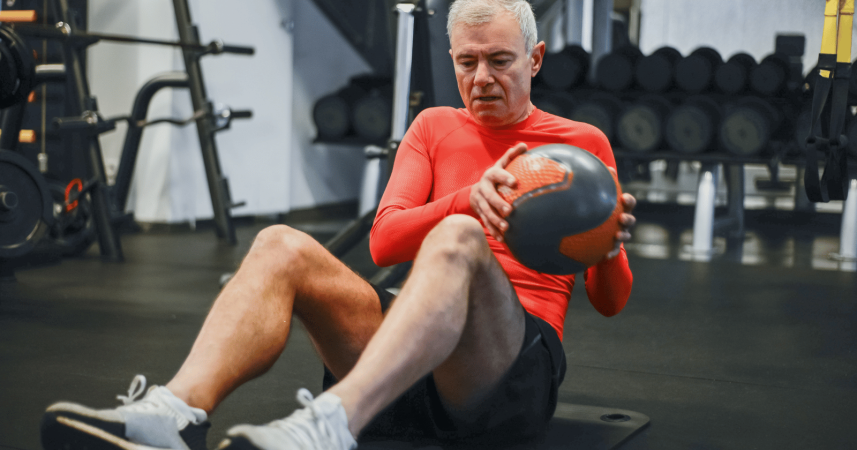
Not six-pack abs. Not marathon endurance. Actual strength. The kind you build from lifting, pushing, pulling, carrying. The kind that doesn’t just change how you look in the mirror—it changes your odds of surviving life itself.
Why strength matters more than looks
I’ll be honest, I didn’t start lifting weights because I was worried about getting old. I just wanted to look better in a T-shirt. But the deeper I got into it, the more research I came across that made me realize muscle isn’t just cosmetic. It’s medicine.
In the massive PURE study—tracking nearly 140,000 adults across 17 countries—researchers found that grip strength was a stronger predictor of all-cause mortality than systolic blood pressure.
Every 5 kg decrease in grip strength was associated with a 16% increase in overall mortality, including a 7% rise in heart attack risk and a 9% increase in stroke risk.
In other words: how hard you can squeeze a dumbbell might tell you more about your longevity than your blood pressure cuff. That’s not exactly the kind of thing your doctor tells you during your annual checkup, but maybe it should be.
The body’s insurance policy
Think about muscle as your body’s insurance policy. When life throws you a curveball—illness, surgery, an accident—your muscle mass is what carries you through.
Research backs this up. Surgical patients with lower skeletal muscle mass face more complications, longer hospital stays, and poorer long-term outcomes.
For instance, ultrasound-assessed muscle mass prior to kidney transplantation strongly predicted how quickly patients recovered and how many days they spent alive and out of the hospital post-op.
Another study found that 92% of gastrointestinal cancer surgery patients experienced muscle loss—and those with moderate to severe loss had significantly higher risks of postoperative complications and lower quality of life.
I once had a close family member who went through major surgery. The difference in recovery between them and another patient I met in the hospital waiting room was night and day.
One bounced back quickly, walking laps around the ward in a matter of days. The other struggled to even get out of bed. The doctors quietly mentioned what I could already see: muscle made the difference.
It’s not something you notice until you see it up close, but once you do, you never forget it.
Strength protects you when you fall
Falls are one of the leading causes of death in older adults. Not because of the fall itself, but because of the broken hips, long hospital stays, and infections that follow.
Building strength now is like installing a safety net for later. Strong legs and core muscles help with balance. Strong arms help you catch yourself. Even if you do fall, having more muscle mass reduces your chances of serious injury.
This isn’t just about the elderly either. I’ve tripped on uneven sidewalks more times than I’d like to admit. Being able to stabilize myself quickly? That’s strength at work saving me from a broken wrist.
It’s sobering to see the statistics behind it: according to the World Health Organization, falls are the second leading cause of unintentional injury deaths worldwide, resulting in roughly 684,000 fatalities annually, with older adults most affected.
Muscle fights disease in the background
We know exercise helps fight chronic diseases like diabetes and heart disease. But strength training specifically adds another layer of protection.
One of the most striking findings comes from a systematic review in the British Journal of Sports Medicine: adults who engaged in regular muscle-strengthening activities had a 10–17% lower risk of all-cause mortality—including fewer deaths from cardiovascular disease, cancer, diabetes, and lung disease—independent of aerobic exercise.
Dr. Stuart Phillips, a leading exercise physiologist, captures it best: “Muscle is the organ of longevity.” Muscle isn’t just sitting there; it plays an active role in regulating metabolism, controlling blood sugar, and fighting inflammation. It keeps us working inside—no matter how we look outside.
This is why losing muscle with age (a condition called sarcopenia) is so dangerous. It’s not just about frailty; it’s about losing one of the body’s most powerful defense systems.
Everyday resilience
One of the best ways to see the value of strength is in everyday life. Can you carry all your groceries in one trip? Can you move your own luggage into the overhead bin? Can you sprint up a flight of stairs without wheezing?
These small things add up. They’re not about ego—they’re about autonomy. The ability to take care of yourself, no matter your age.
I remember a trip to Tokyo where I stayed in a tiny apartment on the sixth floor of a walk-up. No elevator. The younger me might have dreaded hauling my suitcase up those stairs. B
ut after years of lifting, it was a challenge I actually enjoyed. That sense of independence—that I didn’t need anyone to help me—felt better than any aesthetic payoff.
And that’s the bigger point. Strength isn’t about how others see you. It’s about how capable you feel in your own skin.
The mental edge
There’s also a psychological dimension here. Strength training builds resilience, not just in your body, but in your mindset.
When you lift something heavy, fail, and try again, you’re rewiring your brain for persistence. When you watch the numbers on the bar slowly go up week after week, you’re proving to yourself that progress is possible.
This mindset carries over into the rest of life. As psychologist Angela Duckworth has said about grit, “Our potential is one thing. What we do with it is quite another.” Strength training is a laboratory for grit—and grit is a key ingredient in longevity too.
I’ve found that on days when I train, I make better decisions outside the gym. I’m calmer in stressful situations, more focused at work, and less likely to spiral when things go wrong. It’s as if the discipline I practice under the barbell transfers directly into my daily life.
It’s never too late to start
One of the biggest myths about strength training is that it’s only for the young. The truth? You can build muscle at any age.
Tufts University, in collaboration with the CDC, even published Growing Stronger: Strength Training for Older Adults, a guide affirming that resistance training is both safe and effective for enhancing muscle, bone, and emotional health—no matter how old you are.
And it doesn’t have to be complicated. Push-ups, bodyweight squats, resistance bands—these simple movements create real results. The key is consistency. Your body doesn’t care if the weight comes from a fancy barbell or a gallon of water; it cares that you challenge it regularly.
I once met a man in his late sixties at my gym who had started lifting in retirement. He told me, “I thought my best years were behind me, but now I feel like I’ve got a second shot.” His progress wasn’t about building a beach body—it was about reclaiming life.
The role of diet
Of course, strength isn’t built in the gym alone. Nutrition plays just as critical a role.
Getting enough protein is essential, especially as you age. A lot of people under-eat protein without realizing it. Think of it this way: every time you lift, you’re creating tiny tears in your muscles. Protein is the building block that repairs those tears and makes your muscles stronger.
This doesn’t mean you need to live off chicken breast and protein shakes. For me, it’s about balance. A perfectly grilled steak, a piece of fresh salmon, or even a hearty lentil stew—these all contribute to muscle health. As with any good meal, quality matters as much as quantity.
And let’s not forget micronutrients. Magnesium, vitamin D, and omega-3s all support muscle function and recovery. I think of food the same way I think about training: it’s not about perfection, it’s about fueling longevity.
A different definition of strength
Here’s the part that excites me the most: strength reframes how we think about aging. Instead of seeing it as a slow decline, we can see it as a process we can actively shape.
Yes, genetics play a role. But strength training gives you a huge amount of control. It’s the difference between spending your later years in a hospital bed or spending them hiking, traveling, and playing with your grandkids.
Ultimately, strength isn’t about lifting the heaviest barbell in the gym. It’s about being strong enough to live life fully—and to keep living it for as long as possible.
And here’s a mindset shift worth considering: when you invest in building muscle, you’re not just training for today—you’re training for decades from now. Every rep is a small deposit in your future health account.
Final thoughts
If you take one thing away, let it be this: muscle is not optional. It’s not vanity. It’s survival.
The science is clear—strength training extends life, protects against disease, and keeps you independent longer. But beyond the studies, there’s something deeply human about it. To be strong is to be capable. To be capable is to be free.
So don’t wait until it’s too late. Whether you’re 25 or 75, your future self is counting on you to pick up that weight, do that push-up, or climb those stairs. Big muscles really do save lives. And yours might just be the next one they save.
If You Were a Healing Herb, Which Would You Be?
Each herb holds a unique kind of magic — soothing, awakening, grounding, or clarifying.
This 9-question quiz reveals the healing plant that mirrors your energy right now and what it says about your natural rhythm.
✨ Instant results. Deeply insightful.