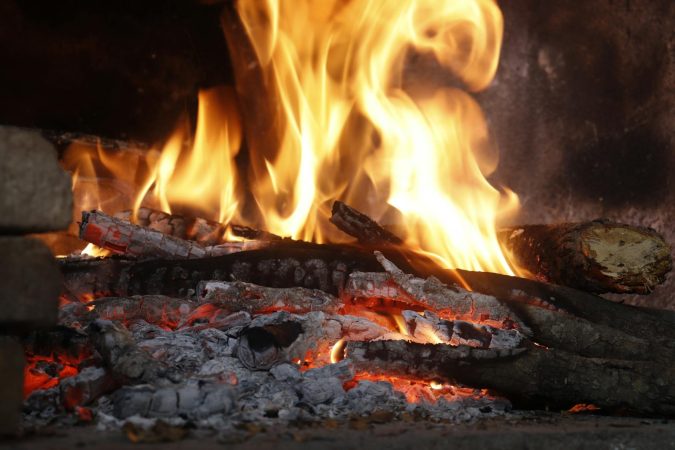
The UK's wood-burning stove industry has sent legal threats to at least eight London councils for running public health campaigns — even as research links domestic burning to 2,500 deaths per year and eco-design stoves produce 450 times more particulate emissions than gas boilers.

Add VegOut to your Google News feed. 
At least eight London councils have received legal threats from the UK's wood-burning stove industry for the crime of… running public health campaigns about air pollution.
According to reporting from The Guardian, the Stove Industry Association (SIA) — the trade body representing wood burner manufacturers — has reportedly sent legal threats to London boroughs over public health campaigns. The councils were trying to inform residents about the health risks of domestic wood burning. The industry's response was to lawyer up.
If that tactic sounds familiar, you're not imagining things.
The Tobacco Playbook, Fireside Edition
"This is straight from the playbook of tobacco," said Jemima Hartshorn, a clean air campaigner, as quoted by The Guardian. "The evidence could not be clearer — burning in your home increases toxic air pollution for you and your neighbours."
The parallel to the tobacco industry's decades-long strategy of suppressing public health messaging through legal intimidation is hard to ignore. When the science becomes inconvenient, threaten the messengers. It's a pattern we've seen play out across industries — from climate research being gutted to agrochemical companies reframing health crises as business decisions.
The SIA, for its part, framed the correspondence differently. A spokesperson told The Guardian that their outreach to local authorities "was aimed at ensuring their marketing campaigns were proportionate, contained a balanced view and, most importantly, distinguished clearly between open fires, older appliances and modern eco-design-compliant stoves."
That framing — "we just want balance" — is worth examining against the actual data.
The Numbers Are Stark
Domestic burning now accounts for a substantial portion of fine particulate matter (PM2.5) emissions in the UK, according to The Guardian's reporting. That makes it one of the country's single largest sources of air pollution. A significant number of UK households now own wood-burning stoves, and installation has been climbing steadily in densely populated urban areas where these stoves supplement — not replace — existing central heating.
So we're not talking about remote cottages in the Cotswolds relying on wood for warmth. We're talking about terraced houses in London boroughs where a stove is, frankly, an aesthetic choice pumping fine particulates into shared airspace.
Research has documented the growing threat of domestic wood burning and the industry's legal attempts to shut down clean air campaigns. Wood burning has been associated with approximately 2,500 deaths per year in the UK, according to recent research cited by The Guardian. Hundreds of illnesses are now linked to air pollution, including cancer and dementia.
And here's the detail that really lands: those modern "eco-design" stoves the SIA wants councils to distinguish from older models? They produce PM2.5 emissions significantly higher than gas boilers, according to research cited by The Guardian. The word "eco" is doing an extraordinary amount of heavy lifting there.
When "Low Emissions" Doesn't Mean What You Think
The Advertising Standards Authority (ASA) has already weighed in on this. The ASA has reportedly ruled that the SIA's advertisements claiming stoves had "very low emissions" were misleading and found the trade body in breach of advertising codes.
Read that again: the same organization threatening councils for warning about emissions was itself found to be misleading the public about emissions.
This is the part where the "balanced view" argument starts to feel less like a principled stand for nuance and more like a strategy to muddy the waters. Councils ran campaigns based on public health evidence. The industry group that was caught making misleading claims about its own products then demanded those campaigns be toned down.
The Government's Response: Warning Labels
The UK government's proposed response has reportedly stopped short of restricting wood burners in urban areas, The Guardian reports. Instead, the approach leans toward encouraging lower-emission models and adding health warnings.
Health warnings. On wood burners.
If the tobacco comparison wasn't already obvious enough, the proposed regulatory response essentially mirrors the warning-label approach that delayed meaningful tobacco regulation for decades. Critics argue this is wildly insufficient given the documented scale of the public health impact.
The Department for Environment, Food and Rural Affairs has acknowledged the problem in broad terms, noting concerns about air quality and public health. But acknowledging the problem and acting proportionally on it are two very different things.

Why This Matters Beyond the UK
The wood burner story is a case study in how industries can suppress public health information through legal pressure — even when the science is well-established. It's the kind of dynamic that plays out globally, across sectors.
We've covered similar patterns at VegOut — whether it's the gap between public support for climate action and actual policy movement or the way inconvenient environmental data gets quietly buried. The mechanisms are remarkably consistent: challenge the messengers, demand "balance" (which functionally means doubt), and wait for public attention to move on.
What makes the wood burner case particularly striking is the intimacy of it. This isn't an industrial polluter operating out of sight. It's a consumer product sitting in people's living rooms, marketed as cozy and eco-friendly, generating pollution that drifts directly into neighbours' homes and lungs. And the people trying to communicate that reality to residents are being met with legal threats.
The Cozy Aesthetic vs. the Air You Breathe
Wood-burning stoves have become a lifestyle signifier — the crackling fire, the hygge vibes, the Instagram-ready living room. That emotional attachment is real, and it's probably part of why this issue is so politically tricky. Nobody wants to be the killjoy who takes away the fireplace.
But the air quality data doesn't care about aesthetics. When many households are running devices that produce significantly higher particulate emissions than alternatives, and those devices are increasingly concentrated in dense urban areas, the maths becomes a public health equation whether we like it or not.
The question for policymakers is whether they'll let that equation be solved by the science — or by the industry's legal team.

For now, councils that tried to protect their residents' health are left navigating legal threats from the very industry contributing to the problem. The stoves keep burning. The fine particulates keep accumulating. And the government is proposing warning labels.
Sometimes the most telling thing about a story isn't what happened. It's who got threatened for talking about it.
Feature image by Berat BAKI on Pexels
If You Were a Healing Herb, Which Would You Be?
Each herb holds a unique kind of magic — soothing, awakening, grounding, or clarifying.
This 9-question quiz reveals the healing plant that mirrors your energy right now and what it says about your natural rhythm.
✨ Instant results. Deeply insightful.

Jordan Cooper
Jordan Cooper is a pop-culture writer and vegan-snack reviewer with roots in music blogging. Known for approachable, insightful prose, Jordan connects modern trends—from K-pop choreography to kombucha fermentation—with thoughtful food commentary. In his downtime, he enjoys photography, experimenting with fermentation recipes, and discovering new indie music playlists.
More Articles by Jordan