
Trump's EPA repeal of the endangerment finding was designed to gut federal climate regulation, but legal experts say it has created a contradiction that could strengthen state climate superfund laws in Vermont, New York, and beyond.

Add VegOut to your Google News feed. 
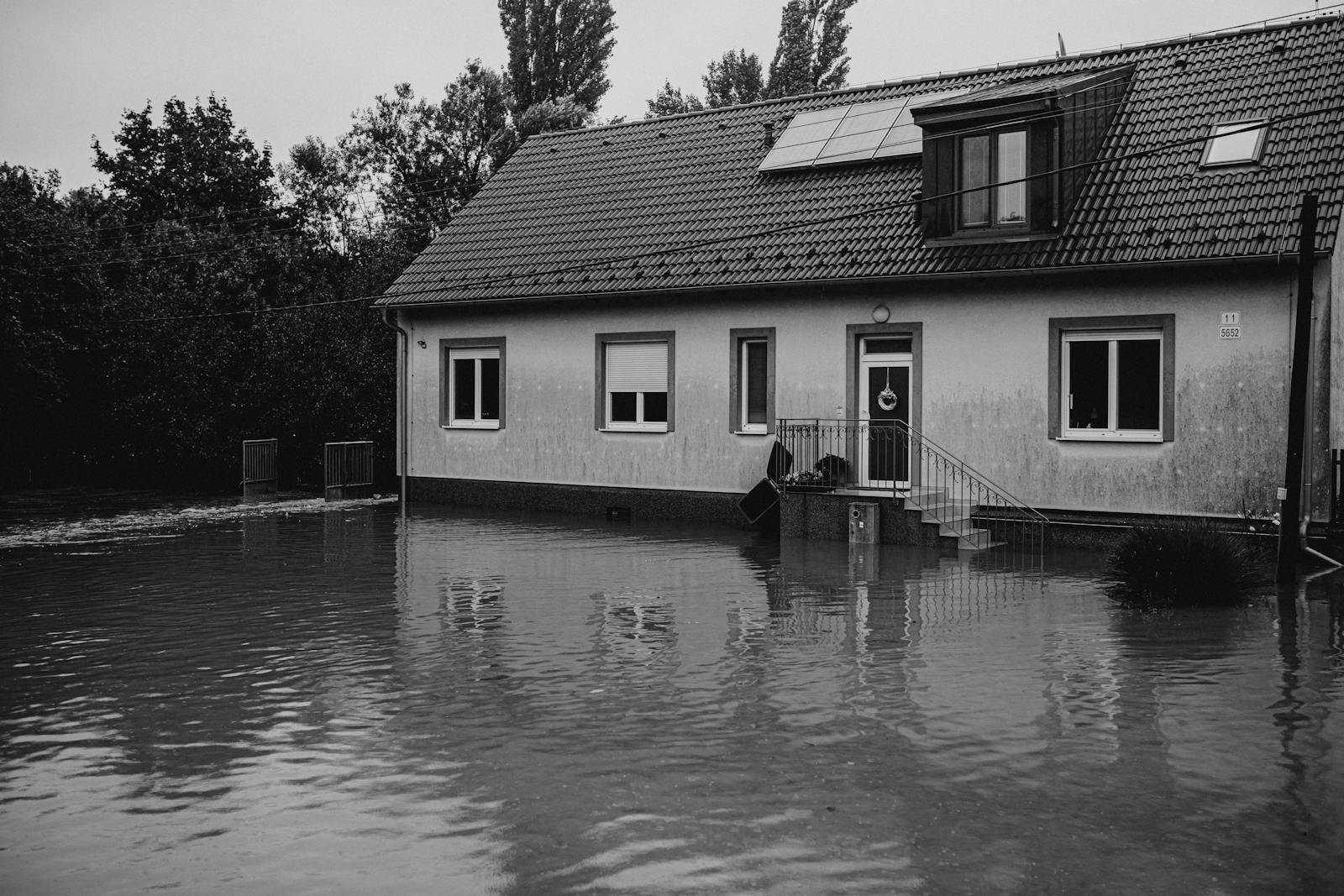
A flooded basement, a buckled road, a neighborhood that smells like mildew for months after a storm — these are the moments that turn climate change from an abstraction into something visceral, something with a price tag. Who should foot the bill? That question is at the center of a growing legal battle between U.S. states and the federal government, and a recent move by the Trump administration may have accidentally handed states a powerful new argument.
The Paradox at the Heart of Federal Climate Policy
The Trump EPA's reported rollback of the endangerment finding — the scientific determination that gave federal officials the authority to regulate greenhouse gas emissions — was designed to dismantle federal climate regulation. But according to recent reporting, it has created a legal contradiction that environmental groups and state attorneys general are now ready to exploit.
Here's the core tension: the Department of Justice is simultaneously arguing that federal law preempts state climate regulations and that the federal government has no authority to regulate greenhouse gas emissions. You can't have it both ways. If the federal government has voluntarily surrendered its regulatory power over emissions, on what basis can it claim that states are barred from stepping in?
"They're trying to talk out of both sides of their mouths," according to Kate Sinding Daly, an attorney with the Conservation Law Foundation.
What Are Climate Superfund Laws?
Vermont passed a climate superfund law in 2024, and New York followed with its own version. Both laws are modeled on the EPA's existing toxic waste cleanup program, known as Superfund, which requires companies responsible for contamination to pay for cleanup and damages.
The climate versions apply the same principle to greenhouse gas emissions. Major fossil fuel companies would be required to pay for damages caused by their past planet-heating pollution — think infrastructure repairs after extreme weather events, public health costs, and community resilience projects.

The logic is straightforward: if a chemical company that contaminated a river can be held financially responsible for the cleanup, why shouldn't the same apply to companies whose products have driven the emissions destabilizing the climate?
Several other states are reportedly considering similar climate superfund policies — a meaningful wave of legislation that could reshape how climate costs are distributed in the United States.
The Legal Collision Course
The DOJ has reportedly challenged Vermont's climate superfund law in a filing in federal court, arguing that federal law preempts the state's authority to impose these costs on fossil fuel companies. A hearing on the case is scheduled for March 30, and it will be livestreamed.
Federal preemption is a well-established legal doctrine. When federal law occupies a regulatory space, states generally can't pass conflicting legislation. The Clean Air Act, for example, preempts states from adopting their own emission standards for new motor vehicles and engines in certain circumstances.
But preemption requires an active federal regulatory framework. The EPA has claimed its endangerment finding repeal applies only to motor vehicle emissions, but the broader signal is hard to ignore: the federal government is stepping back from greenhouse gas regulation. Environmental attorneys argue that stepping back is precisely what opens the door for states.
Legal experts have suggested that the revocation of the endangerment finding will play a prominent role in countering the preemption claim in these cases.
A Ripple Effect Through Climate Litigation
The Vermont case doesn't exist in isolation. Numerous climate lawsuits have been filed by cities and states against major oil companies across the country. The Supreme Court has also agreed to hear cases involving energy producers seeking to dismiss climate lawsuits. How the federal preemption argument plays out in the Vermont proceeding could set a tone for all of them.

The legal landscape here is genuinely complex. Preemption arguments are nuanced, and courts don't always rule in broad strokes. But the logical incoherence of the federal government's current position — claiming authority to block state action while simultaneously abandoning its own authority to act — is the kind of contradiction that tends to catch judicial attention.
California and Connecticut have reportedly pledged to bring their own lawsuits over the endangerment finding rollback itself, which could add another layer of legal pressure. Meanwhile, the broader analysis suggests the rollbacks may have inadvertently invited a wave of climate action from blue states — the exact opposite of their intended effect.
Why This Matters Beyond the Courtroom
For people tracking how climate costs actually get distributed — who pays for the flood damage, the wildfire recovery, the upgraded stormwater systems — these legal battles are the mechanism through which abstract policy becomes concrete.
Environmental advocates have framed the issue in terms of the practical gap left by federal inaction. "It's becoming increasingly clear that leaders in our federal government do not have a coherent plan for adapting to the climate crisis," according to climate policy observers.
That vacuum matters for anyone making decisions about where to live, what to eat, and how to plan for a future shaped by climate impacts. When federal policy retreats, the question of who fills the gap becomes urgent. Right now, states are trying to answer it — and the federal government's own actions may be making that easier.
The March 30 hearing on Vermont's climate superfund law will be a significant early test. Whatever the outcome, the legal contradiction at the center of the case has already been identified by attorneys across the country, and it's unlikely to disappear. The more the federal government dismantles its own regulatory authority over emissions, the harder it becomes to argue that states can't act in its place.
That dynamic — a federal rollback inadvertently creating state-level opportunity — may end up being one of the most consequential unintended consequences in recent environmental law.
Feature image by Aysegul Aytoren on Pexels
What’s Your Plant-Powered Archetype?
Ever wonder what your everyday habits say about your deeper purpose—and how they ripple out to impact the planet?
This 90-second quiz reveals the plant-powered role you’re here to play, and the tiny shift that makes it even more powerful.
12 fun questions. Instant results. Surprisingly accurate.