
The Trump administration has repealed foundational climate protections and dismantled the country's top atmospheric research center — and the organized resistance from Democrats, billionaires, and activists has been almost nonexistent. What's behind the "climate hush"?

Add VegOut to your Google News feed. 
The U.S. government just dismantled its premier climate research institution, repealed a foundational public health protection against greenhouse gas pollution, and banned the Department of Energy from using the words "climate change." The organized resistance so far? Barely a whisper.

That's the central tension in a sweeping new analysis, which documents how the Trump administration's second-term environmental rollbacks have been met with a level of silence that has stunned observers on both sides of the political aisle. The first Trump term saw marches, lawsuits, and cable news battles over every regulatory tweak. This time, the moves are far more sweeping — and the room is far quieter.
What's Actually Happened
The specifics are worth laying out, because they're easy to miss when nobody's talking about them.
In February, the administration reportedly moved to repeal the 2009 "endangerment finding," the legal determination that greenhouse gas pollution endangers public health. That finding, established under the Obama administration, was the bedrock of the federal government's authority to regulate climate emissions. Without it, agencies like the EPA lose the legal basis for most climate-related rules. It's roughly the equivalent of removing the foundation from a house and hoping the walls hold up on their own.
Then there's the reported dismantling of the National Center for Atmospheric Research (NCAR), long considered the crown jewel of U.S. climate science. NCAR, based in Boulder, Colorado, has been central to atmospheric research for decades. Its projects support everything from weather forecasting to long-term climate modeling. The administration reportedly moved to gut it in December, and according to environmental researchers, the reaction was almost nonexistent.
"The Trump administration just marched in and destroyed the crown jewel of climate science in the United States. And nothing happened. There wasn't even a whimper," observers have noted.
The administration has also pursued a long line of regulatory rollbacks targeting the Clean Air Act and coal power regulations. Weather forecasting organizations and climate research facilities have reportedly been significantly curtailed since January 2025. The Department of Energy, under Secretary Chris Wright, reportedly banned its key renewable energy department from using terminology like "climate change," "green," and "sustainability."

The "Climate Hush"
What makes this moment unusual isn't the policy itself. Administrations roll back regulations. That's politics. The unusual part is who's staying quiet.
According to analysis, Democrats have largely retreated from climate messaging, with internal party debates centering on whether affordability should replace environmental action as a core talking point. Climate activists who were organizing mass protests during the first Trump term have gone comparatively dormant. And journalists, by several accounts, are reporting less aggressively on fossil fuel policy than they did eight years ago.
Then there are the billionaires. Tech leaders like Jeff Bezos and Bill Gates — who once positioned themselves as climate champions — have reportedly pivoted away from ambitious climate commitments. The shift coincides with the tech industry's escalating energy demands for AI infrastructure and, in some cases, direct partnerships with fossil fuel companies. Reports indicate that Gates' foundation has donated to organizations run by climate skeptics. Gates also reportedly published a memo last October arguing that climate change "will not lead to humanity's demise."
The silence has become so pronounced that even climate skeptics are commenting on it. Climate denial advocates have reportedly observed: "In my 26 years of being focused on climate, I've never seen anything like this. Trump is gutting everything they ever stood for."
When the people who disagree with you are astonished by how little you're fighting back, that's a data point worth paying attention to.
Public Opinion Tells a Different Story
Here's where it gets genuinely confusing. The political and media class may have gone quiet, but the public hasn't changed its mind.
According to polling data, a majority of the American public believes the president and Congress should prioritize clean energy. Globally, support for climate action remains strong — a figure we covered recently and one that raises an obvious question: if the demand for action is this widespread, why is the supply of political pushback so thin?
That gap between public sentiment and institutional action is the real story here. People haven't stopped caring. Organizations — political parties, media outlets, corporate leaders — have simply stopped translating that concern into pressure. It's a failure of infrastructure, not interest.
Why This Matters for the Plant-Based and Sustainability World
If you're reading this on VegOut, you probably care about the broader ecosystem of conscious living — not just what's on your plate, but the systems that determine whether the planet stays livable enough for any of us to worry about dinner.
Climate science doesn't exist in a vacuum. The atmospheric research conducted at places like NCAR informs agricultural planning, water resource management, and the kind of long-term environmental modeling that every sustainability initiative depends on. When you pull the scientific infrastructure out, the downstream effects touch everything from food systems to public health.
Recent data has shown that sea level measurements continue to reveal concerning trends. The ability to track, measure, and respond to changes like that depends on exactly the kind of research institutions being dismantled right now.
And then there's the language ban at the Department of Energy. When a federal agency can't use the words "climate change" or "sustainability," it doesn't just affect bureaucratic memos. It shapes what gets funded, what gets studied, and what policy options remain on the table. The ripple effects reach into clean energy investment, agricultural innovation, and the regulatory frameworks that plant-based and alternative protein companies navigate daily.
The Case for Rebuilding
Climate scientists and communications experts have emphasized that in this time of "climate hushing," having conversations about climate change is more important than ever.
That word — "climate hushing" — captures something specific. It's not that the facts have changed or that the public has shifted. The conversation itself is being suppressed, and the suppression is coming from an unlikely coalition: an administration actively rolling back protections, an opposition party hesitant to engage, a tech billionaire class chasing AI profits, and a media environment that has simply moved on to other things.
Reporting suggests that global clean energy adoption continues to advance, even without U.S. federal leadership. Solar, wind, and battery storage are still growing. The economics still favor the transition. But the pace matters enormously when the timeline for avoiding the worst climate outcomes keeps getting shorter.
Organizations have spent decades building the infrastructure for climate skepticism. Experts argue that rebuilding a comparable infrastructure for climate action — one that can withstand political headwinds — is the essential task of this moment.
What Now?
The instinct when reading something like this is to feel either outraged or helpless, and neither emotion tends to produce much. So here's a more practical thought: the gap between what people believe and what institutions are doing creates an opportunity. It means the demand is there. The support didn't evaporate. It's waiting for someone to build something worth showing up for.
For those of us in the conscious living space, this is a reminder that individual choices — what we eat, what we buy, how we power our homes — exist within larger systems. Those systems are being actively reshaped right now, with remarkably little friction. Paying attention to that reshaping, and talking about it even when the political class won't, is itself a form of pushback.
The quiet part isn't that people stopped caring. The quiet part is that the people with the biggest megaphones put them down.
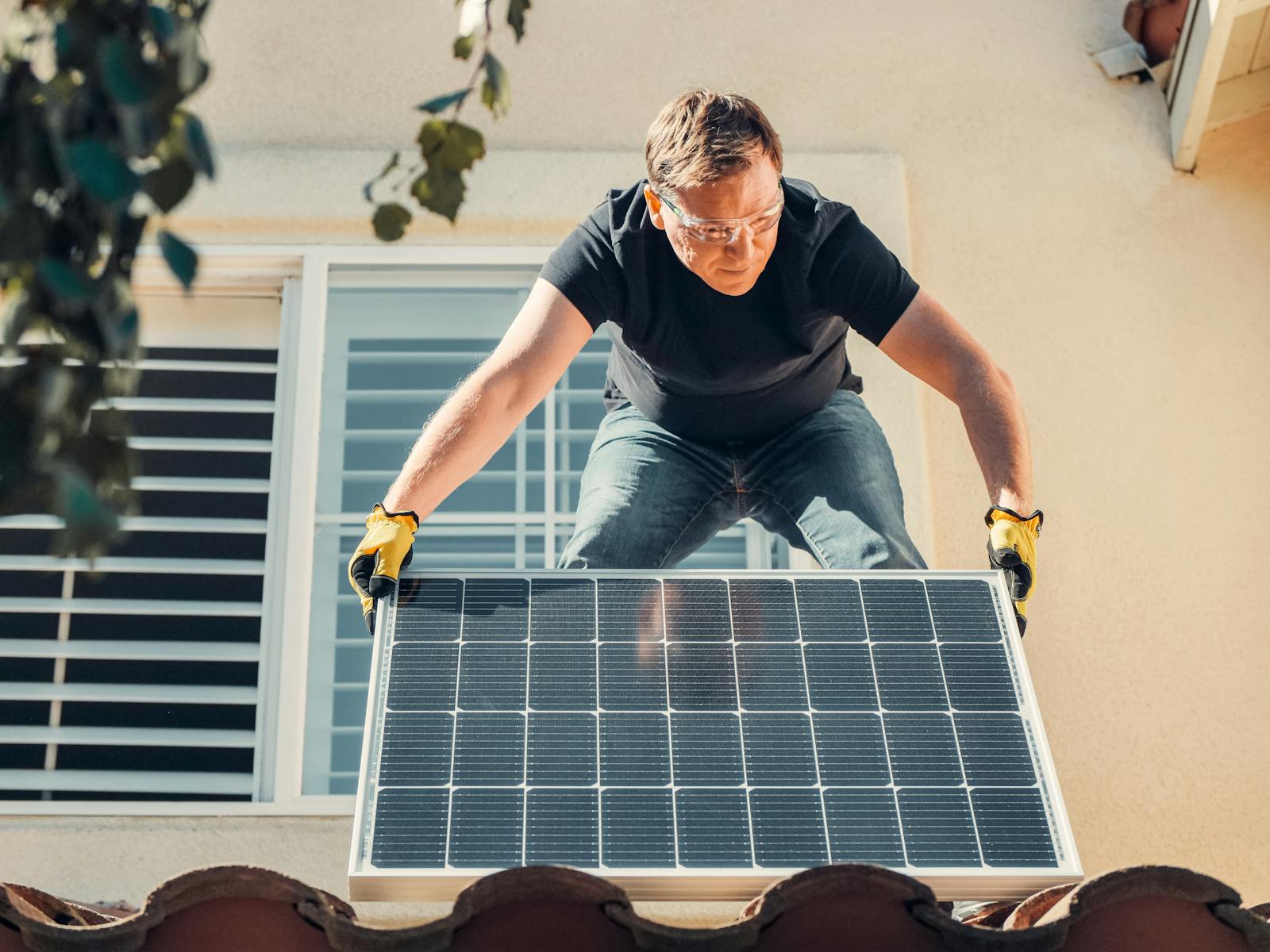
Feature image by Willy Hubbard on Pexels
What’s Your Plant-Powered Archetype?
Ever wonder what your everyday habits say about your deeper purpose—and how they ripple out to impact the planet?
This 90-second quiz reveals the plant-powered role you’re here to play, and the tiny shift that makes it even more powerful.
12 fun questions. Instant results. Surprisingly accurate.