The Netherlands has become the first European country to allow vertical farming operations within residential zones at the national level. The policy, taking effect in September 2025, could set the template for how densely populated cities across Europe integrate food production into urban life.

Add VegOut to your Google News feed. 
The Dutch Ministry of the Interior and Kingdom Relations has reportedly amended its national zoning framework to allow vertical farming operations within residential districts, provided they meet specific noise, light emission, and structural safety thresholds. The policy change would make the Netherlands one of the first European countries to explicitly integrate multi-story agricultural facilities into urban housing zones at the national level.
The implications reach well beyond Dutch borders. As European cities grapple with rising food costs, supply chain fragility, and mounting pressure to cut agricultural emissions, this policy experiment could become a blueprint — or a cautionary tale — for how densely populated countries rethink the geography of food production.
What the Dutch Policy Actually Changes
Until now, vertical farming operations in the Netherlands occupied a legal gray area. Most were classified under industrial or commercial zoning, which restricted them to business parks and designated agricultural land. A handful of smaller operations in Amsterdam and Rotterdam received municipal exemptions, but scaling up required navigating a patchwork of local regulations that varied from city to city.
The new amendment creates a unified national classification — "urban agricultural facility" — that sits between commercial and residential use categories. Facilities up to 12 stories can now be approved within residential zones, subject to environmental impact assessments conducted at the municipal level. The amendment also streamlines the permitting timeline from an average of 14 months to a target of six.
Housing Minister Hugo de Jonge has framed the change as both a food security measure and a housing innovation. "We are a small country that has always punched above its weight in agriculture," de Jonge reportedly said. "This brings that tradition into the 21st century by recognizing that growing food and living side by side are compatible when the engineering is right."
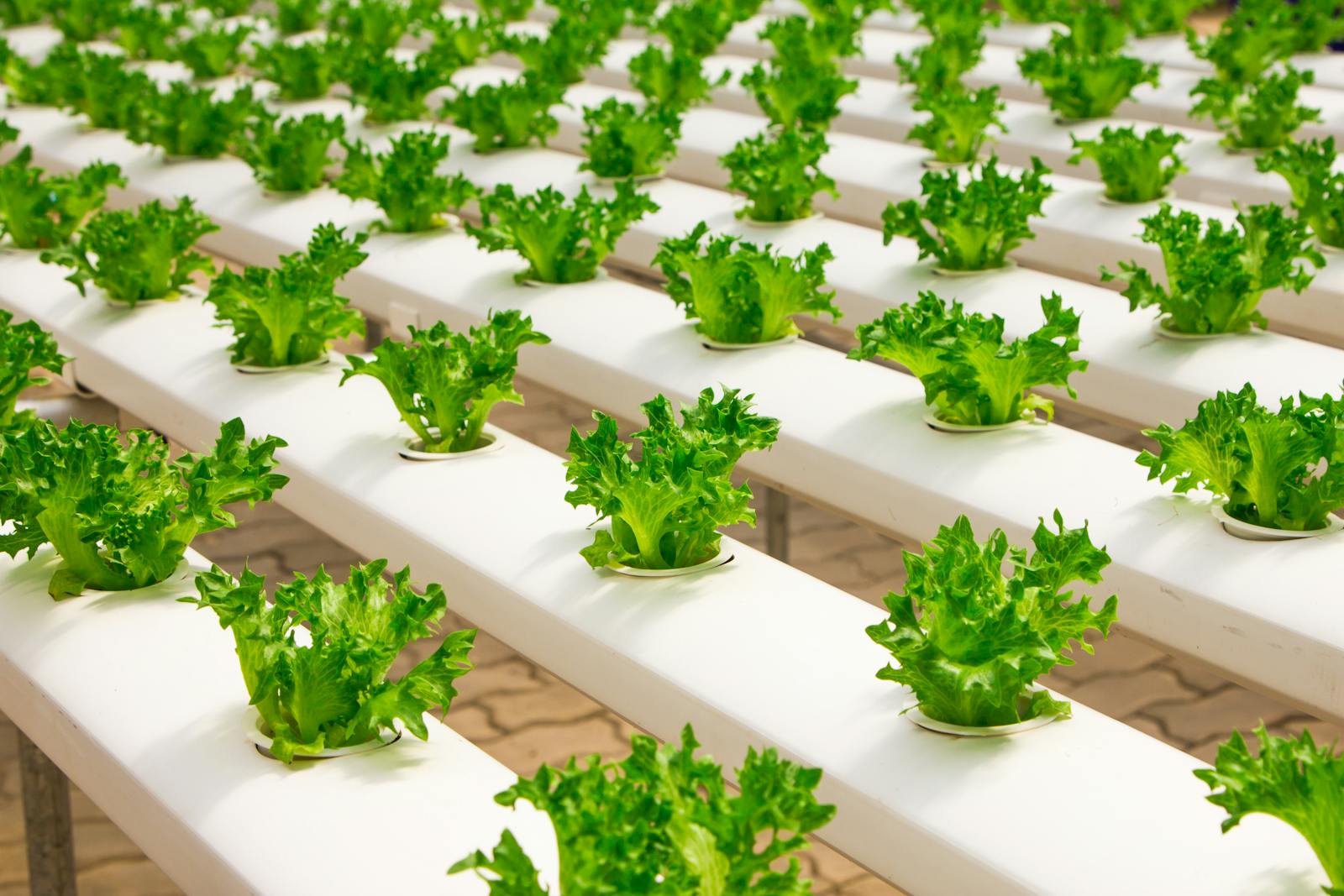
The Dutch agricultural sector is already the world's second-largest food exporter by value, despite the country being roughly the size of Maryland. Wageningen University & Research, the institution most closely associated with Dutch agricultural innovation, has been publishing research on integrated urban farming models for over a decade. Research from Wageningen suggests that vertical farms using LED-optimized growing systems can produce leafy greens at yields dramatically greater per square meter than conventional field agriculture, while using significantly less water.
Why Now — and Why It Matters Beyond the Netherlands
The timing reflects several converging pressures. Europe's food supply chains proved more vulnerable than policymakers assumed during the COVID-19 pandemic, and the war in Ukraine further exposed dependencies on long-distance grain and fertilizer supply routes. Meanwhile, the European Commission's Farm to Fork Strategy has set a target of reducing the environmental footprint of EU food systems by 2030, with urban food production increasingly cited as a tool in that effort.
The Netherlands also faces a specific domestic pressure. The country's ongoing nitrogen crisis — a legal and political battle over agricultural ammonia emissions that has forced the closure of thousands of livestock farms — has created an urgent need for alternative food production models that don't carry the same environmental burden. Vertical farms, which operate in sealed environments with recirculated nutrient solutions, produce negligible ammonia and nitrous oxide emissions compared to conventional agriculture.
Several European cities are watching the Dutch experiment closely. Copenhagen's municipal government has explored the integration of vertical farms into its new Nordhavn development district. Barcelona's urban planning agency has been in discussions with the Dutch Ministry about adapting elements of the framework for Mediterranean climate conditions. And in the UK, the Greater London Authority has reportedly examined the Dutch model as part of broader consultations on food resilience.
"What the Netherlands has done is remove the single biggest barrier, which is zoning," said Dr. Dickson Despommier, emeritus professor of microbiology at Columbia University and author of The Vertical Farm: Feeding the World in the 21st Century. "The technology has been ready. The economics are getting there. The regulatory framework was the missing piece."
The Economics: Promising but Unproven at Scale
For all the optimism, the economics of vertical farming remain a genuine open question. The sector has seen significant investment — global vertical farming funding exceeded $2 billion in 2022, according to AgFunder — but several high-profile failures have tempered expectations. AeroFarms, once one of the largest vertical farming companies in the world, filed for bankruptcy in 2023. Infarm, a Berlin-based operation, dramatically scaled back its European operations the same year.
Energy costs represent the central challenge. Vertical farms rely on artificial lighting and climate control systems that consume substantial electricity. Industry analyses suggest that vertical farm energy costs can account for roughly a quarter or more of total operating expenses, significantly higher than the share for conventional greenhouse operations. In countries with higher electricity prices — much of Europe, notably — that gap becomes a serious profitability hurdle.
The Dutch policy attempts to address this by allowing vertical farms access to residential energy tariffs rather than commercial rates, and by making them eligible for the country's SDE++ renewable energy subsidy program. Several planned facilities are designed to integrate with district heating systems, using waste heat from the growing operations to warm adjacent residential buildings.
As VegOut has covered in the plant-based protein sector, the trajectory from early enthusiasm to market correction to sustainable growth is a pattern that repeats across food innovation. The vertical farming industry appears to be somewhere in that middle phase — past the hype, dealing with real economic constraints, but still holding genuine long-term potential.
What Can Actually Be Grown — and What Can't
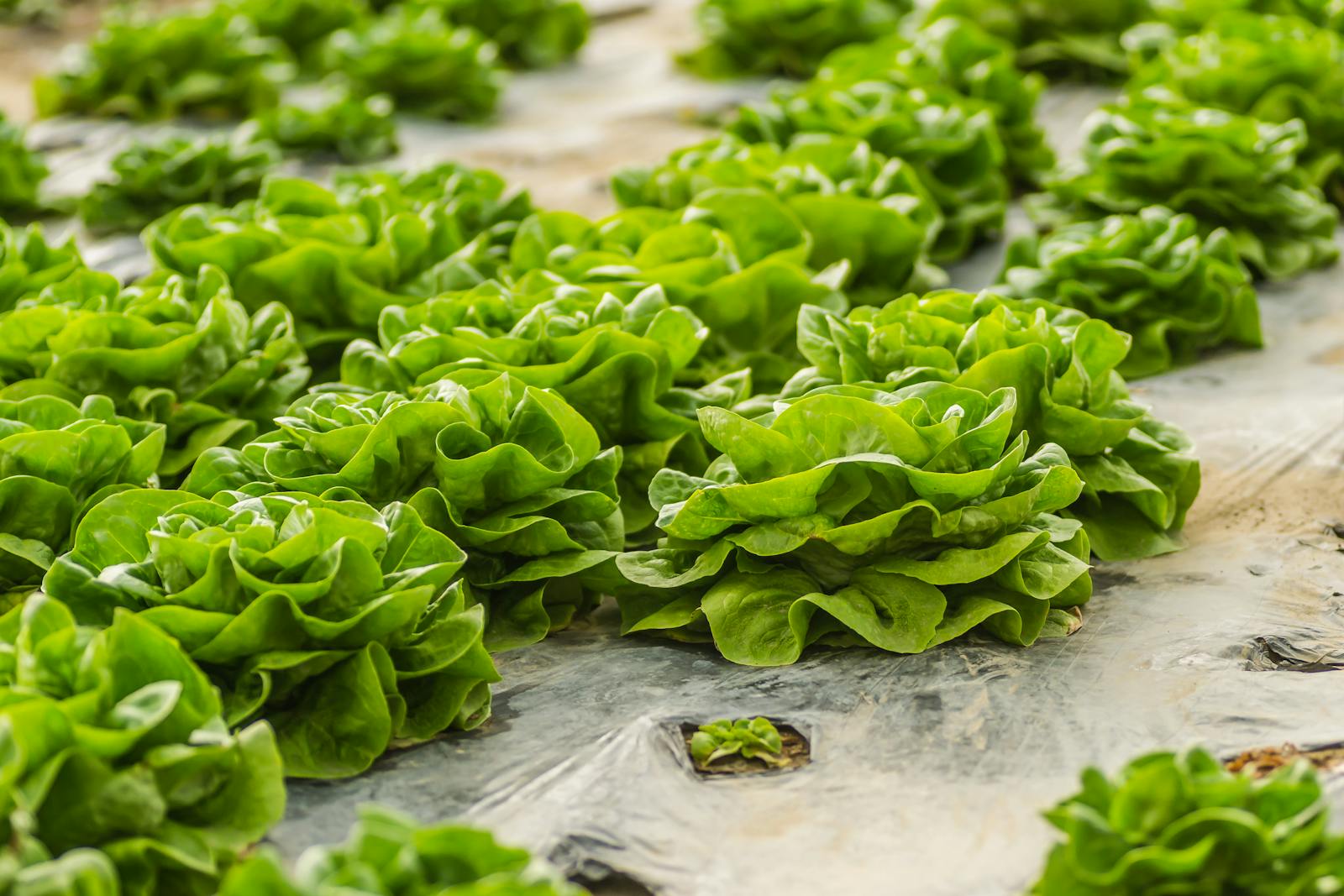
One common misconception about vertical farming is that it can replace conventional agriculture entirely. It can't, at least not with current technology. The crops that make economic sense in vertical systems are primarily leafy greens (lettuce, spinach, arugula, herbs), microgreens, and strawberries. These are high-value, fast-growing, perishable crops where proximity to the consumer provides a clear logistical advantage.
Staple crops like wheat, rice, corn, and soybeans remain far too energy-intensive to grow vertically at competitive prices. Research has suggested that growing wheat in a vertical farm would cost many times more than field production, even under optimistic assumptions about energy efficiency improvements.
The Dutch framework reflects this reality. The approved facility designs focus on leafy greens, herbs, and specialty produce — the kinds of crops that currently travel an average of 1,500 kilometers to reach Dutch supermarkets, according to data from the Dutch Nutrition Centre. Shortening that distance to, in some cases, a few hundred meters carries meaningful implications for freshness, food waste reduction, and transport emissions.
"The value proposition here is hyper-local freshness combined with year-round growing seasons," said Dr. Leo Marcelis, a professor of horticulture at Wageningen University. "We're not trying to replace the grain belt. We're trying to eliminate the absurdity of flying lettuce 2,000 kilometers when it could be grown in the basement of the building where people live."
The Neighborhood Question
Zoning changes that mix food production with housing inevitably raise quality-of-life questions. Dutch residents' associations have already voiced concerns about light pollution from LED systems, increased delivery traffic, and potential impacts on property values. Surveys suggest that a majority of Dutch respondents are open to living near a vertical farm, though a significant minority express reservations primarily related to noise and aesthetics.
The policy includes mitigation requirements: external light shielding, maximum decibel limits during nighttime hours, and mandatory community consultation processes before facilities can be approved. But the real test will come when the first residential-adjacent farms begin operating later this year.
There's a parallel here to conversations about how our environments shape our relationship with food. As we explored in our look at how income shapes grocery habits, proximity and access fundamentally change what people eat. If fresh greens are growing in the building next door, priced competitively because transportation costs have been nearly eliminated, that shifts the equation for households where fresh produce has traditionally been a budget stretch.
A Bigger Picture: The Future of Urban Food Systems
The Dutch vertical farming amendment arrives at a moment when the future of food production feels genuinely up for grabs. Cultivated meat is emerging from labs into early commercial reality. Plant-based proteins are navigating a market correction that will determine which products and companies survive long-term. And climate change continues to threaten conventional agricultural yields in ways that are becoming harder to ignore — the European Environment Agency has reported that extreme weather events have significantly reduced EU crop production in recent years.
Vertical farming won't single-handedly solve food security. No single technology will. But the Dutch decision to treat it as a legitimate component of urban residential planning, rather than an industrial novelty banished to the periphery of cities, represents a meaningful conceptual shift. It acknowledges that the infrastructure of food production and the infrastructure of daily life can be woven together.
The first three facilities approved under the new framework are expected to break ground in Rotterdam, Utrecht, and Eindhoven before the end of 2025. Collectively, they aim to produce approximately 4,500 tonnes of leafy greens annually — enough to supply roughly 120,000 households. The data from those operations will likely determine whether other European governments follow the Dutch lead or wait for the model to prove itself further.
"Every country that industrialized agriculture in the 20th century pushed farms further from cities," Despommier noted. "The Netherlands is asking whether that was always the right instinct. The answer probably depends on what you're growing, how you're powering it, and whether your neighbors can sleep at night. That's not a bad set of questions to be asking."
For a country that built much of its landmass by holding back the sea, engineering food production into the skyline feels, in some ways, like the most Dutch thing imaginable.
Feature image by Freek Wolsink on Pexels