
The closure of the Strait of Hormuz has dominated headlines as an energy crisis — but nearly one-third of global nitrogen fertilizer trade passes through the same corridor, threatening food security for 4 billion people right as spring planting season begins.

Add VegOut to your Google News feed. 
I keep thinking about dinner tables. Not the food on them — the people around them. That's what I keep coming back to after spending the last few weeks diving into research about social influence and eating behavior. Every time I sit down at a restaurant with friends, I'm now hyper-aware of something most of us never notice: the person across from you has more power over what you order than your own carefully held food beliefs.
I should know. I'm the guy who went vegan eight years ago after watching a documentary, cleaned out his fridge two days later, donated his leather jacket, and within a month was "that person" bringing quinoa salad to barbecues. I spent three years armed with factory farming statistics, ready to deploy slaughterhouse footage at the slightest provocation. I was certain my dietary beliefs were the most powerful force shaping what I ate.
I was wrong. And the research backs that up in ways that are both humbling and fascinating.
The Science of Social Ordering
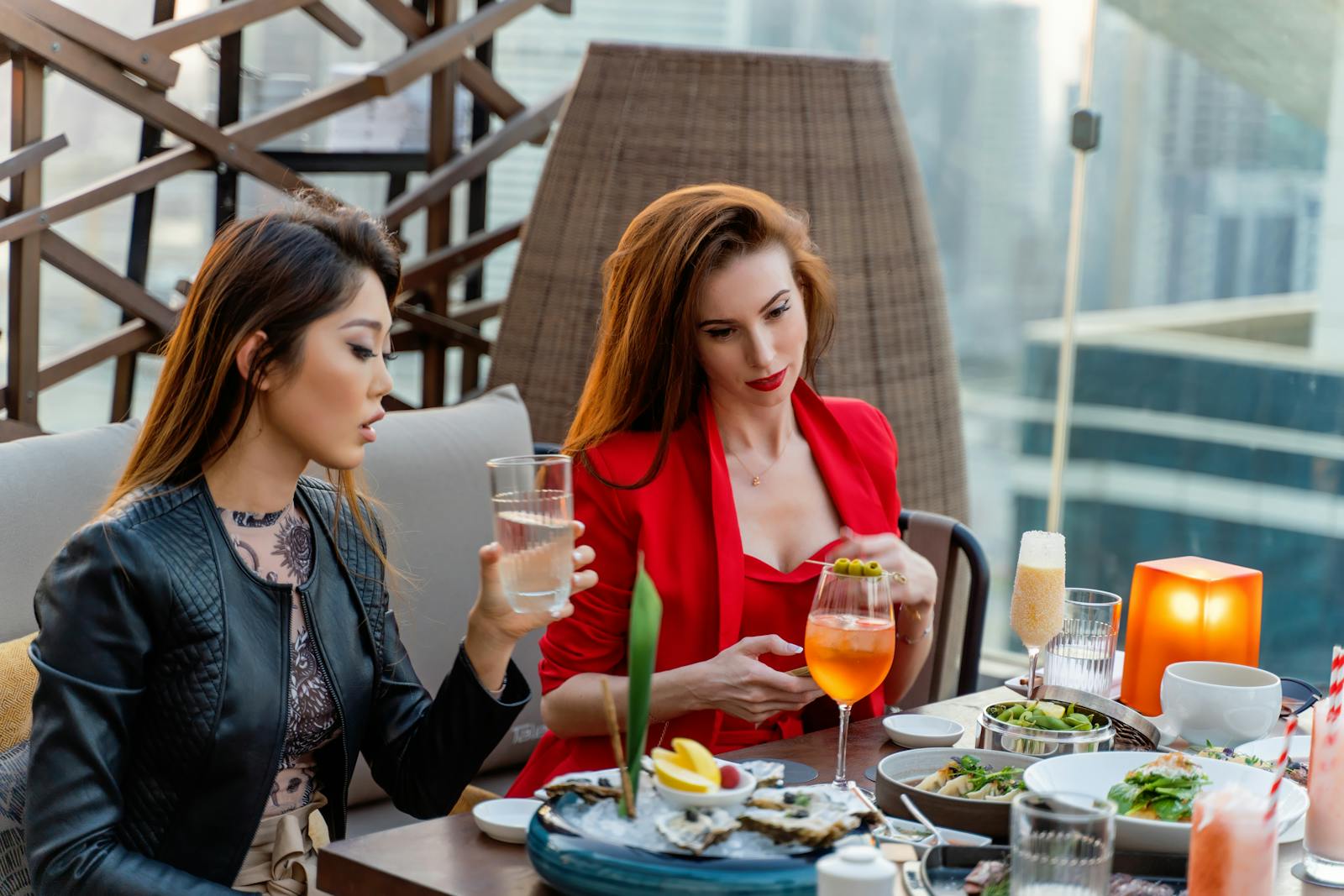
Here's what behavioral scientists have been finding: people consistently adjust their food choices to match the people they're eating with. Studies on social conformity in dining settings show that when you sit down at a restaurant with a group, you unconsciously calibrate your order based on what others are choosing. If the first person orders a salad, salads proliferate around the table. If someone leads with a burger, suddenly everyone's craving red meat.
This isn't just about peer pressure in the obvious sense. Researchers studying eating behavior have found that social modeling — the tendency to match the quantity and type of food consumed by dining companions — is one of the most robust findings in the psychology of eating. It's not a subtle effect. It's enormous.
"People eat more when their companions eat more, and less when their companions eat less," is how researchers have summarized the phenomenon. But it extends beyond quantity to type of food, level of indulgence, and even how quickly you eat.
The implications are wild when you trace them forward. Your friend group isn't just your social circle — it's your dietary environment.
Why Your Beliefs Take a Back Seat

I think about my friend Sarah's birthday dinner. Years ago — back during what I now call my "evangelical phase" — I showed up and basically turned her celebration into a lecture about the meat industry. It was terrible. I lost friendships during that period, and I deserved to lose them. I was so convinced that my dietary beliefs were this unshakeable force that I couldn't see what the research makes obvious: social belonging trumps ideology at the dinner table almost every time.
Psychologists who study decision-making in social contexts have identified several mechanisms at work. First, there's the desire for social cohesion — ordering something wildly different from the group creates a subtle sense of separation. Second, there's information signaling — when someone orders something, it implicitly communicates "this is appropriate here," and we take that cue. Third, there's the simple cognitive shortcut of following others when we're uncertain, which describes roughly every restaurant experience where the menu has more than twelve items.
Even people with strong dietary convictions — vegans, keto devotees, people with genuine allergies — report feeling social pressure to minimize their "different" orders or avoid drawing attention to their restrictions. I've done this myself. There are nights where I've scanned a menu looking for the vegan option that would seem least weird to the table, rather than what I actually wanted to eat. That's social influence overriding belief in real time.
Restaurants Absolutely Know This
Here's where it gets really interesting. The restaurant industry has studied social dining dynamics extensively, and they design experiences around them. Menu engineering — the science of how items are positioned, described, and priced on a menu — accounts for social ordering patterns.
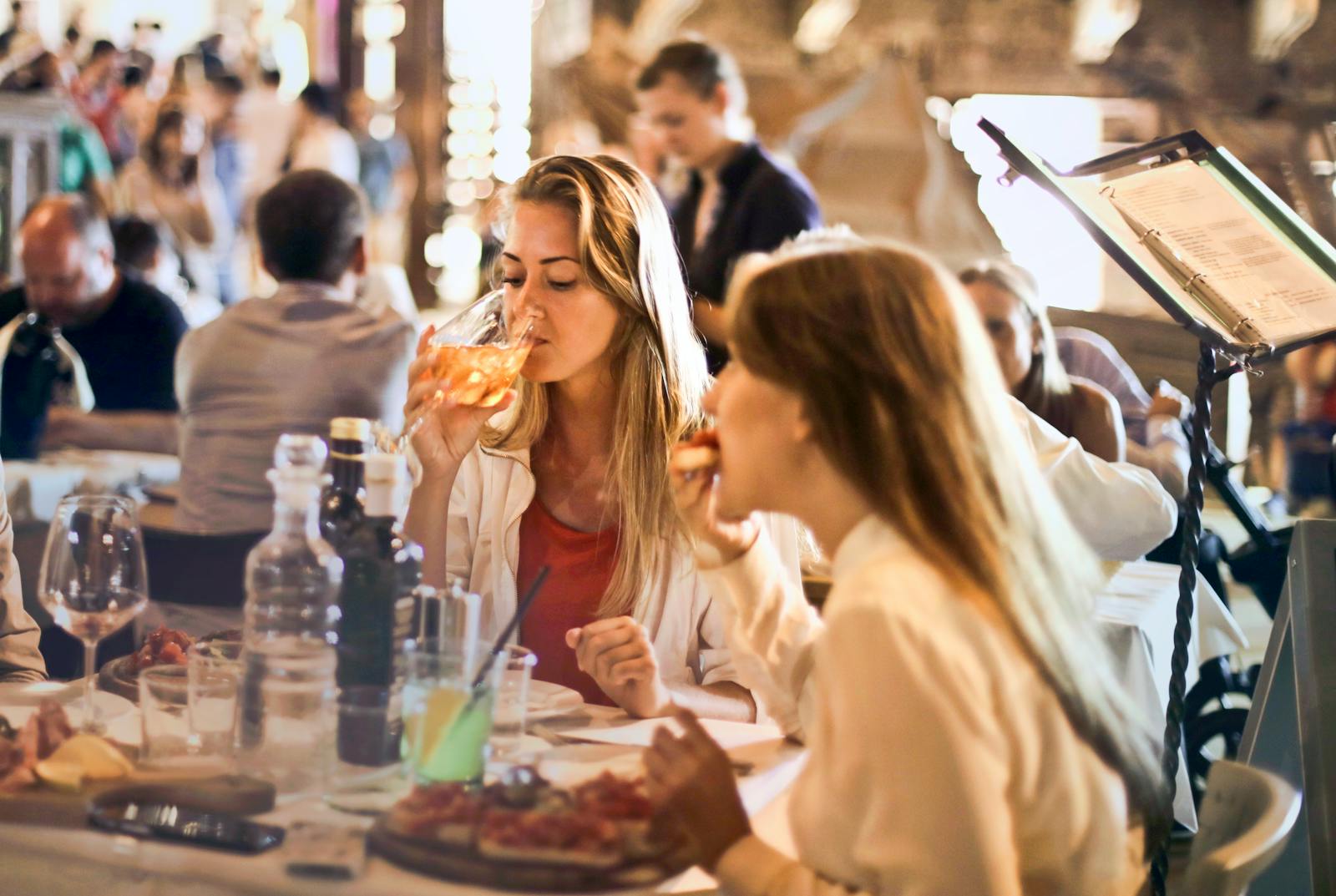
Think about how dishes are presented at many restaurants now: shareable plates, family-style service, tasting menus where the whole table eats the same thing. These formats aren't just trendy — they leverage the psychology of social conformity to increase spending and satisfaction. When one person orders the elaborate appetizer spread, the whole table participates. When a server describes the chef's special to the group, they're not just informing — they're creating a shared reference point that influences everyone's order.
Research on restaurant psychology has found that tables where one person orders a premium item see increased spending from other diners. The first order sets an "anchor" — a behavioral economics concept — that shifts everyone's sense of what's appropriate to spend.
My partner, who is decidedly not vegan and loves pepperoni pizza with ranch (I know, I know), has actually taught me a lot about this. When we go out with friends, I watch how the table dynamics shift. If my partner orders something indulgent first, others follow. If I order a plant-based dish and it arrives looking incredible, suddenly people are curious. "Wait, what is that? Can I try some?" That's social influence working in real time — not because I lectured anyone, but because the food looked good and the social context made it safe to be curious.
The Conformity Trap — and How It Cuts Both Ways
There's a self-deprecating irony here that I can't ignore. I spent three years trying to change people's eating habits through arguments, statistics, and moral pressure. I ruined Sarah's birthday dinner. I made Thanksgiving at my parents' house tense — there was a crisis moment when my grandmother cried because I rejected her famous stuffing, food she'd been making for decades. I was pushing so hard on people's beliefs, thinking that was the lever that moved behavior.
Meanwhile, the actual lever was sitting right in front of me: the dinner table itself.
Social influence around food works both directions. The same conformity pressure that makes people order burgers when everyone else is ordering burgers can make people try plant-based dishes when the social environment supports it. My friend Marcus went vegetarian six months after I stopped evangelizing. Not because I convinced him with arguments, but because I started just... eating good food around him. Showing up with dishes that looked and tasted amazing. Making it normal instead of making it a cause.
Sarah does Meatless Mondays now. She reinvited me to birthday dinners after I learned to shut up. My partner requests my lentil bolognese — not because I delivered a PowerPoint on plant-based nutrition, but because it tastes great and became part of our shared routine.
The behavioral science research confirms exactly this pattern: people change their eating habits more through social modeling and positive exposure than through information or moral arguments. Shame doesn't create lasting change. Belonging does.
The Invisible Architecture of Your Food Choices
Here's the part that I think deserves more attention from anyone who cares about what people eat — whether you're a public health researcher, a restaurant owner, or just someone trying to eat a little better.
We massively overestimate the role of individual beliefs and massively underestimate the role of social context in dietary choices. Behavioral scientists have been documenting this gap for years. People who report strong commitments to healthy eating consistently abandon those commitments in social settings. People with no particular dietary philosophy adopt the eating patterns of their closest friends over time.
Research on social networks and health has shown that your likelihood of becoming obese increases significantly if a close friend becomes obese — not because of shared genetics or environment, but because of shifted social norms about eating. The same dynamic works for dietary improvements: when your social circle normalizes healthier or more plant-forward eating, your own eating shifts.
This has massive implications for how we think about food culture change. Individual willpower, dietary education, calorie labeling on menus — these interventions target the individual decision-maker. But if the social table is the more powerful force, then the most effective interventions might be the ones that shape group dining dynamics.
What This Means for How We Eat
I've been writing at VegOut about invisible systems of connection that shape our lives — the relationships, communities, and structures we don't think about until someone points them out. The social dynamics of the dinner table are exactly this kind of hidden architecture. The friends you eat with are literally shaping your diet, and most of us never notice because we're too busy believing we're making independent choices.
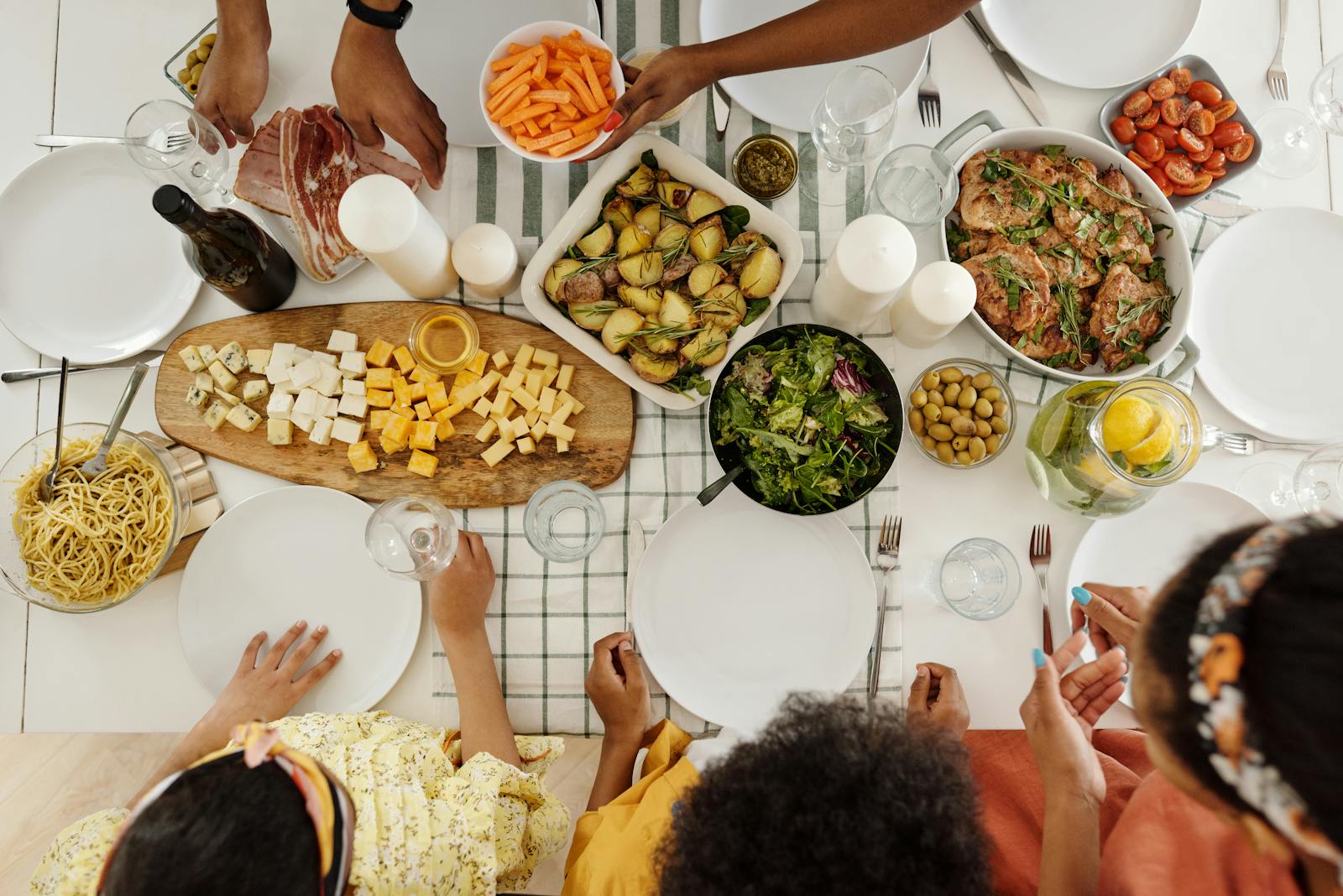
Restaurants have figured this out and designed their entire experience around it. Menu placement, server scripts, shareable plate formats, even table size and seating arrangements — all of it is calibrated to leverage the fact that eating is fundamentally a social act, not an individual one.
So what do you do with this information?
For me, it was the final nail in the coffin of my evangelical phase. Understanding that social modeling beats moral arguments didn't just make me a better dinner companion — it made me a more effective advocate for the food choices I care about. I stopped preaching. I started cooking. I started showing up to potlucks with cashew mac and cheese and jackfruit tacos instead of pamphlets. I started being the person at the table whose food looked so good that people wanted what I was having.
That's not manipulation. That's just how humans work. We're social animals who eat socially, and the table we share matters more than the beliefs we hold privately.
Pay attention next time you're out with friends. Watch who orders first. Notice how the table's energy shifts. See if your own order changes based on what the person before you chose. I promise you — once you see this pattern, you can't unsee it.
And if you're trying to change how someone eats? Stop arguing. Start inviting them to dinner. That's the psychology. That's what works. Restaurants figured it out a long time ago. The rest of us are just catching up.
Feature image by Jep Gambardella on Pexels