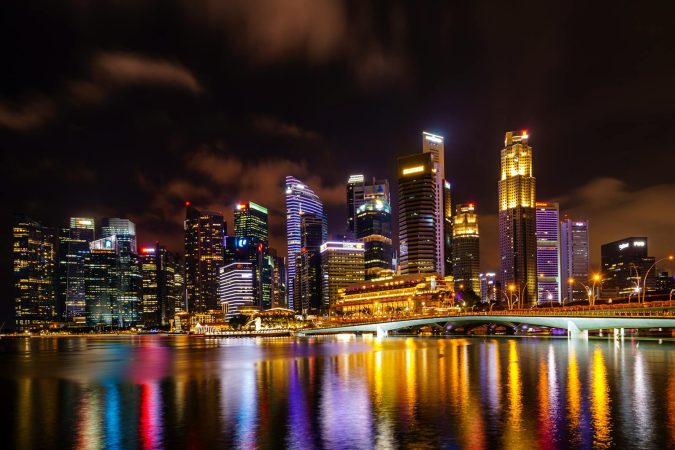
Singapore has begun stockpiling high-protein crops like mung beans, soybeans, and engineered rice varieties in underground vaults as Southeast Asia faces its most severe drought threat in four decades — a move that signals a new era of climate-driven food security planning.

Add VegOut to your Google News feed. 
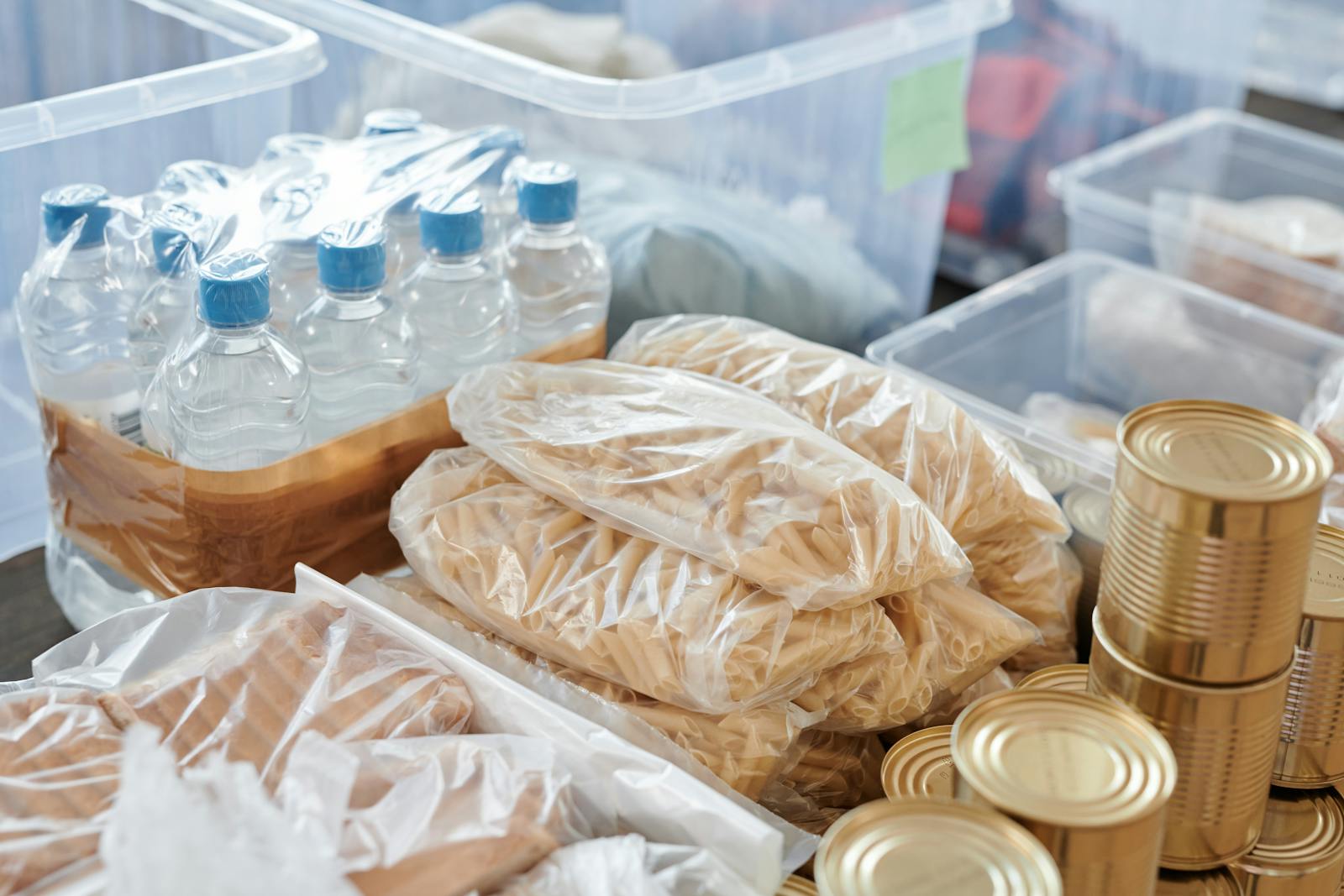
Beneath the streets of Singapore, in climate-controlled chambers carved from granite bedrock, government workers are cataloging pallets of mung beans, soybeans, and high-protein rice varieties. The city-state's Strategic Protein Reserve — a program that until recently existed mostly in planning documents — is now physically operational, stockpiling enough plant-based protein to sustain 5.9 million residents through what regional meteorologists are calling the most severe drought threat Southeast Asia has faced since 1983.
The move comes as El Niño conditions intensify across the Pacific, compounding an already brutal dry season that has left reservoirs in Thailand, Vietnam, and Indonesia at their lowest levels in decades. For Singapore, a nation that imports over 90% of its food, the calculus is straightforward: when your neighbors can't grow enough to feed themselves, they stop exporting to you first.
A Drought Unlike Recent Memory
The Meteorological Service Singapore issued an advisory in late May warning that rainfall across the Malay Peninsula could fall 40-60% below seasonal averages through September. The projection aligns with broader forecasts from the ASEAN Specialised Meteorological Centre, which has been tracking soil moisture deficits across the region since March.
Thailand's Chao Phraya basin — the agricultural engine that produces much of the country's rice surplus — is operating at roughly 38% of normal water capacity. Vietnam's Mekong Delta, responsible for nearly half the country's rice output, has seen saltwater intrusion push further upstream than at any point since comprehensive monitoring began. Indonesia's Java and Sulawesi islands, major producers of soybeans and peanuts, are reporting crop stress that the country's Ministry of Agriculture has classified as "severe."
What makes 2025 different from past El Niño events is the compounding effect of long-term warming. A study published earlier this year in Nature Climate Change found that Southeast Asian droughts are now 23% more intense on average than they were during comparable El Niño cycles in the 1980s and 1990s, largely because baseline temperatures are higher and evapotranspiration rates have increased.
The region produces roughly 27% of the world's rice and significant volumes of soybeans, mung beans, and peanuts. When these supply chains constrict, the effects ripple globally. As VegOut previously reported, global food security models now assume 2°C of warming is locked in, and the crop maps are being redrawn in real time. Singapore's stockpiling program reads like a direct response to those projections.
Why Protein Crops, Specifically
Singapore's decision to prioritize high-protein crops over calorie-dense staples like white rice is notable. The reserves reportedly include mung beans, soybeans, chickpeas, red lentils, and several high-protein rice cultivars developed by the International Rice Research Institute (IRRI) in the Philippines.
The logic, according to a briefing from Singapore's Food Agency (SFA), centers on nutritional density per unit of storage space. Protein deficiency, rather than raw caloric shortfall, tends to be the binding constraint in modern food crises — particularly in urbanized populations that have access to some carbohydrate supply but lose access to diverse protein sources when trade flows are disrupted.
"Calories are relatively easy to stockpile," said Dr. Lena Tan, a food systems researcher at the National University of Singapore, in comments to the Straits Times. "Protein is the harder problem, especially when you're talking about a population that depends on imports for its legumes and oilseeds. The SFA has clearly done the math on what a three-to-six month import disruption looks like nutritionally."
The emphasis on plant-based protein sources also reflects a pragmatic calculation about storage. Legumes and dried grains can be stored for years in controlled environments with minimal energy input. Frozen animal protein requires continuous cold chain infrastructure and degrades more quickly. In underground vaults where stability and longevity matter most, plants win on logistics alone.
This focus on plant protein as a strategic asset tracks with research we covered earlier this year, when scientists mapped what 2 billion people will eat by 2050 and found that legumes and pulses are projected to become the dominant protein source for a significant share of the global population.
Singapore's "30 by 30" Problem
The stockpiling program exists within the broader context of Singapore's "30 by 30" initiative — an ambitious government target to produce 30% of the nation's nutritional needs domestically by 2030. The program has funneled hundreds of millions of dollars into vertical farming, aquaculture, and alternative protein research since its launch in 2019.
Progress has been mixed. Singapore's domestic food production currently accounts for less than 10% of consumption. Vertical farms have scaled impressively for leafy greens, but calorie-dense and protein-rich crops remain overwhelmingly dependent on imports. The 30 by 30 target, while politically popular, is widely regarded among food security analysts as aspirational rather than achievable within its original timeframe.
The underground reserves represent a different philosophy — one that acknowledges the limits of domestic production and instead builds resilience through strategic buffering. Think of it less as a bunker mentality and more as an insurance policy written by actuaries who've read the climate data.
Singapore has long maintained strategic reserves for rice and other staples, managed through a combination of government warehousing and mandatory stockpile requirements for licensed importers. The protein reserve program expands this framework to include a wider range of legumes and engineered crop varieties, stored in the Jurong Rock Caverns — the same underground facility originally built to store petroleum products.
Regional Ripple Effects
Singapore's move has drawn attention from other import-dependent nations across the Asia-Pacific. Japan, South Korea, and the Gulf states — all of which rely heavily on agricultural imports — are reportedly studying the program's structure.
The geopolitics of food hoarding are delicate. When wealthy nations stockpile, it can accelerate price spikes for the very commodities that poorer nations need on the open market. The 2007-2008 rice crisis, in which export bans by India and Vietnam triggered a near-tripling of global rice prices, remains a cautionary example of how protective behavior by individual actors can destabilize the entire system.
Singapore's approach attempts to sidestep this by diversifying its reserve composition across multiple crop types and sourcing from different global markets rather than concentrating purchases in the regional supply chain. SFA officials have emphasized that the reserves draw from Australian, Canadian, and East African suppliers in addition to traditional Southeast Asian sources.
Still, the signal it sends is unmistakable: a wealthy, well-governed nation has concluded that market access alone is insufficient insurance against climate-driven supply disruption. That conclusion carries weight.
As we reported recently, climate scientists modeling food security scenarios for 2040 have found that projected shortfalls are hitting wealthy nations too — a finding that challenges the assumption that food insecurity is exclusively a developing-world problem. Singapore's vault is physical proof that the message has landed in at least one government's planning office.
The Drought's Timeline
Regional forecasters expect the current dry spell to peak between July and September, with the worst conditions concentrated in mainland Southeast Asia and the Indonesian archipelago. The Philippine Atmospheric, Geophysical and Astronomical Services Administration (PAGASA) has already issued drought watches for several provinces in Mindanao and the Visayas.
Rice planting in Thailand and Vietnam has been delayed by weeks due to insufficient water for paddy flooding, and early-season mung bean harvests in Myanmar have come in roughly 20% below projections. The UN Food and Agriculture Organization's regional office in Bangkok released a situation report in May characterizing the current conditions as "the most significant drought risk to regional food production since the 1982-83 El Niño event."
For context, the 1982-83 drought caused rice production across Southeast Asia to fall by an estimated 15-20%, triggering localized food emergencies in several countries. The region's population has roughly doubled since then, while arable land per capita has declined significantly.
The intersection of drought, population growth, and shifting agricultural zones is creating pressure points that would have seemed abstract even a decade ago. Recent USDA projections showing the American Midwest could resemble Texas by 2050 illustrate the same dynamic playing out on the other side of the Pacific — the places we've built our food systems around are changing faster than the systems can adapt.
What This Means Beyond Southeast Asia
Singapore's underground protein reserves are a specific response to a specific crisis. But they also represent something broader: a growing recognition that food resilience in the 21st century requires rethinking what we store, how we store it, and which nutrients matter most when supply chains fracture.
The fact that a national government has chosen high-protein legumes and engineered rice varieties as its strategic hedge says something meaningful about where the food system is heading. Protein security — once a niche concern discussed mainly in development economics journals — is becoming a mainstream policy priority.
For those of us watching from elsewhere, the takeaway is less about the vaults themselves and more about the reasoning behind them. A government with world-class logistics infrastructure and deep financial reserves has concluded that the best way to protect its population's nutrition is to go underground with soybeans and mung beans. The ongoing debate about optimal protein sources for vulnerable populations takes on new urgency when nations start physically stockpiling their answers.
The drought hasn't hit its peak yet. The reserves haven't been tested. And Singapore's planners are surely hoping the vaults remain a precaution rather than a necessity. But in a region where 680 million people depend on increasingly unstable rainfall patterns to grow the food they eat, preparation that looks excessive in June can look prescient by October.
Sometimes the most telling thing a country can do is show you what it's afraid of.
Feature image by Cyrill on Pexels