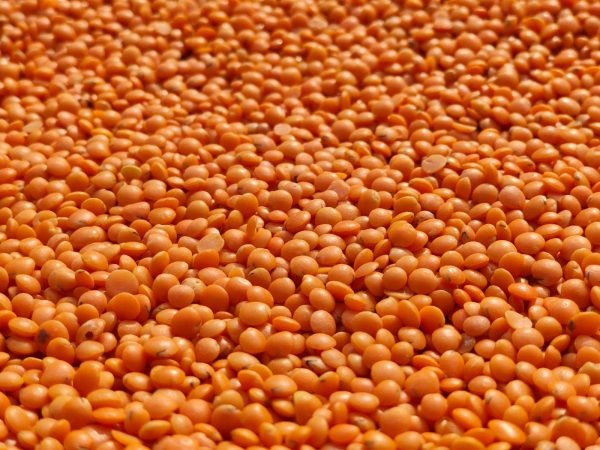
A sweeping new analysis modeled what two billion additional people will eat by 2050 — and the fastest-growing protein source across the Global South isn't poultry, lab-grown meat, or alt-protein burgers. It's the humble pulse.

Add VegOut to your Google News feed. 
A sweeping new analysis published in the Proceedings of the National Academy of Sciences (PNAS) has modeled the dietary trajectories of roughly two billion people across the Global South through 2050, and the findings challenge some deeply held assumptions about the future of protein.
The single largest source of protein growth in these projections? Pulses and legumes, outpacing poultry, aquaculture, and even the much-hyped alternative protein sector.
The research arrives at a moment when the conversation around feeding a planet of 10 billion tends to split into two camps: those who see industrial animal agriculture scaling up to meet demand, and those banking on lab-grown meat and precision fermentation to save us. The data suggests something more complicated — and, frankly, more interesting — is happening on the ground.
What the Research Actually Shows
The PNAS study examined projected demand for terrestrial animal source food through 2050, focusing on low- and middle-income countries where population growth and rising incomes are reshaping diets fastest. The researchers built models incorporating demographic shifts, urbanization rates, income growth, and cultural food preferences across Sub-Saharan Africa, South Asia, and Southeast Asia.
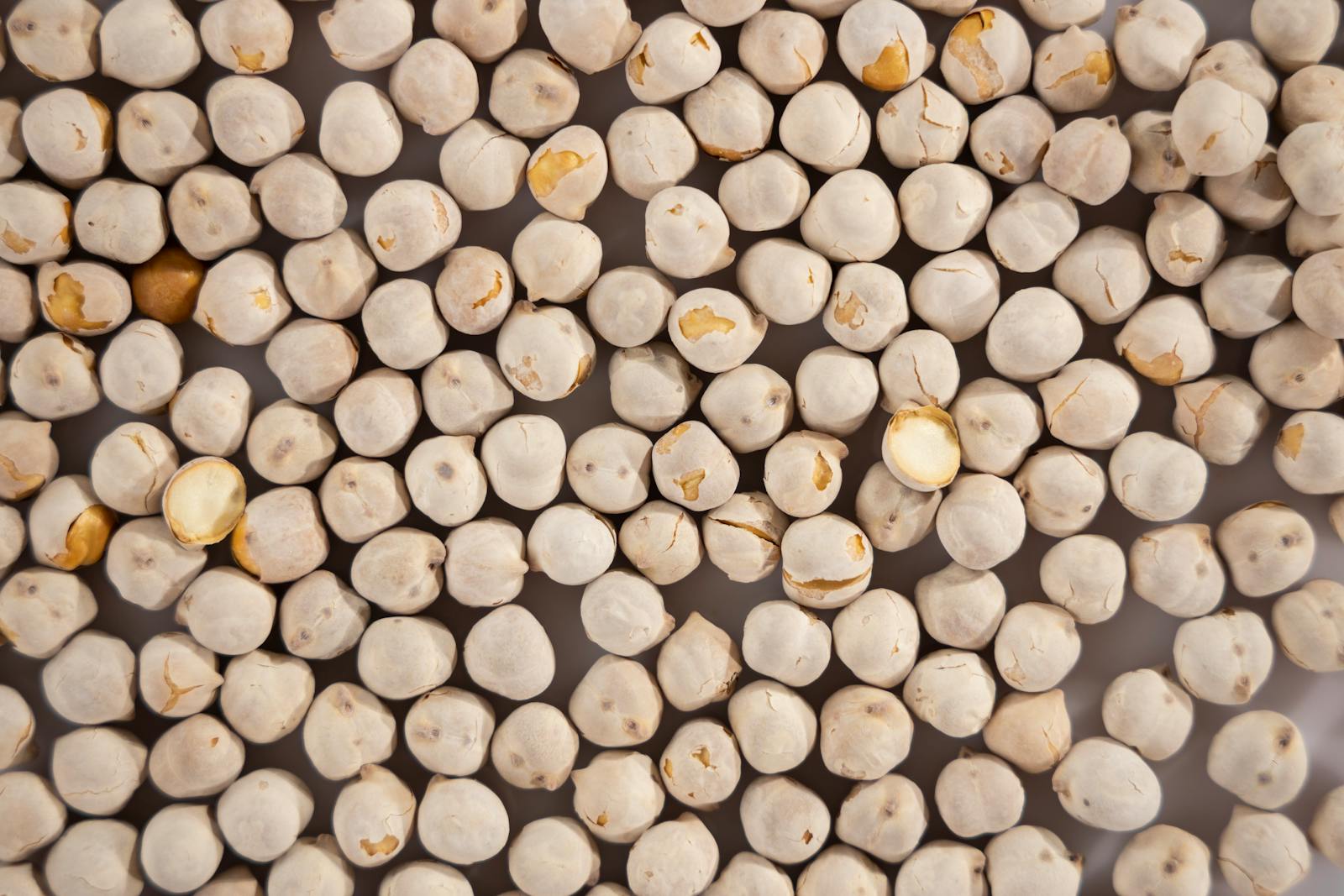
What emerged was a picture that defies the simple narrative of a world inevitably eating more meat. While demand for animal protein will increase — the study doesn't deny that — the rate of growth for plant-based protein sources, particularly lentils, chickpeas, black beans, and other pulses, is projected to outstrip animal protein in several of the fastest-growing population centers on Earth.
In Sub-Saharan Africa alone, pulse consumption is forecast to rise by more than 60 percent by mid-century. South Asia, already the world's largest consumer of lentils and dal, is expected to see demand climb another 45 percent. These are staggering numbers when you consider the populations involved.
Dr. Mario Herrero, one of the researchers involved in the broader body of work on sustainable food systems that informed the study, has noted in previous interviews that "the framing of the protein question in the West is almost unrecognizable in countries where beans and lentils have been the protein backbone for centuries."
Why Pulses? The Economics and Ecology
The reasons are layered, and they start with money. In regions where a family might spend 50 to 70 percent of household income on food — a reality VegOut has explored in the context of how income shapes grocery decisions — the cost-per-gram of protein matters enormously. Lentils deliver roughly 25 grams of protein per dollar in most global markets. Chicken delivers about 12. Beef, depending on the region, can drop to 5 or 6.
Then there's the agricultural side. Pulses are nitrogen-fixing crops, meaning they pull nitrogen from the atmosphere and deposit it into soil, reducing the need for synthetic fertilizers. In a world where 95 percent of soil is projected to be degraded by 2050, that trait is wildly valuable. They also require a fraction of the water that animal agriculture demands and can grow in semi-arid conditions where other crops struggle.
For smallholder farmers across the Global South — who produce roughly a third of the world's food — pulses represent a crop that feeds the family and improves the land for next season's planting. That dual function is hard to overstate.
The Western Protein Obsession Meets Global Reality
There's a useful disconnect to examine here. In North America and Europe, the protein conversation has been dominated by a kind of arms race: plant-based burgers engineered to bleed, cultivated meat grown in bioreactors, protein bars with 30 grams crammed into every serving. Companies like Beyond Meat have spent years and billions of dollars trying to replicate the experience of animal protein for Western consumers.
Meanwhile, much of the world has been quietly eating plant protein all along. India's dal. Brazil's feijão. Ethiopia's shiro. The Middle East's hummus and ful medames. These dishes didn't need to be "disrupted" because they were never broken.
The PNAS data underscores this point with hard numbers. When researchers modeled the protein sources that will feed the additional two billion people expected by 2050, pulses and legumes emerged as the single largest growth category by volume. The finding doesn't minimize the projected growth in poultry and aquaculture, which will also climb substantially. But it reframes the conversation around where actual protein calories will come from at scale.
As we've noted before, the foods people assume they won't like often turn out to be the ones they reach for again and again once they've actually tried them. On a civilizational scale, the same pattern holds: the humble lentil, dismissed in many Western food cultures, is quietly positioned to be the protein of the century.
Climate, Migration, and the Shifting Plate
The projections don't exist in a vacuum. Climate change is already redrawing the agricultural map. The New York Times reported that climate migration has already begun reshaping where and how food is grown, with millions of people moving away from regions that can no longer sustain the agriculture their communities once depended on.
Pulses are uniquely suited to this new reality. Many varieties are drought-tolerant. They grow in poor soil. They have short growing seasons. For communities adapting to hotter, drier conditions, a crop that thrives under stress while delivering dense nutrition is less a lifestyle choice and more a survival strategy.
Bill Gates has written extensively about the need for a reimagined climate strategy, one that accounts for the food system's role in emissions. The data on pulses fits squarely into this framework. Per gram of protein produced, lentils generate roughly 0.9 kg of CO2 equivalent. Beef generates about 50 kg. Even poultry, the most efficient of the major animal proteins, comes in around 5.7 kg. The math is stark.
This doesn't mean that two billion people will be choosing lentils over steak for environmental reasons. Most will be choosing them because they're affordable, familiar, and available. The climate benefit is a massive, structural co-benefit — one that arrives whether or not the person eating the dal is thinking about carbon at all.
What This Means for the Future of Food
The implications ripple outward in several directions.
For the alternative protein industry, the data is both validating and humbling. The thesis that the world needs more plant protein is correct. But the assumption that this protein needs to come in the form of high-tech, processed products designed to mimic meat may be overstated — at least globally. The market opportunity for improving yield, distribution, and processing of traditional pulses could dwarf the market for plant-based burgers.
For agricultural policy, the findings argue for dramatically increased investment in pulse crop research. The CGIAR system — the network of international agricultural research centers — has historically directed a fraction of its funding toward legume improvement compared to cereals like rice and wheat. If pulses are going to carry this much of the protein load, that allocation needs to shift.
For the broader conversation around conscious eating, the research offers a corrective to the tendency — common in Western media — to frame plant-based eating as a new or niche phenomenon. Billions of people have been doing some version of this for millennia. The future of food may look less like a Silicon Valley lab and more like a grandmother's kitchen in Hyderabad.
VegOut recently covered research on the subtle biological signals that indicate living systems, and there's something poetic about the parallel here. The most important shifts aren't always the loudest or most visible. Sometimes the signal that matters most is quiet, persistent, and easy to overlook — like a billion people eating lentils for dinner tonight.
The Bigger Picture
Zooming out, this research reframes one of the central questions of the 21st century: how do we feed 10 billion people without wrecking the planet? The answer emerging from the data is unglamorous. It involves no patents, no IPOs, no glossy packaging. It involves beans.
That might be disappointing to anyone hoping for a techno-fix. But there's something genuinely hopeful about the finding. The solution to one of humanity's biggest challenges already exists. It grows in the ground. It costs almost nothing. It's been feeding people for 10,000 years.
The challenge now is whether policymakers, investors, and the food industry can recognize what the data is telling them and direct resources accordingly. The research suggests the world's growing population is already voting with their plates. The question is whether the institutions that shape the food system will catch up.
As perspectives on food culture continue to evolve — something we've explored through the lens of how living abroad reshapes assumptions — the protein question may end up being one of the clearest examples of a global majority quietly leading while the loudest voices in the room debate solutions to a problem already being solved at scale.
Two billion new mouths to feed. The biggest protein source to meet them: a crop so ancient, so ordinary, and so effective that it barely makes headlines. Until now.
Feature image by Anshu Kumar on Pexels
If You Were a Healing Herb, Which Would You Be?
Each herb holds a unique kind of magic — soothing, awakening, grounding, or clarifying.
This 9-question quiz reveals the healing plant that mirrors your energy right now and what it says about your natural rhythm.
✨ Instant results. Deeply insightful.

Adam Kelton
Adam Kelton is a writer and culinary professional with deep experience in luxury food and beverage. He began his career in fine-dining restaurants and boutique hotels, training under seasoned chefs and learning classical European technique, menu development, and service precision. He later managed small kitchen teams, coordinated wine programs, and designed seasonal tasting menus that balanced creativity with consistency.
After more than a decade in hospitality, Adam transitioned into private-chef work and food consulting. His clients have included executives, wellness retreats, and lifestyle brands looking to develop flavor-forward, plant-focused menus. He has also advised on recipe testing, product launches, and brand storytelling for food and beverage startups.
At VegOut, Adam brings this experience to his writing on personal development, entrepreneurship, relationships, and food culture. He connects lessons from the kitchen with principles of growth, discipline, and self-mastery.
Outside of work, Adam enjoys strength training, exploring food scenes around the world, and reading nonfiction about psychology, leadership, and creativity. He believes that excellence in cooking and in life comes from attention to detail, curiosity, and consistent practice.
More Articles by Adam