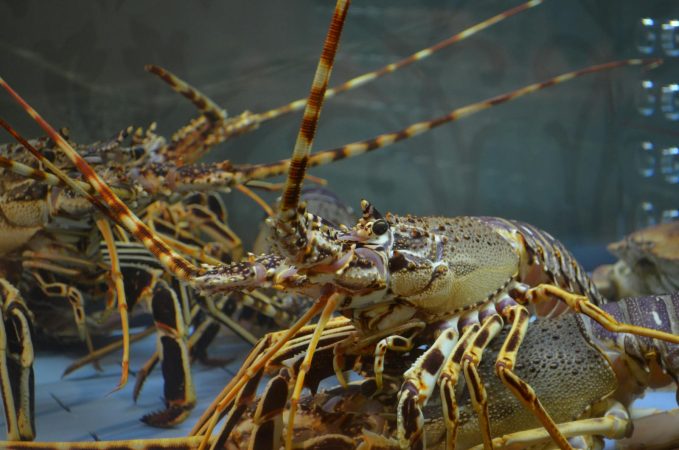
A NOAA-funded study reveals that warming water, not ocean acidification, poses the greatest threat to Maine lobster embryos — and that multiple environmental stressors compound in ways worse than either alone.
Here's the most unsettling finding from new research on Maine's lobster fishery: it's not warming water alone that threatens the industry's future. It's that warming and ocean acidification together produce effects on lobster embryos worse than either stressor in isolation—compounding damage at the most vulnerable stage of the animal's life cycle, when just two out of every 50,000 eggs survive to harvestable size. For a fishery that harvested 78.8 million pounds last year, that biological math carries enormous economic weight.
The simple climate narrative—the Gulf of Maine is getting hotter, so lobsters will migrate north—has dominated public understanding of the problem. But as Inside Climate News reports, new research reveals that this framing misses the real story. The danger isn't any single environmental shift; it's the way multiple pressures compound simultaneously. And that means the policy tools built around single-variable thinking—temperature monitoring, migration tracking, catch adjustments—are likely insufficient for what's coming. Managing this fishery's future requires grappling with compound stressors, not just warming in isolation.
The Gulf of Maine's surface temperature is warming 99% faster than the rest of the ocean, per a 2015 study led by Andrew Pershing. Lobsters are ectotherms, meaning they can't regulate their own body temperature. When water warms, they grow faster but reach maturity at smaller sizes with less reproductive capacity, and their timing falls out of sync with food availability and harvesting seasons. That's the baseline problem. What the new research adds is the multiplier effect.
Research tracking American lobster development under varying temperature and acidity levels designed to mimic both present conditions and future projections found that embryos tolerated acidification well but reacted sharply to warming. Larvae that developed in warmer water hatched smaller, making them more vulnerable to predators at a stage when survival is already razor-thin. But when warming and acidification were combined, the effects were synergistic—greater than the sum of their parts.
According to research from the Gulf of Maine Research Institute, these synergistic effects on lobster populations are precisely what make compound stressor models essential for future management. Studies indicate the ideal development range for lobster embryos sits between 12 and 18 degrees Celsius. Push beyond that window while simultaneously shifting ocean chemistry, and the biological math starts to break down in ways that single-variable projections can't capture.
For anyone paying attention to how warming oceans ripple through food systems, this matters well beyond New England's coastline. Lobster is one of the most visible, economically significant fisheries in the United States, with a documented history in Maine stretching back centuries. The way we've talked about lobsters as a society is already shifting. What this research suggests for the next five to ten years is concrete and sobering: as Gulf of Maine temperatures continue to push past that 18-degree developmental threshold with increasing frequency, and as acidification intensifies alongside warming, recruitment of juvenile lobsters into the population will likely decline—not in a single dramatic collapse, but in a steady erosion of reproductive success that shows up years later as smaller catches. If fishery management doesn't evolve beyond single-stressor models to account for these compound effects, the industry could find itself adjusting quotas and seasons based on projections that systematically underestimate the decline already underway.