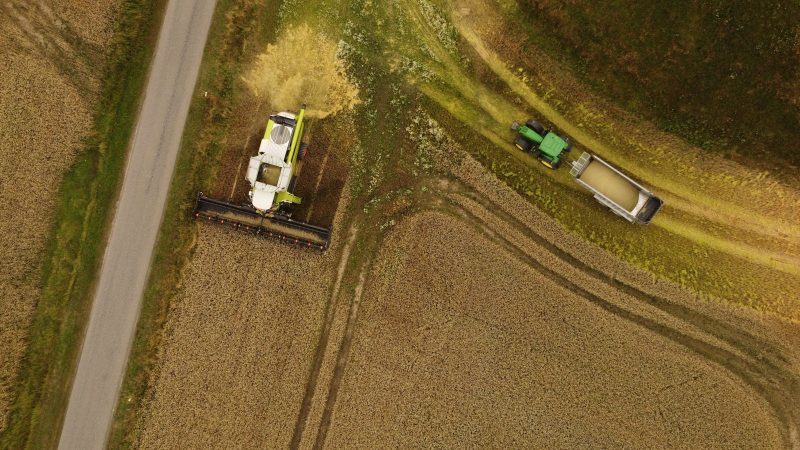
Denmark's landmark carbon tax on farming doesn't officially begin until 2030, but small dairy producers are already selling off herds as the policy's financial uncertainty reshapes the industry years ahead of schedule.

Add VegOut to your Google News feed. 
Denmark will become the first country in the world to impose a direct carbon tax on agricultural emissions when its landmark levy takes effect on January 1, 2030 — but the policy's ripple effects are arriving years ahead of schedule. Small and mid-sized dairy farmers across the country have begun selling off herds, citing the financial uncertainty of operating under a system that will eventually charge 300 Danish kroner (roughly $43) per metric ton of CO₂ equivalent by 2030, rising to 750 kroner by 2035.
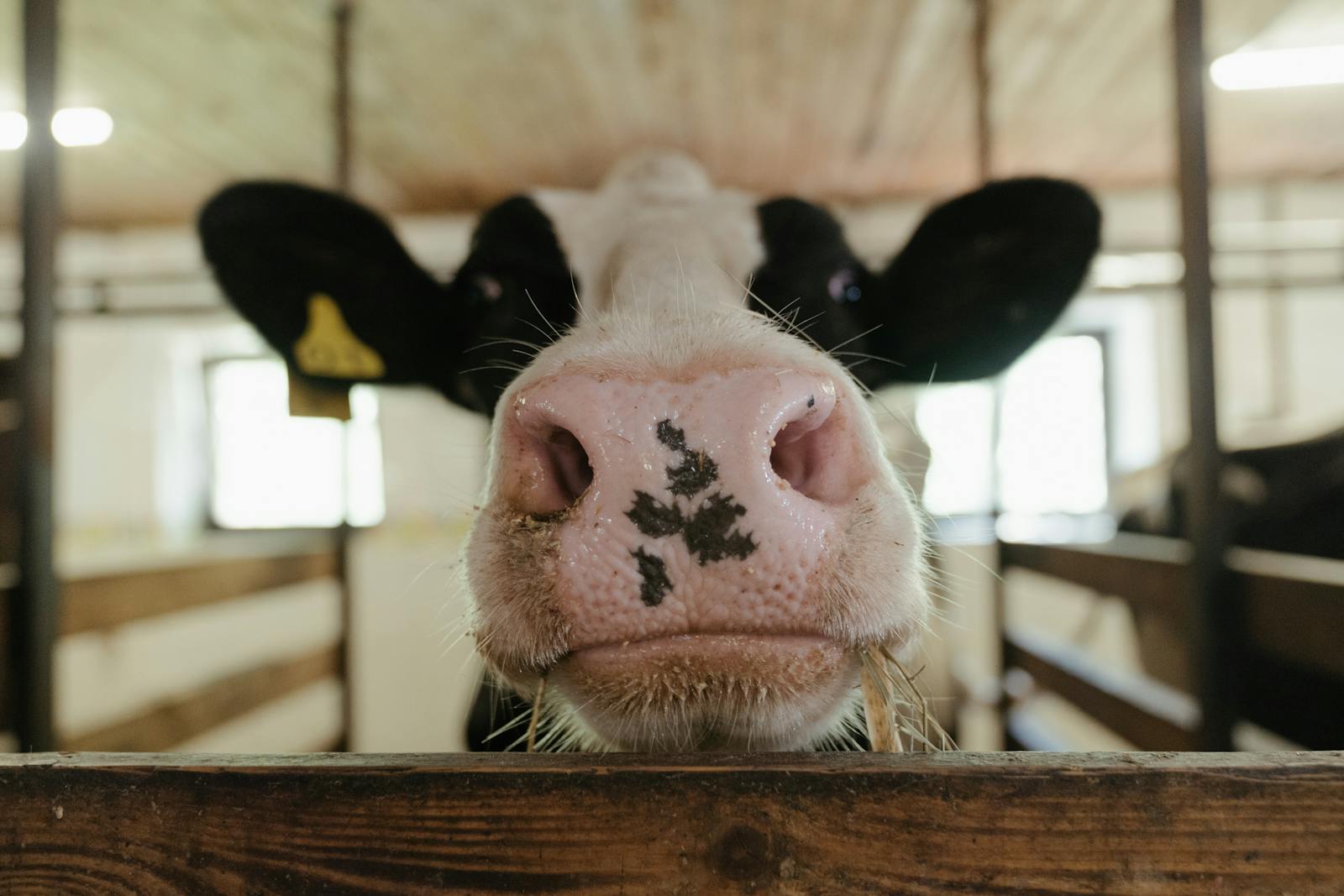
The tax, passed by Denmark's parliament in June 2024 with broad cross-party support, targets methane and nitrous oxide emissions from livestock and fertilizer use. According to estimates from Denmark's Ministry of Taxation, the levy will affect approximately 20,000 farms and is projected to cut the country's agricultural emissions by 1.8 million metric tons of CO₂ equivalent by 2030. For large operations with diversified revenue streams, those numbers are manageable. For smaller dairy producers milking fewer than 100 cows, the math looks different. The Danish Agriculture and Food Council reported that farm sale inquiries surged 18% in the second half of 2024 compared to the year prior, with dairy operations accounting for a disproportionate share.
What's striking is the timing. The tax doesn't technically begin for months, and the initial rate is deliberately modest — designed to give producers a runway to adapt. Yet behavioral economics tells us that anticipation of cost frequently drives decisions faster than the cost itself. Several farmers interviewed by the Danish newspaper Jyllands-Posten in early 2025 described a cascading effect: the tax announcement depressed local land values for pasture, made it harder to secure favorable credit terms, and triggered a psychological reassessment of whether the next generation would inherit a viable business. Some are transitioning to crop farming. Others are exiting agriculture entirely.
Denmark's situation offers a real-time case study in how climate policy reshapes food systems before it even takes full effect. As VegOut previously covered, Danish institutions have already been rethinking food procurement through a climate lens — ranking foods by their water cost per gram of protein and restructuring school lunch programs accordingly. The carbon tax accelerates that trajectory from the production side. Together, these demand-side and supply-side shifts suggest Denmark is assembling something like a coherent national food-climate strategy, even if no single architect designed it that way.
Critics of the tax argue it will simply offshore Danish dairy production to countries with weaker environmental standards — a concern economists call "carbon leakage." The Danish government has attempted to address this by earmarking a portion of tax revenue for a transition fund that subsidizes farmers who shift toward lower-emission practices, including plant-based crop cultivation and regenerative soil management. Whether that fund proves sufficient remains an open question. Meanwhile, other EU member states are watching closely. The Netherlands, which has grappled with its own contentious livestock reduction plans, has reportedly studied Denmark's legislative framework as a potential template.
The broader context matters here too. As Singapore accelerates cultivated meat approvals and alternative protein investment continues its uneven recovery, Denmark's tax represents a different lever entirely — one that changes the economics of conventional production rather than betting solely on replacements. For the small dairy farmers currently listing their herds for sale, the distinction is academic. The future arrived in their bank statements before it arrived on the calendar.
Feature image by Malthe Byskov on Pexels